cosy, goodbank,
frankfurt, germany, 2025
Cosy
Venue Goodbank, Frankfurt, Germany
Date December 6 - January 13
Curated by Maja Lisewski
Photography Daniel Stubenvoll
Press Release
Cezary Poniatowski
Cosy
curated by Maja Lisewski
December 6 - January 13, 2026
Goodbank Frankfurt
Old carpets, seemingly obsolete infusers, or air vents: materials that register as overlooked, unassuming fragments of everyday environments form the basis of the sculptural practice of Cezary Poniatowski (b. 1987, Olsztyn, Poland). Cosy at GOODBANK marks the Warsaw-based artist’s first solo exhibition in Frankfurt am Main.
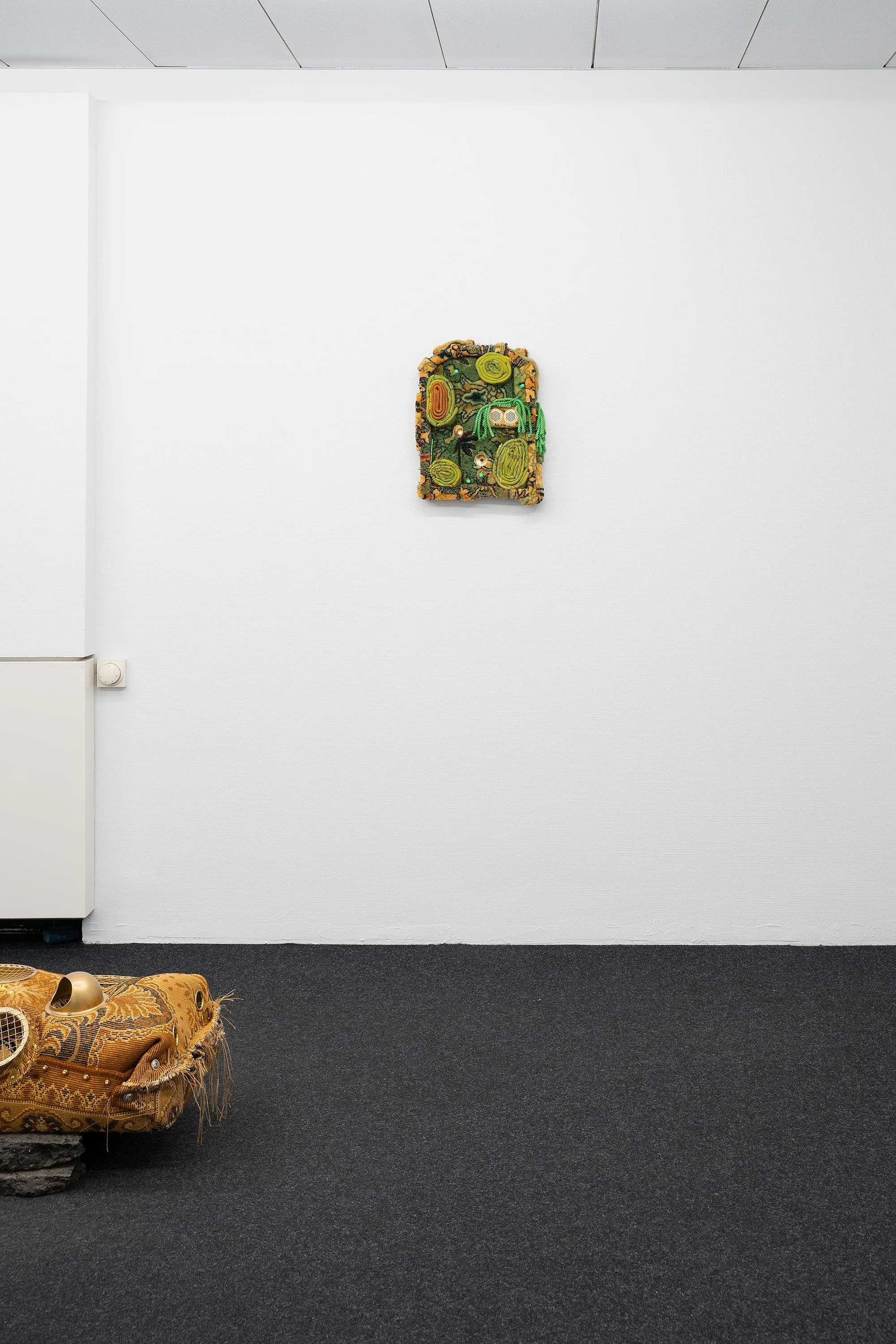
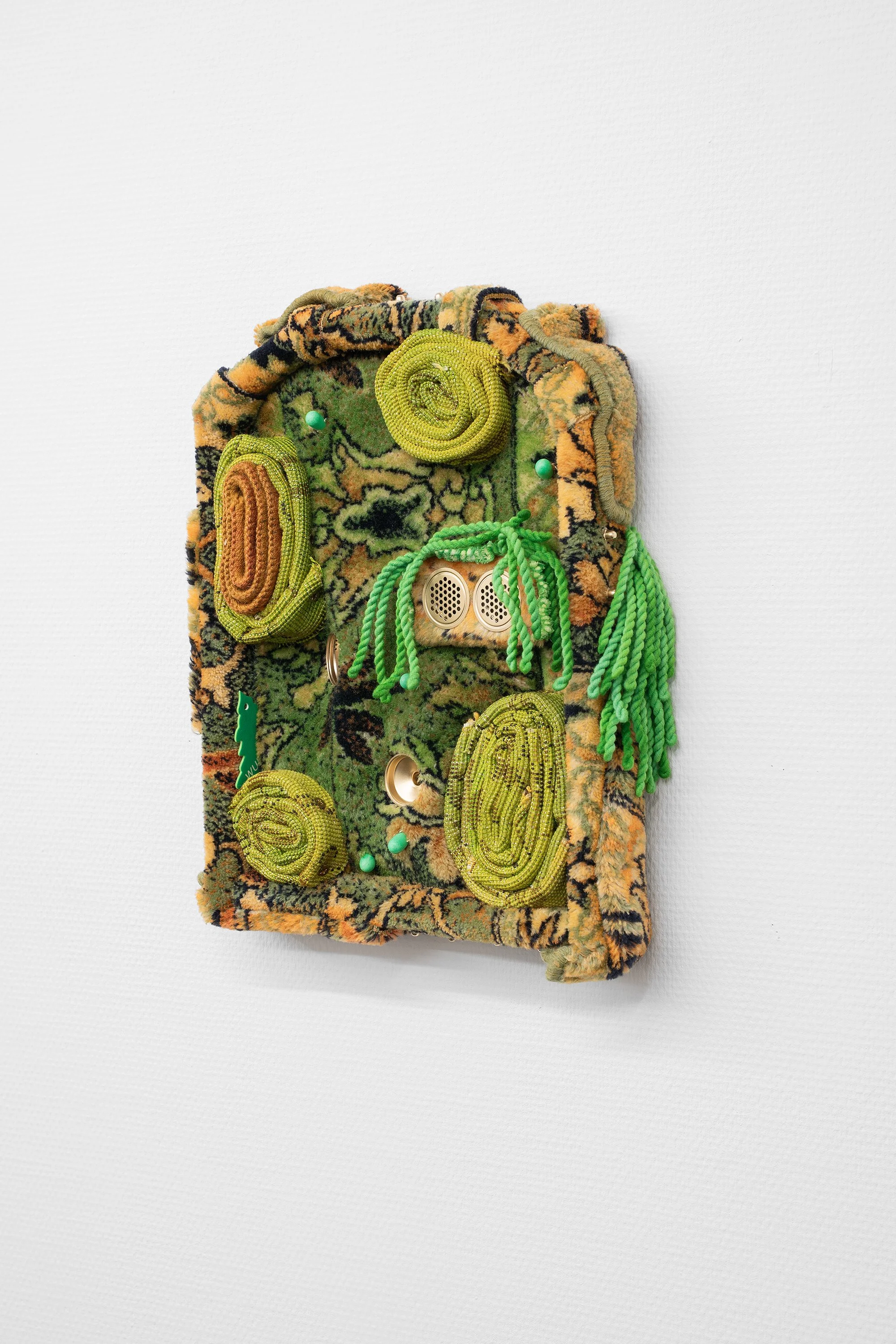
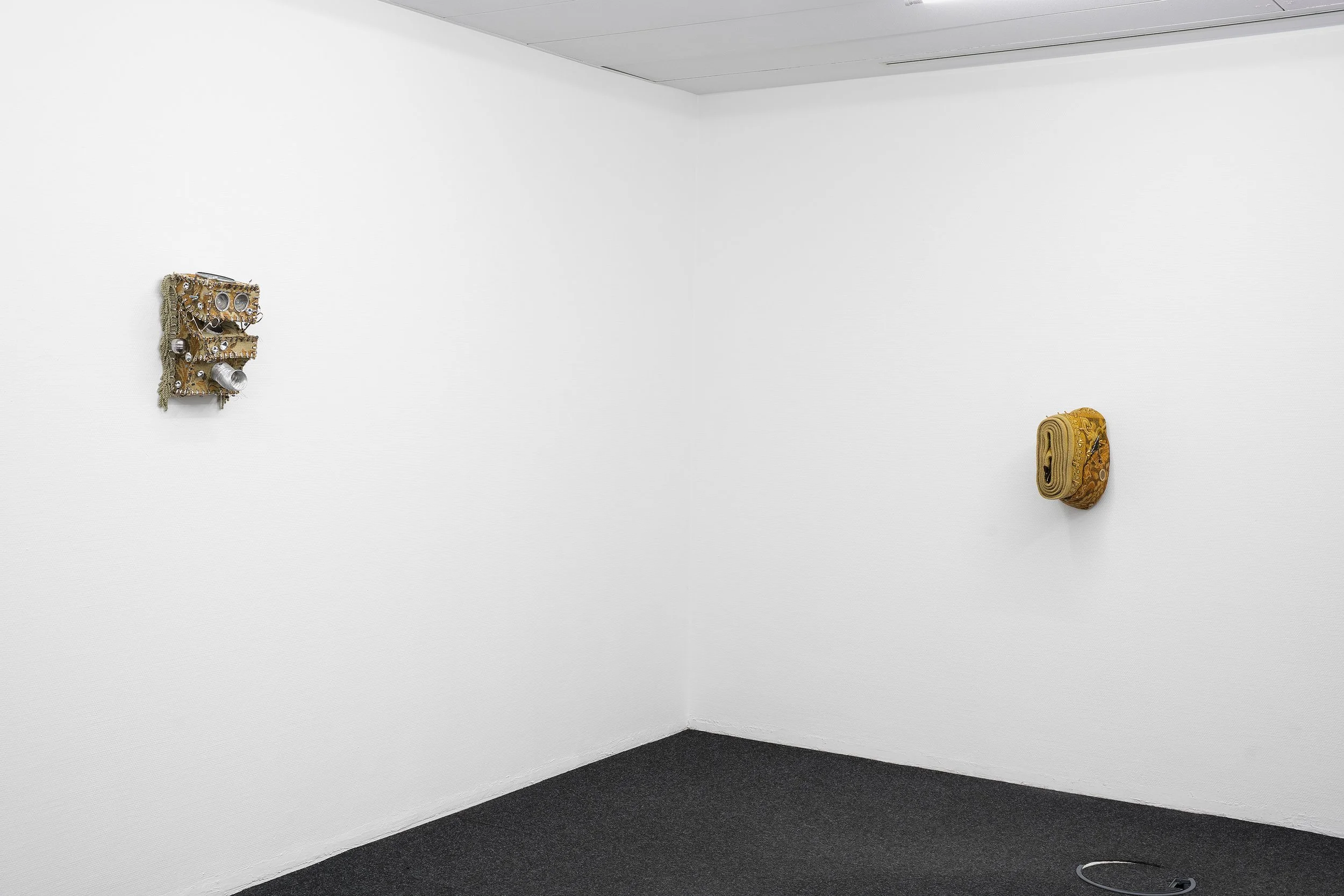
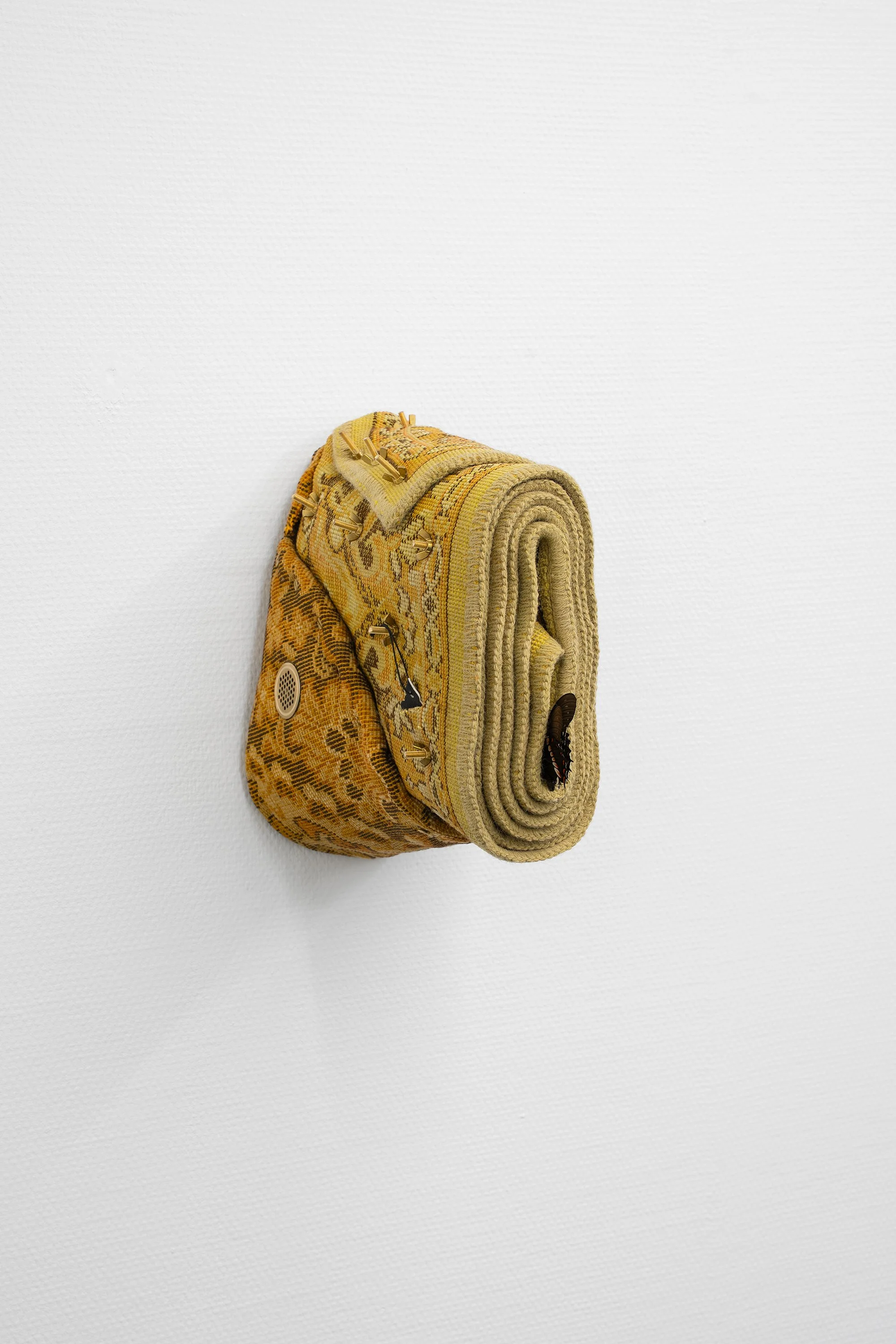
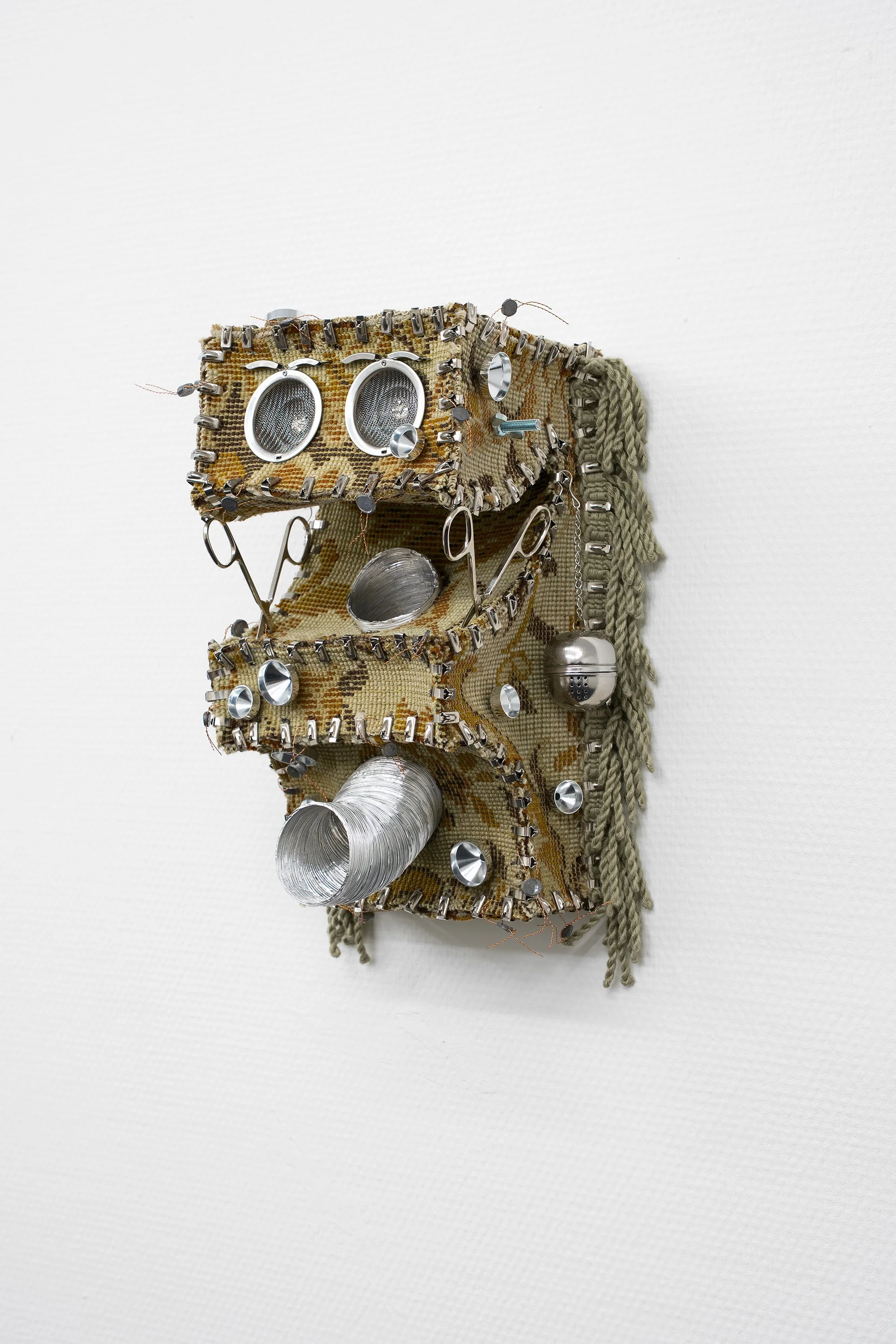
Carpets occupy a curious cultural category: omnipresent yet rarely acknowledged, they “tie the room together,” as immortalised in The Big Lebowski. Once installed, they are enlisted to soften domestic space, only to recede into the background as mute companions. As buffers between cold flooring andhuman skin, they absorb presence—muffling, filtering, collecting. Attuned to their economic and geopolitical resonance, Poniatowski repurposes carpets from the former Eastern Bloc, compressing them into sculptural masses and granting them corporeality through zip ties, screws, and silvergleaming staples. The domestic and familiar tilt into the absurd, mutating into grotesque formations that conjure a post-apocalyptic socialism in a jewel-like attire.
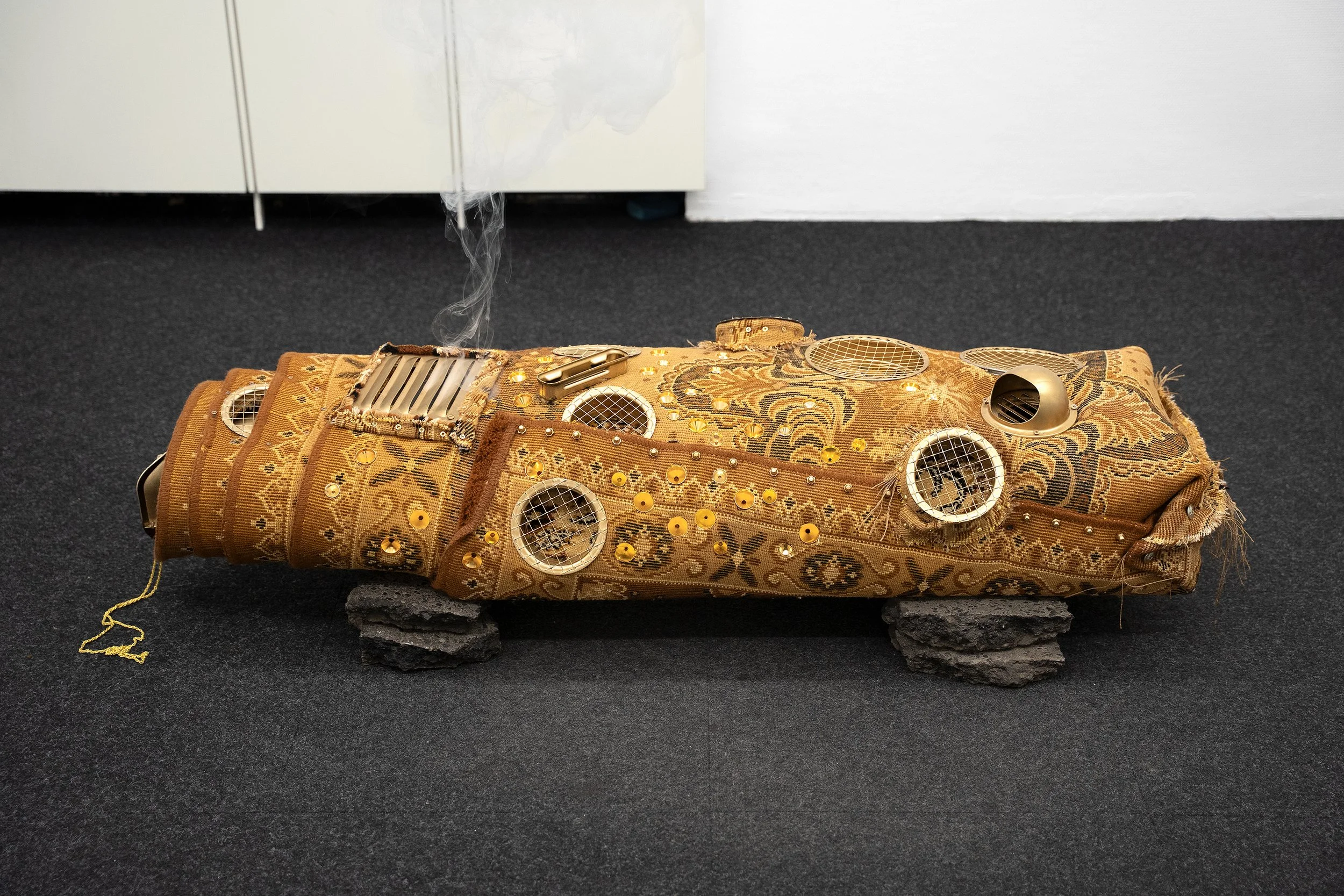
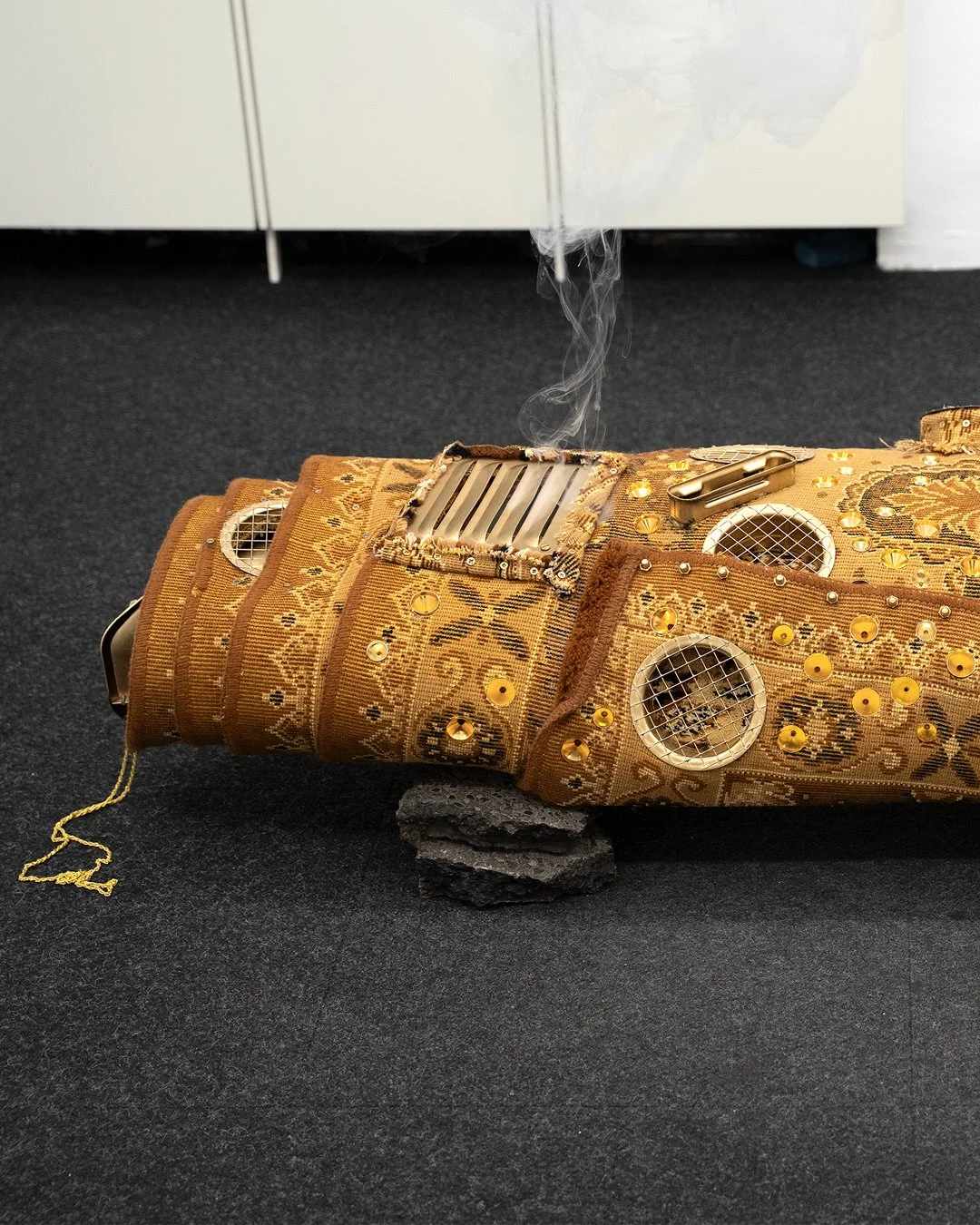
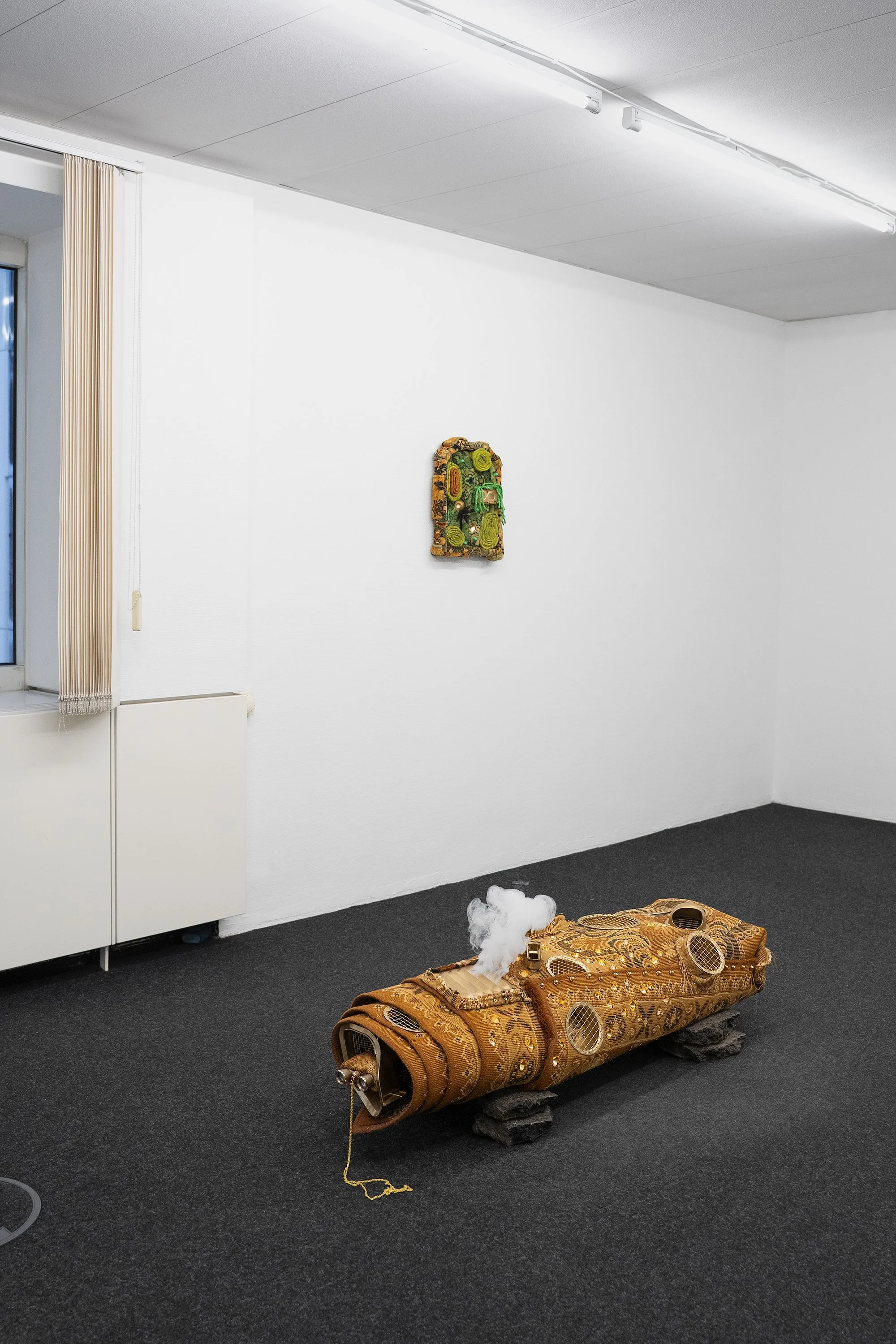
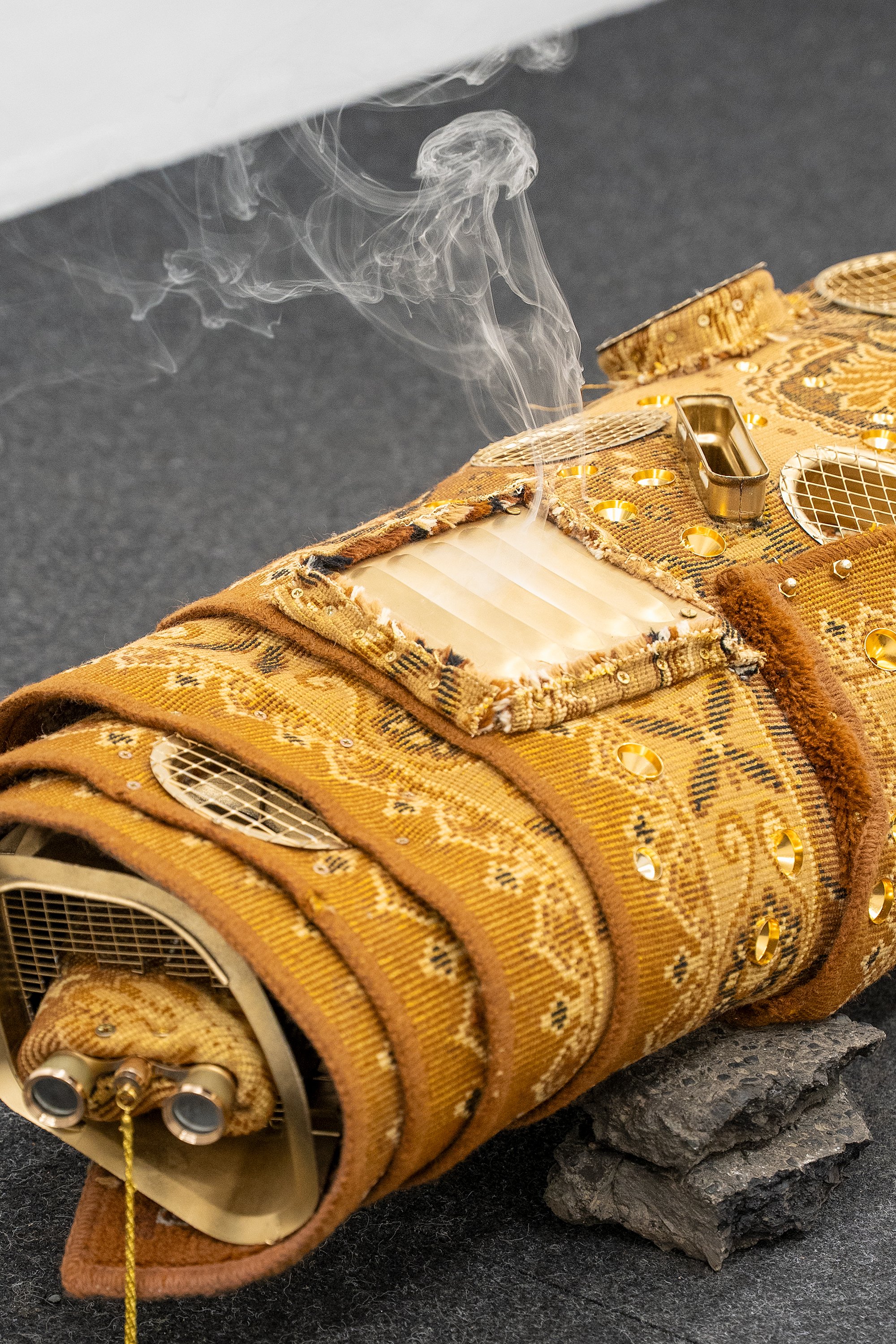
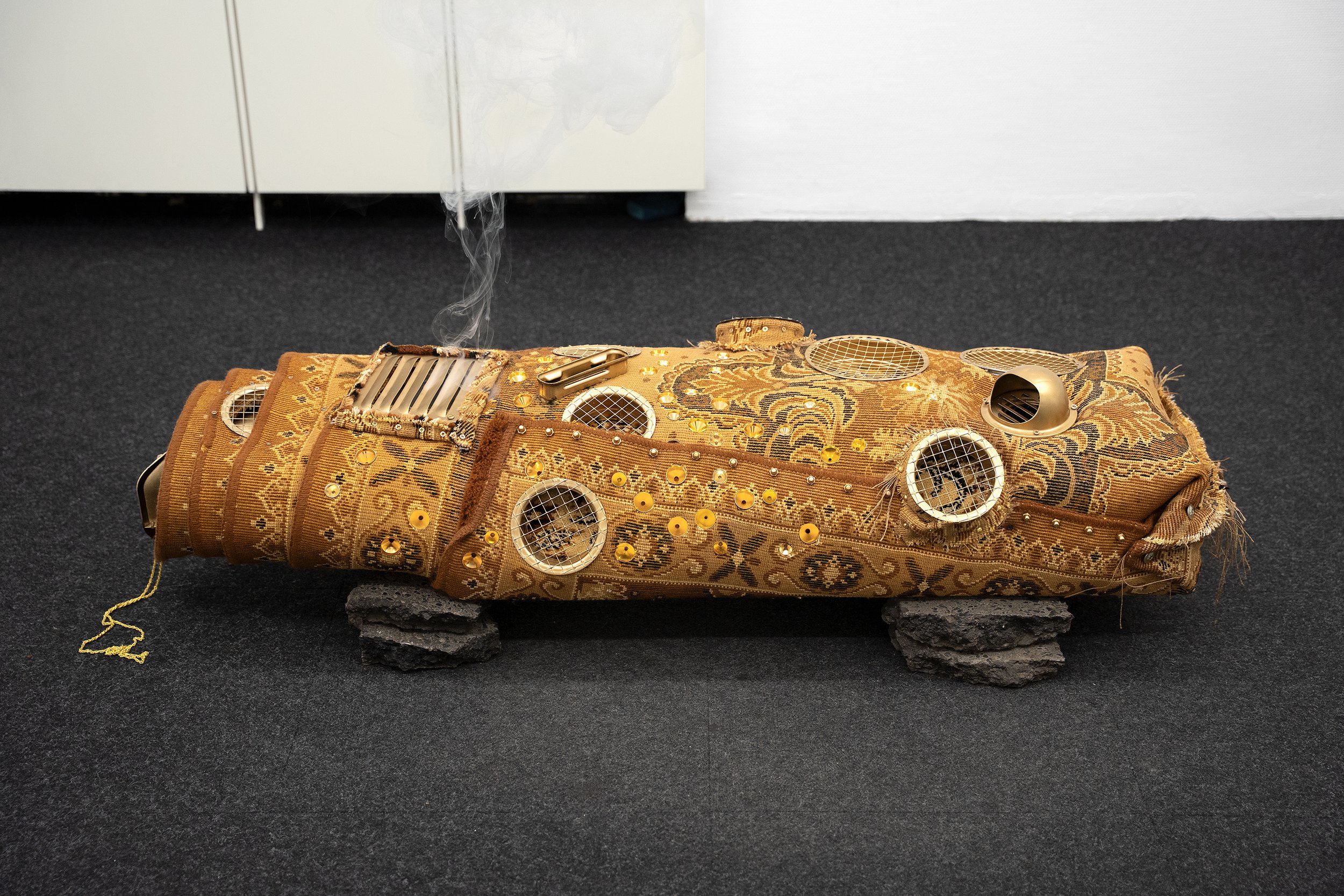
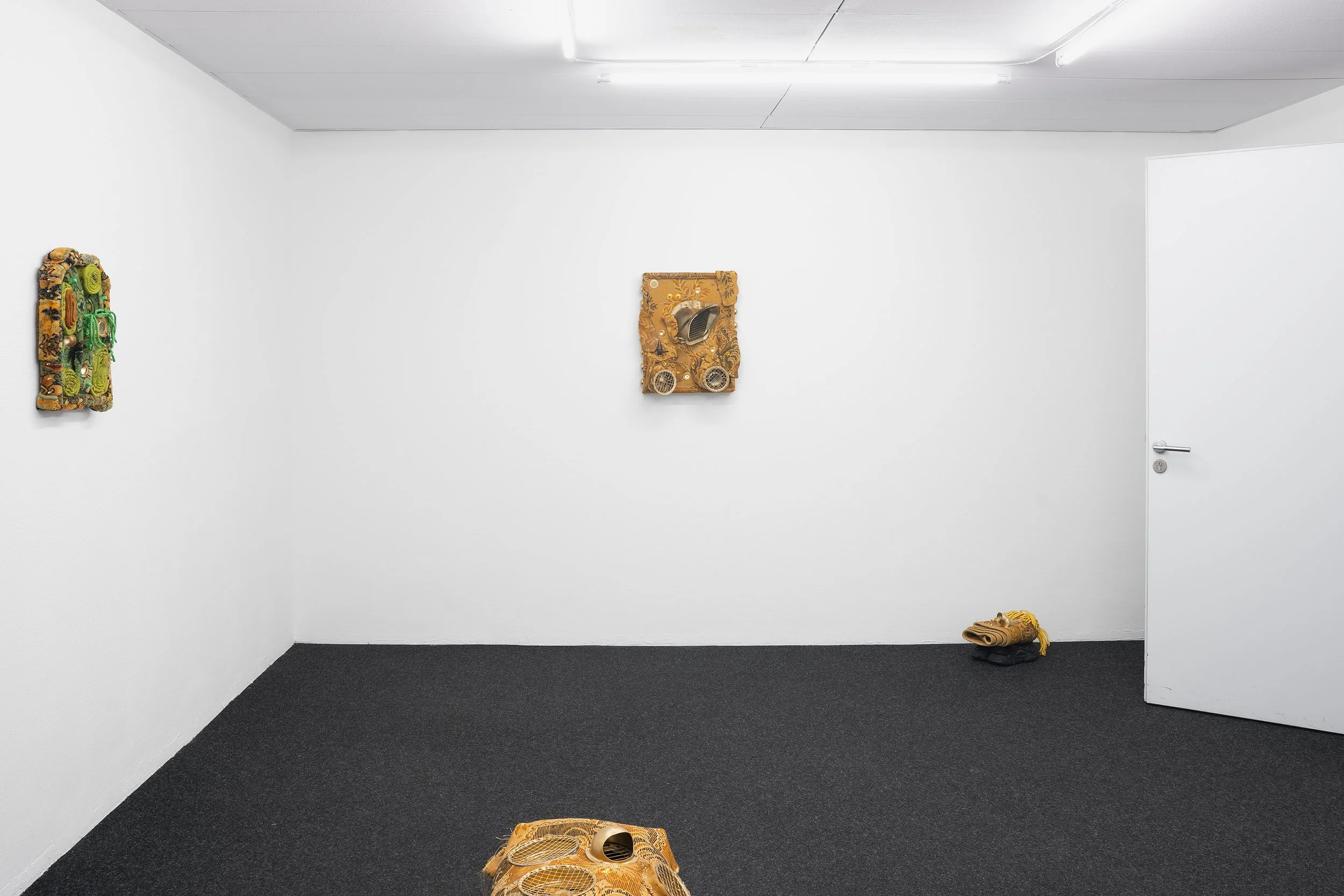
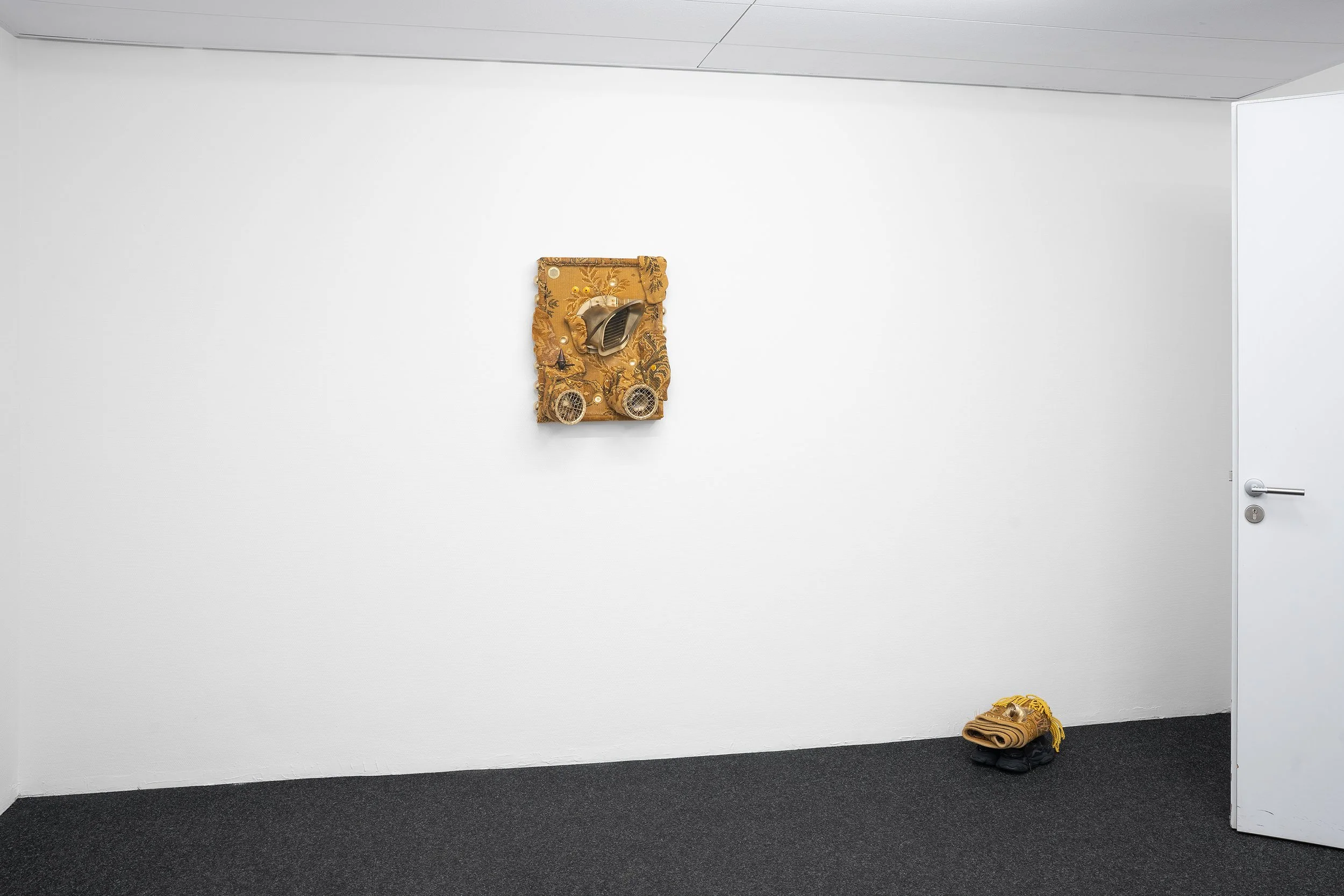
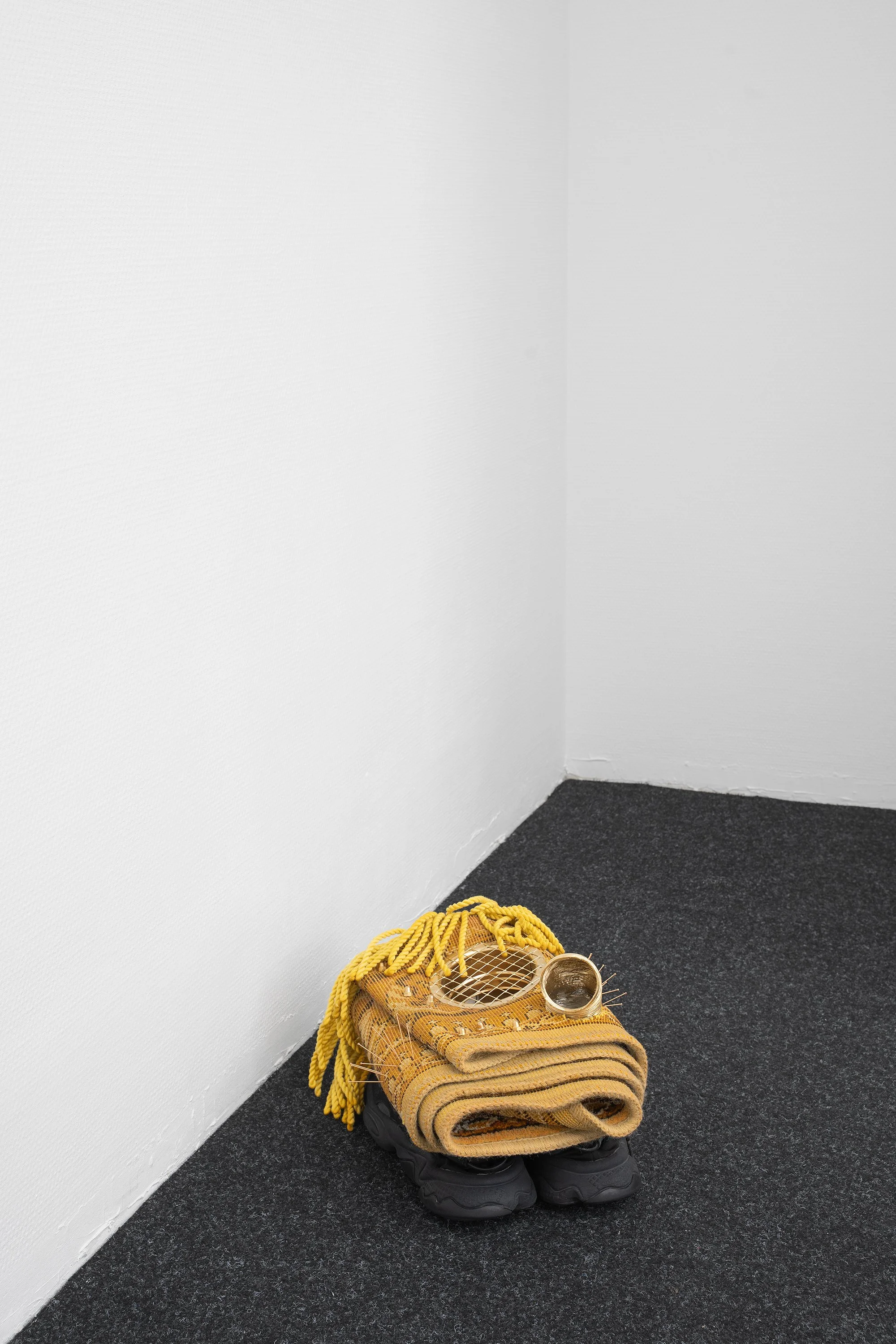
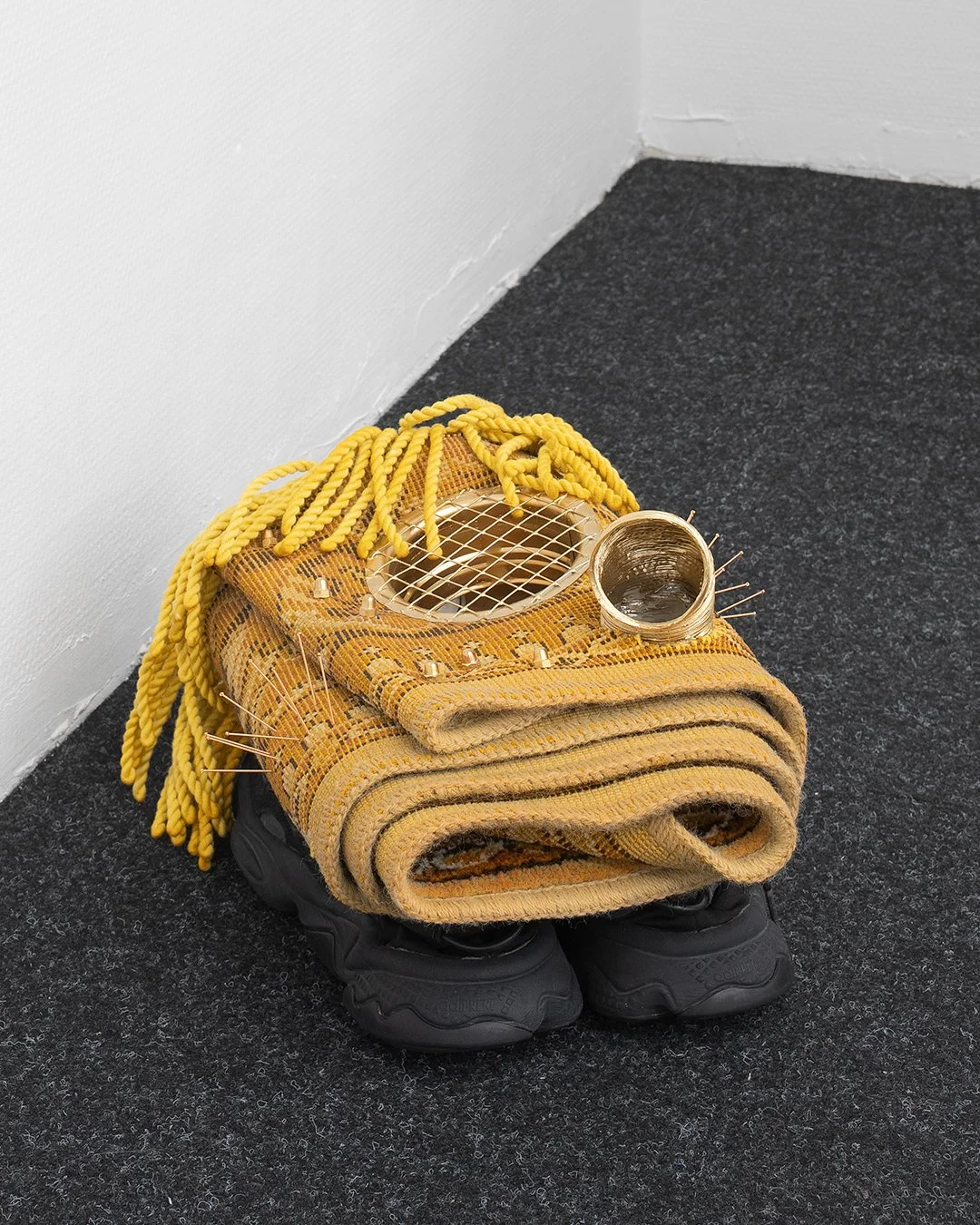
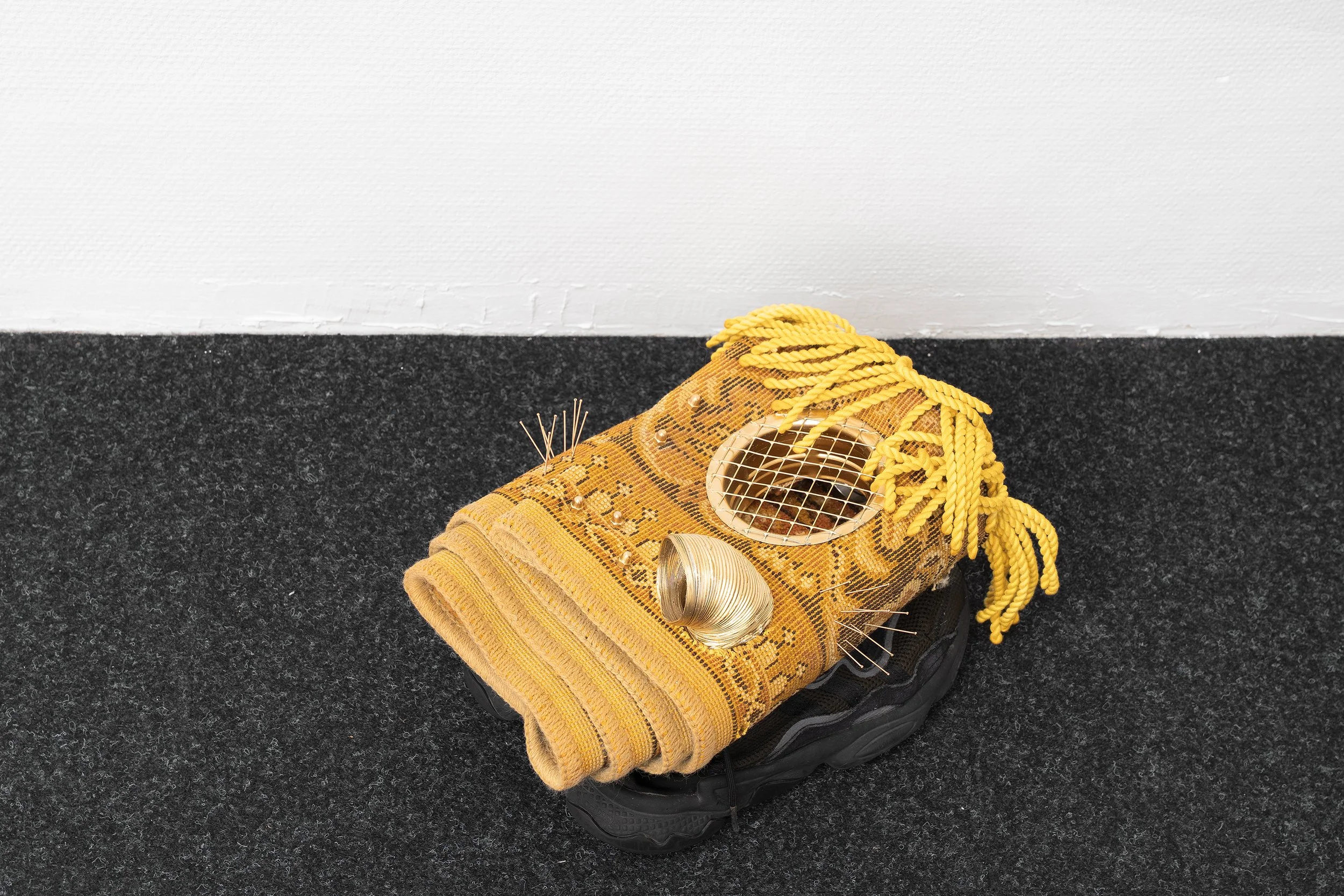
Drawing on the frictions between a post-Soviet past and the turbo-capitalist promises that followed, Vehicle (2025) reads as a zombie-socialist engine: golden vents and fragile grids pierce a yellow-gold carpet rolled inside-out, while gilded binoculars lend the claustrophobic body a piercing gaze. A set of paving stones serves as a pedestal, breaching the threshold between private and public space. Smoke emanating from the carpet dispels any residual sense of domestic comfort, transforming the textile mass into a dystopian flying carpet. Turning physical logics upside down once more, Hauler (2025) offers an almost childlike counterpoint: a small golden carpet rests calmly upon a pair of sneakers; finally roles are reversed.
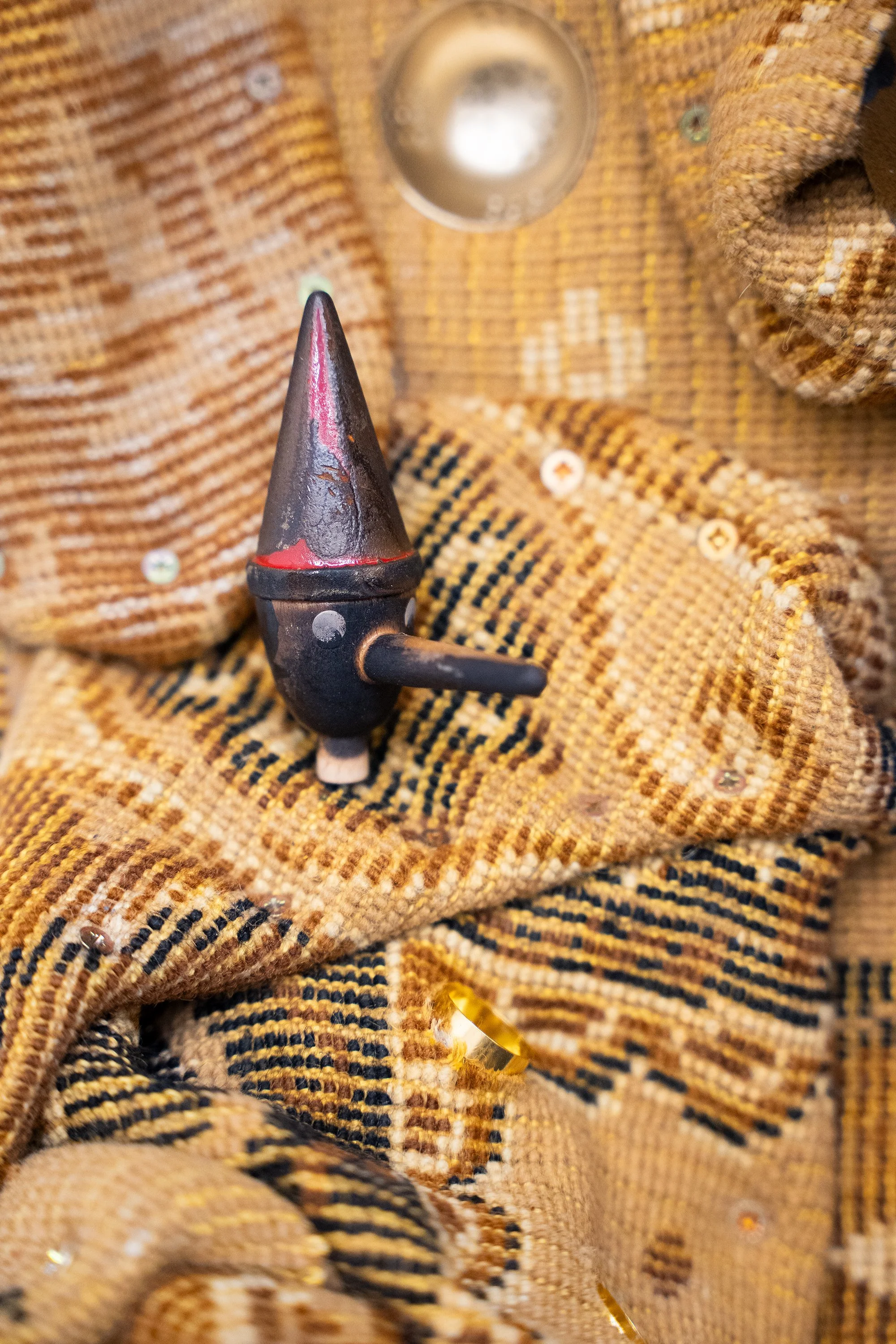
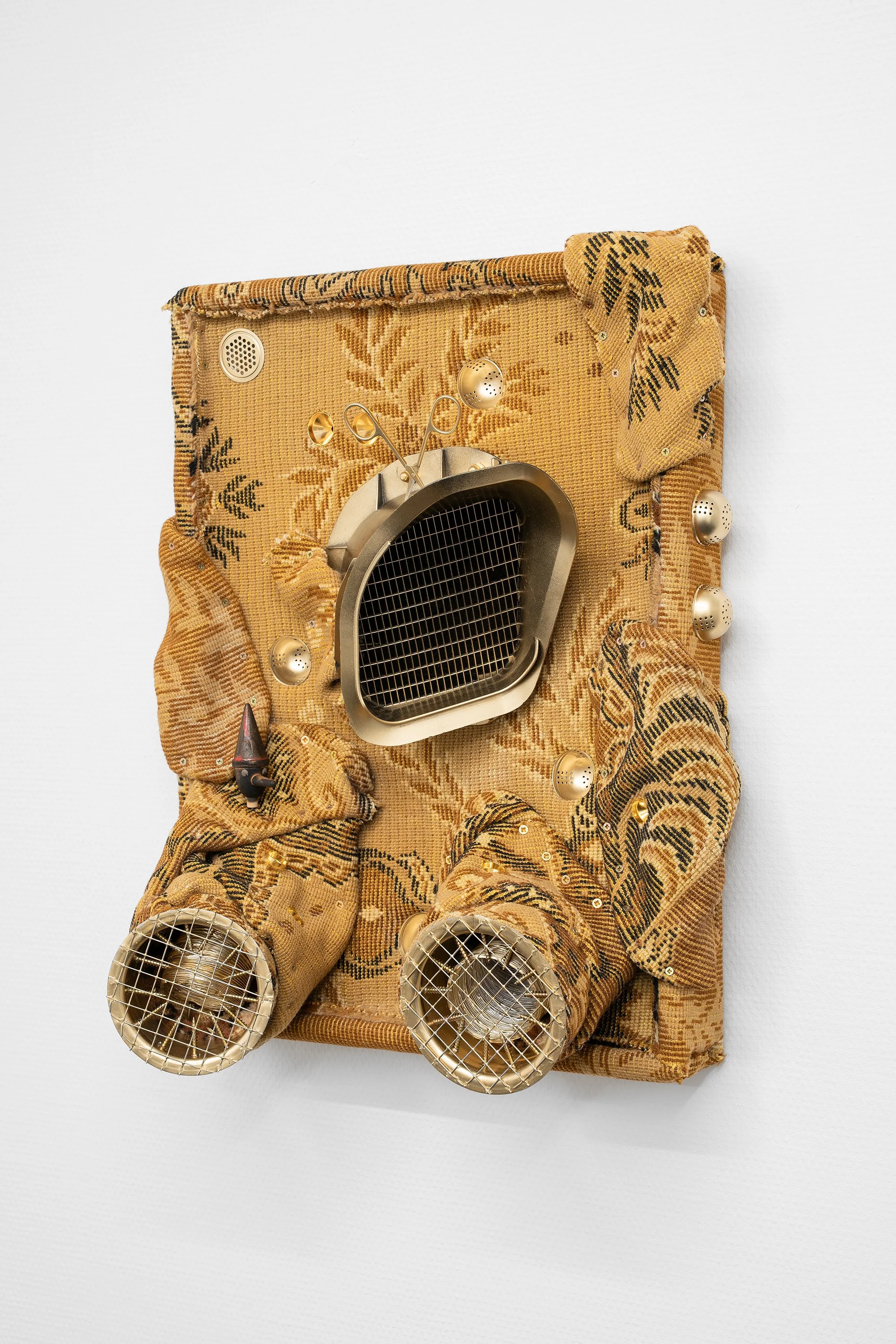
Shining finger scissors and silver tea balls animate Gargoyle (2025), amplifying the duality embedded in its title as the work oscillates between a bejewelled, protective figure and the grotesque, watchful statuary of Gothic architecture. Infusers and car vents recur throughout the exhibition as symbols of air’s invisible but vital presence. In works such as Untitled (2025), they seem to open an imagined view into the sculptures’ hidden interiors. Inside–outside, past–present: dualistic structures anchor Poniatowski’s practice. His recent works foreground the ambivalent nature of air itself; vital yet, when polluted, toxic. First Aid Kit (2025) gestures toward care and healing, offering the illusion of comfort through its plush, palliative surface.
Poniatowski’s Soviet-era carpets—steadily disappearing artefacts of the former Eastern Bloc’s collective memory—suggest that the repressed past and the unstable present lie far closer than expected. This liminal state of uncertainty echoes the logic of the pharmakon, a substance that is both remedy and poison. Poniatowski’s works inhabit a terrain where benefit and harm remain inseparable from context. Cosy reminds us that the oneiric and the unsettling reside in the smallest shifts: what feels familiar, comforting, even secure may always be on the verge of tipping into trepidation.
more: