deep house, meet factory,
Prague, czech republic, 2026
Deep House (solo exhibition)
Venue Meet Factory, Prague, Czech Republic
Date May 6 - October 4
Curated by Ján Gajdušek
Production Nikol Hoangová
Photography Jan Kolský
Press Release
Cezary Poniatowski
Deep House
curated by Ján Gajdušek
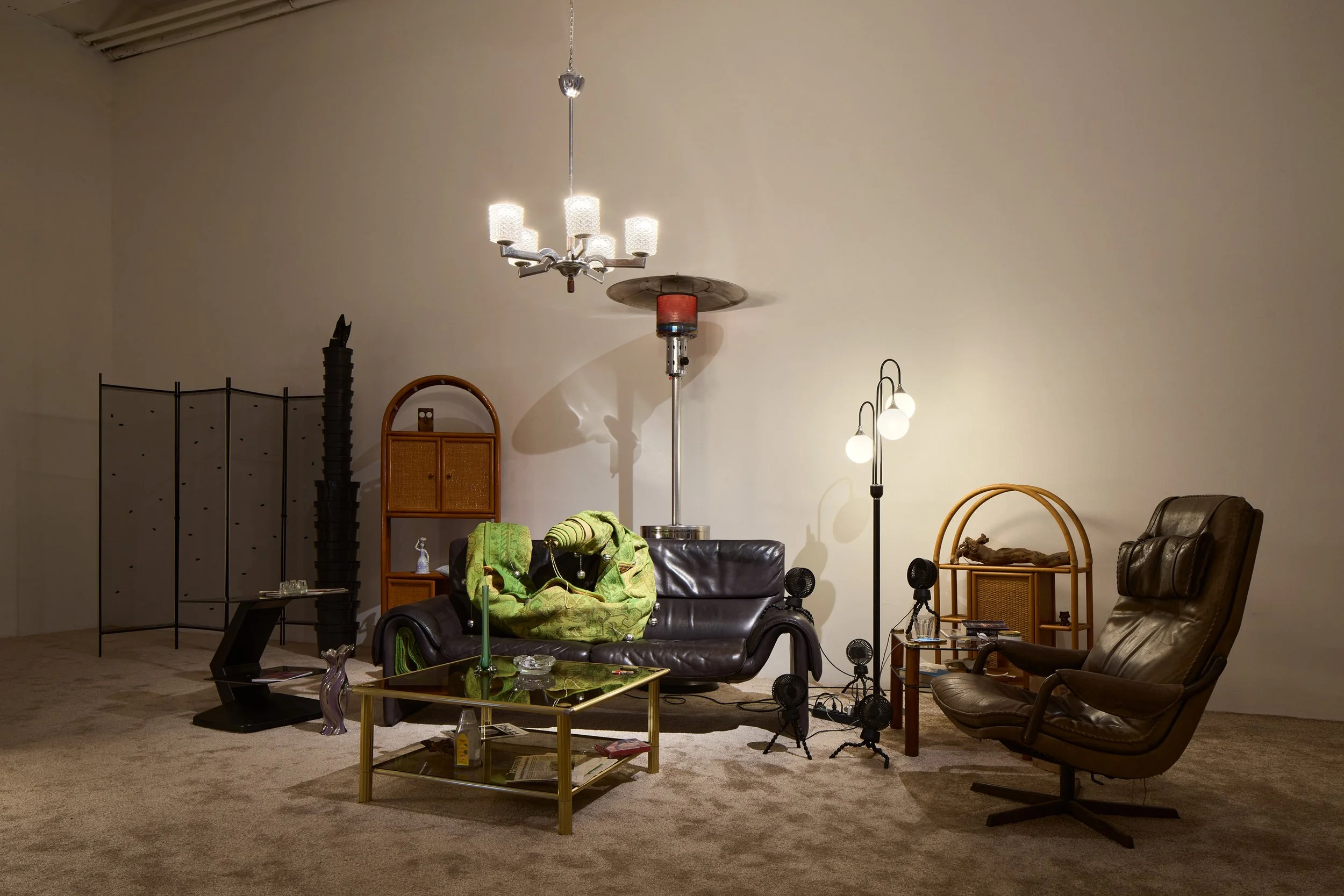
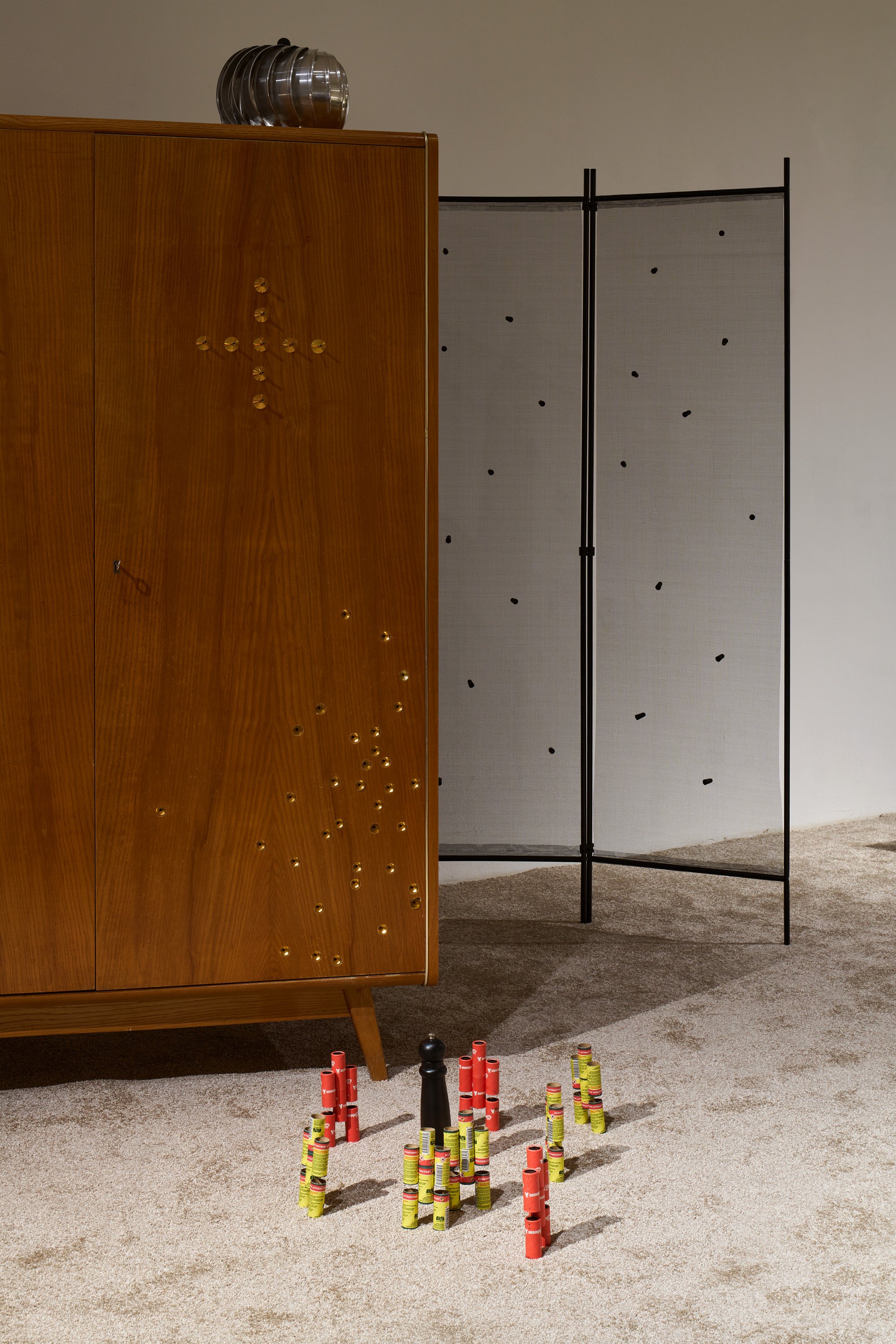
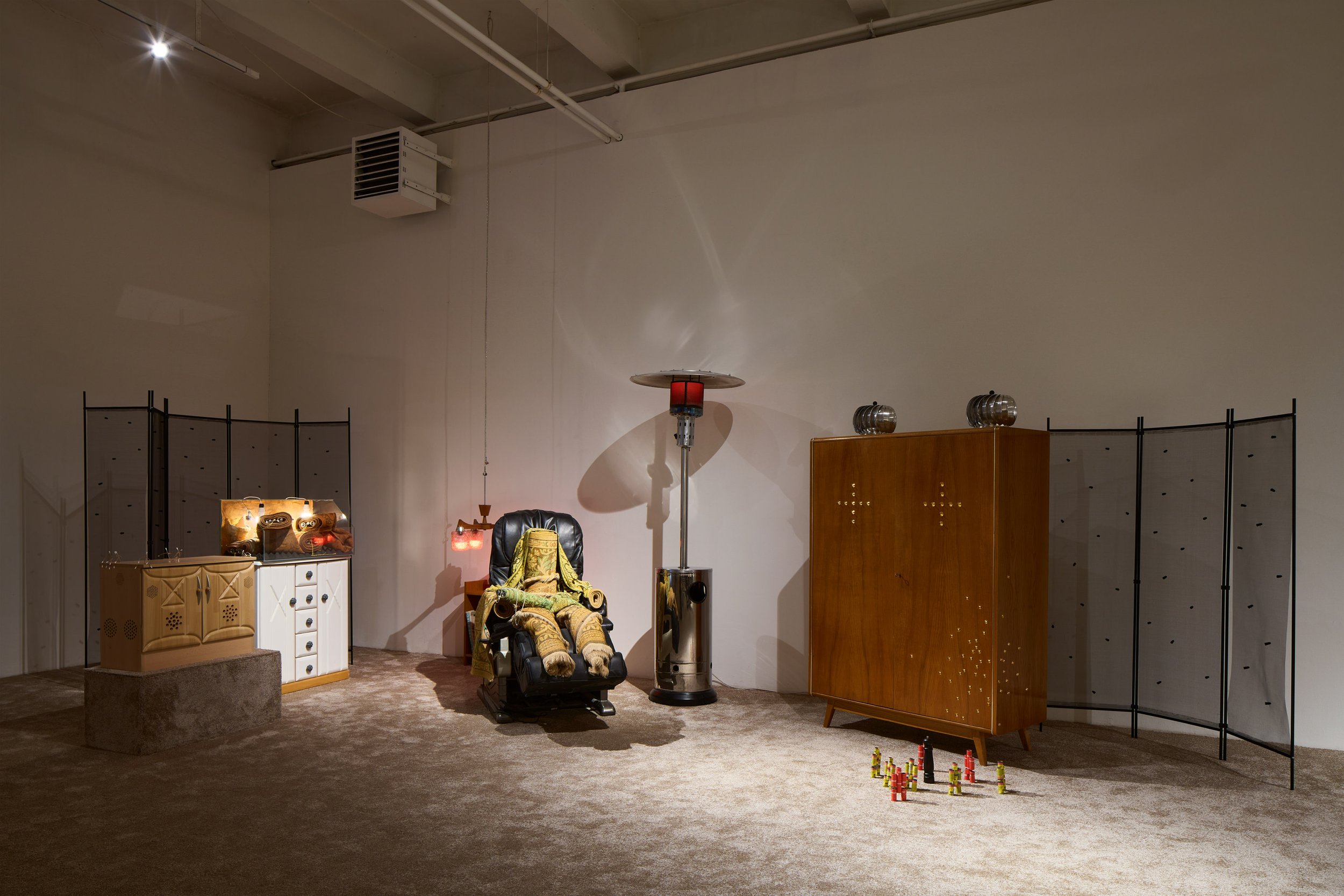
This solo exhibition by Polish artist Cezary Poniatowski is a sweeping spatial staging of a home in the moment after the end of humankind. The hand stops at just past midnight on the Doomsday Clock, marking a post-apocalyptic shift in scale. The human inhabitants have left the scene, yet the house remains inhabited. What unfolds within can be likened to a metabolism that has always been present but has merely become more visible since the moment its former host left.
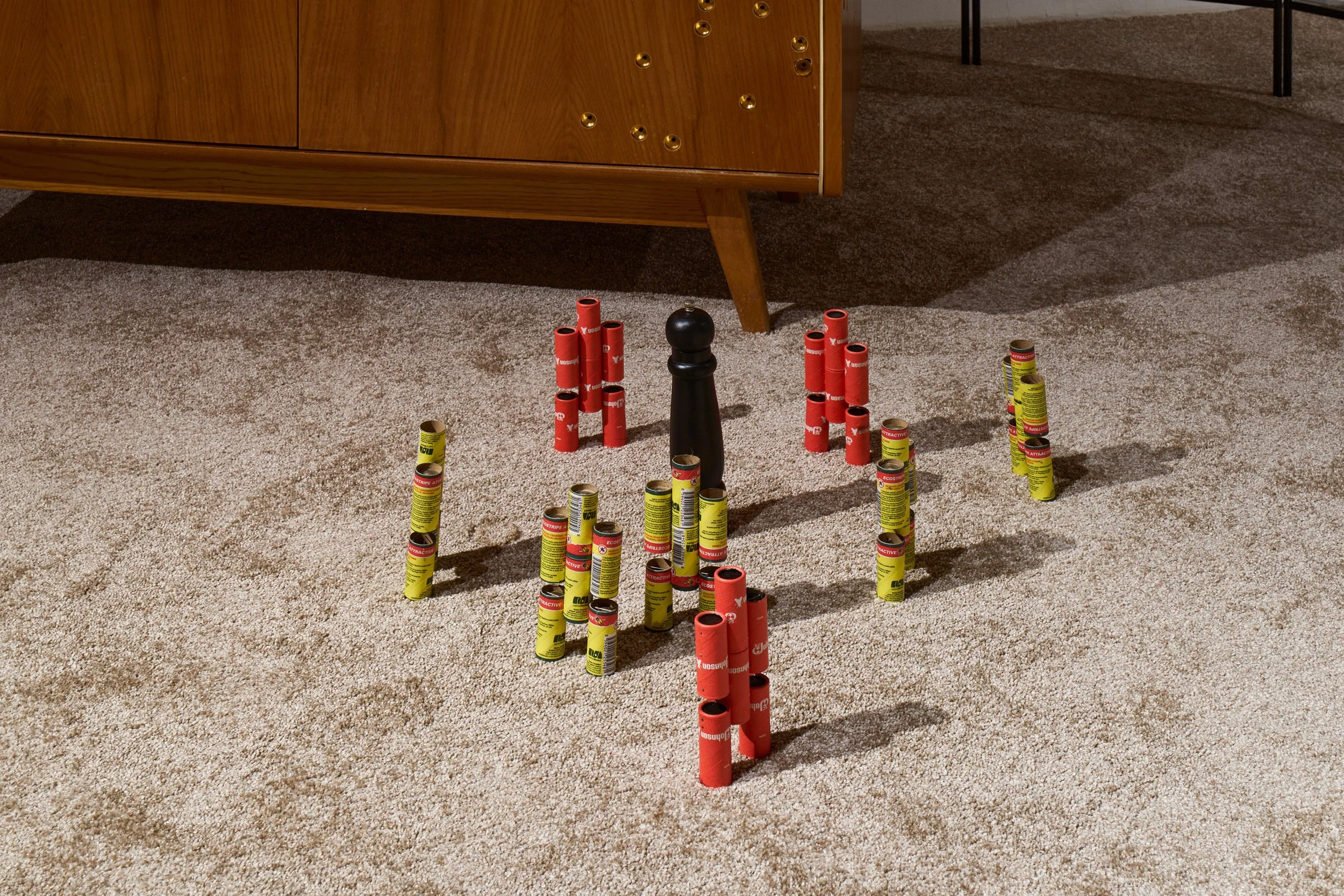
The title of the exhibition refers to the word depth rather than to the subgenre of electronic music. The house, or the domestic interior, can thus be understood as a series of imagined layers descending into the deep, where other forms of life move and brush against one another unseen. Beneath the carpet lives a mite, in the crevice a silverfish, in the wall some mould, in the wood a larva. The home is an ecosystem held together by the tacit agreement that its other inhabitants remain invisible. Poniatowski reverses this agreement to show how long these invisible occupants have exceeded us both in number and in patience.
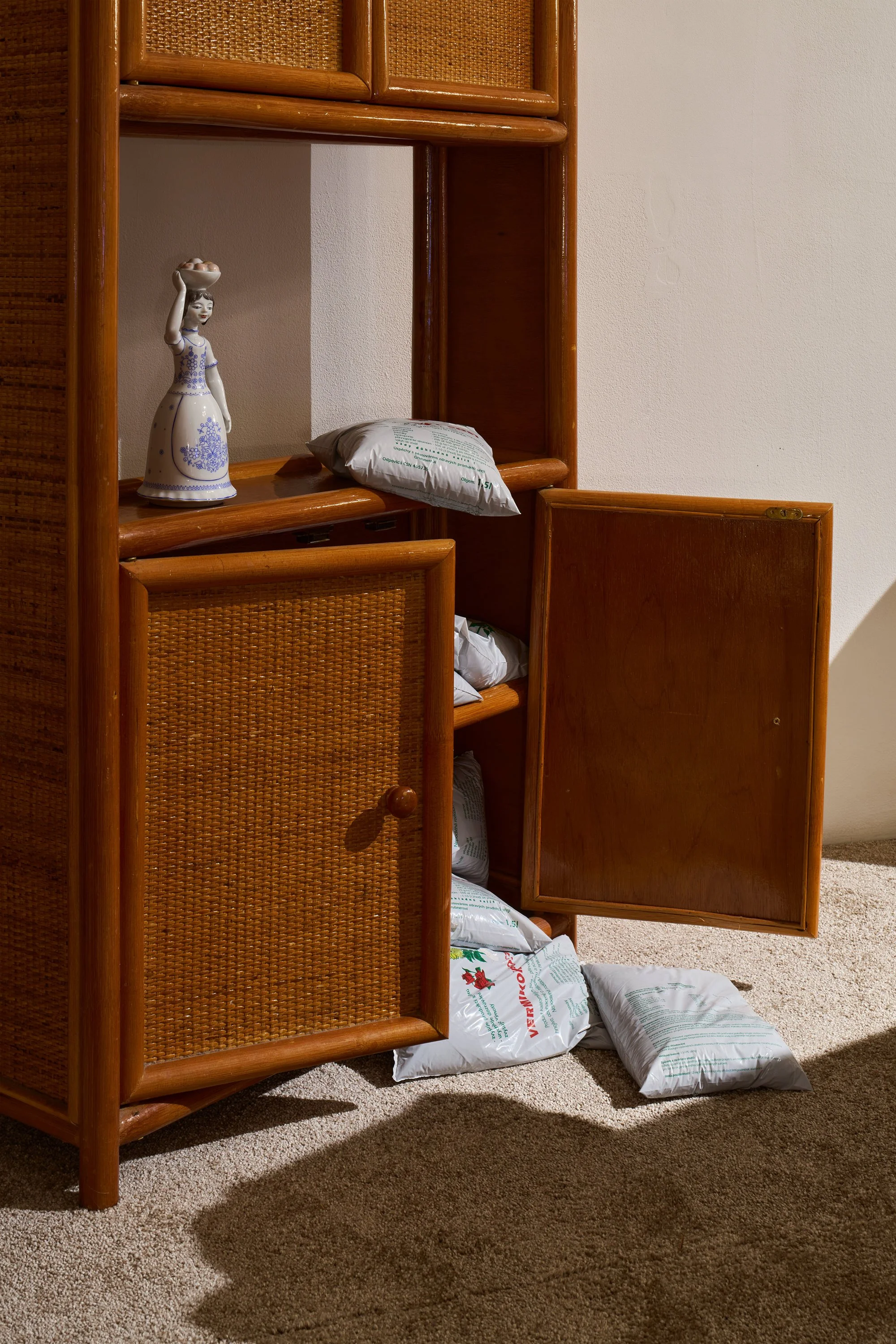
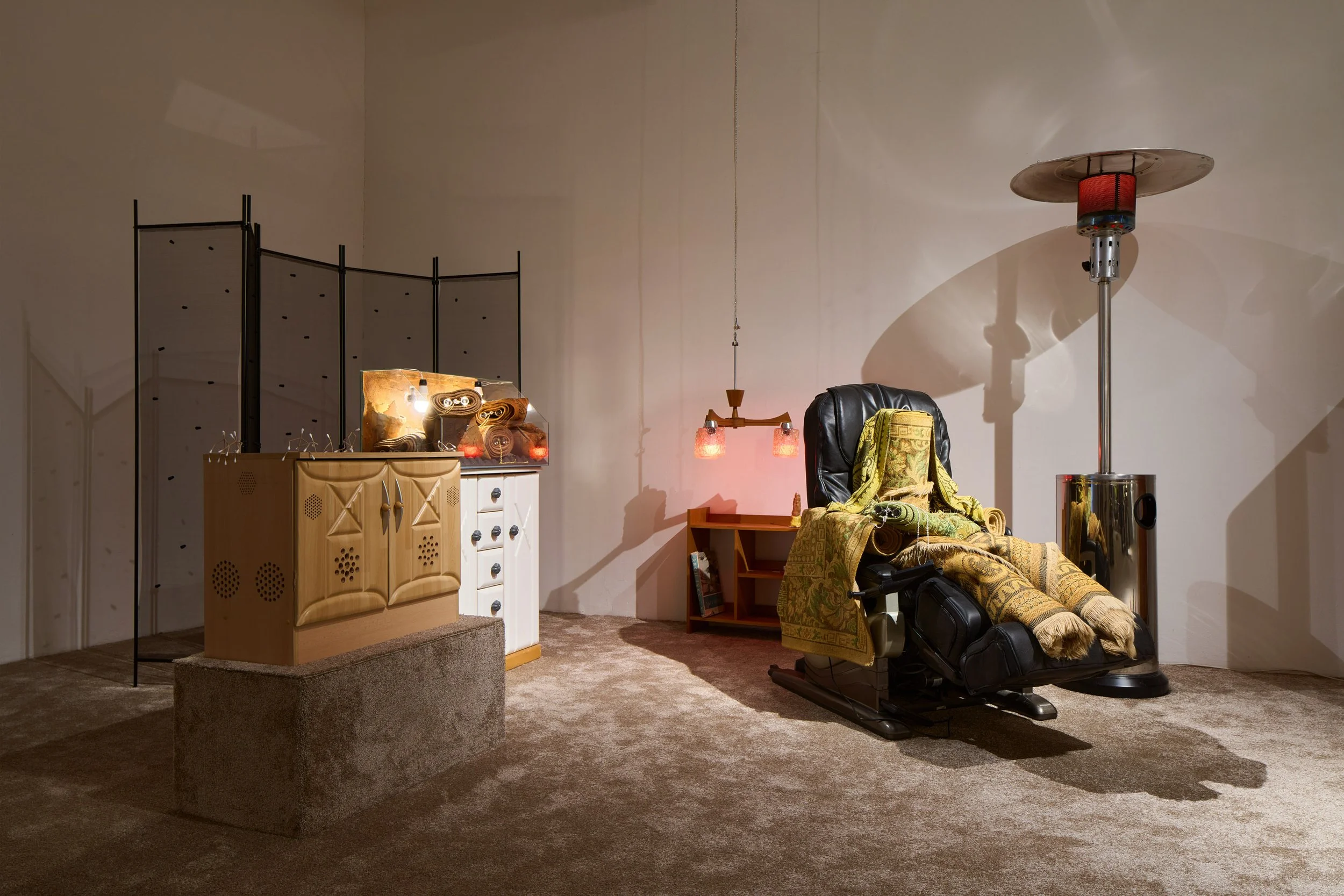
Italian philosopher Emanuele Coccia conceives of the home as a space in which the boundary between subject and object dissolves, in which things cease to be mere props and become co-subjects of our lives. To inhabit something, Coccia argues, necessarily means to be inhabited; every house is therefore a network of mutually nested lives. Poniatowski gives this idea material form through what he calls “negatives of the human soul” – old patterned carpets from flats in socialist-era prefabricated apartment blocks, sticky faux leather, upholstery foam, ventilation grilles, and various components of discarded furniture, transformed into new constellations of meaning so that they reach us as imprints of whatever details of them emerge in our memory.
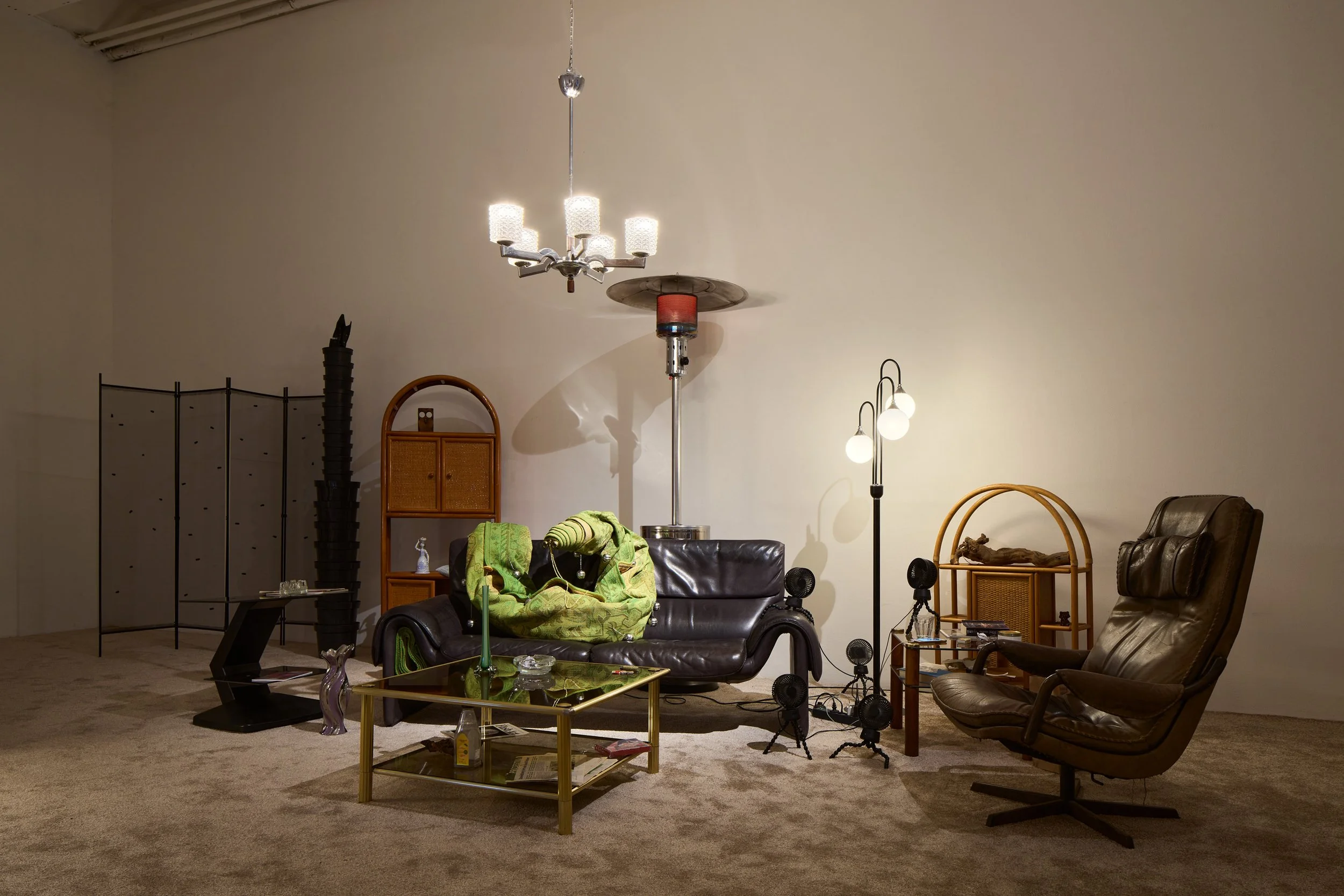
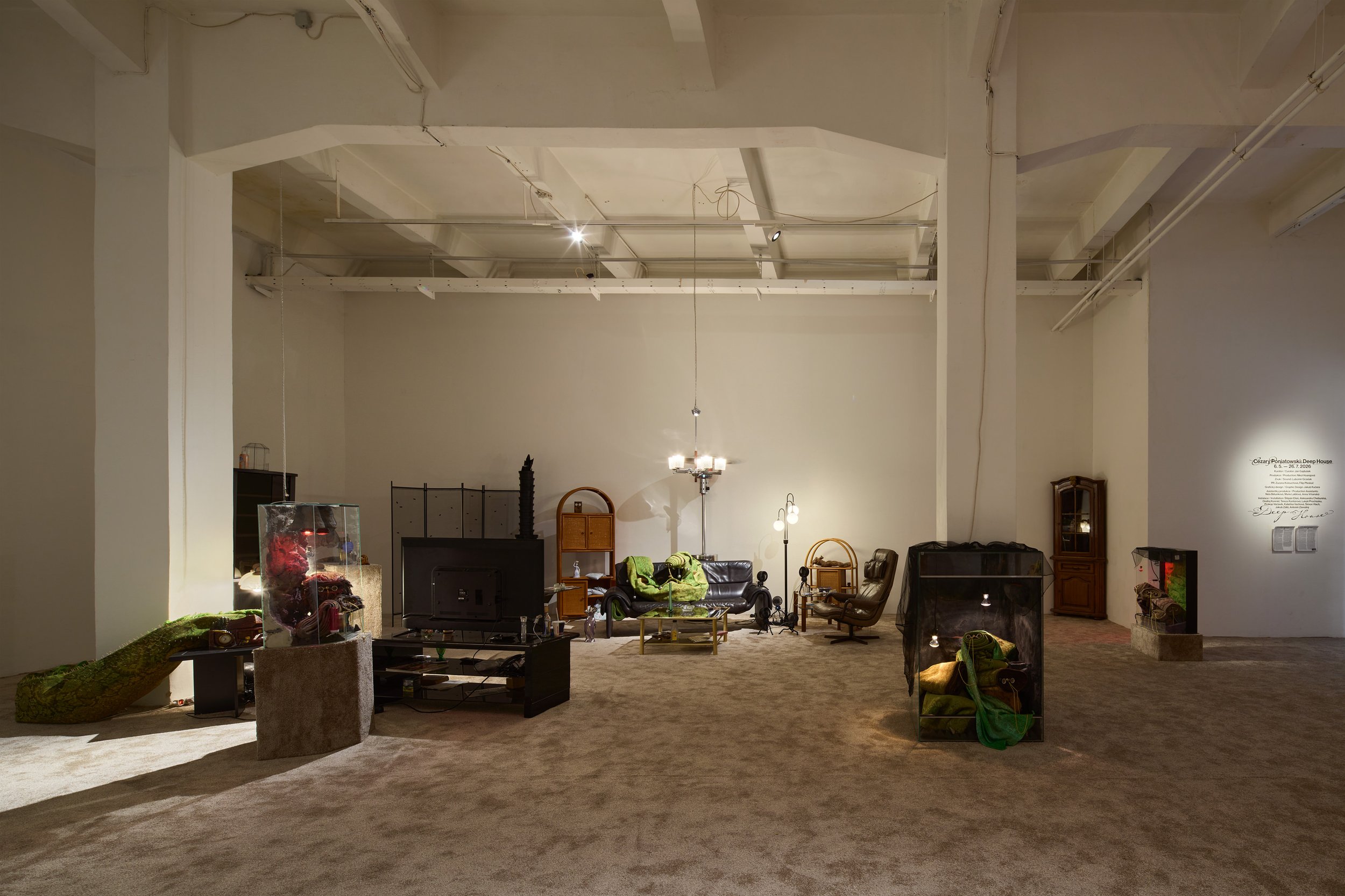
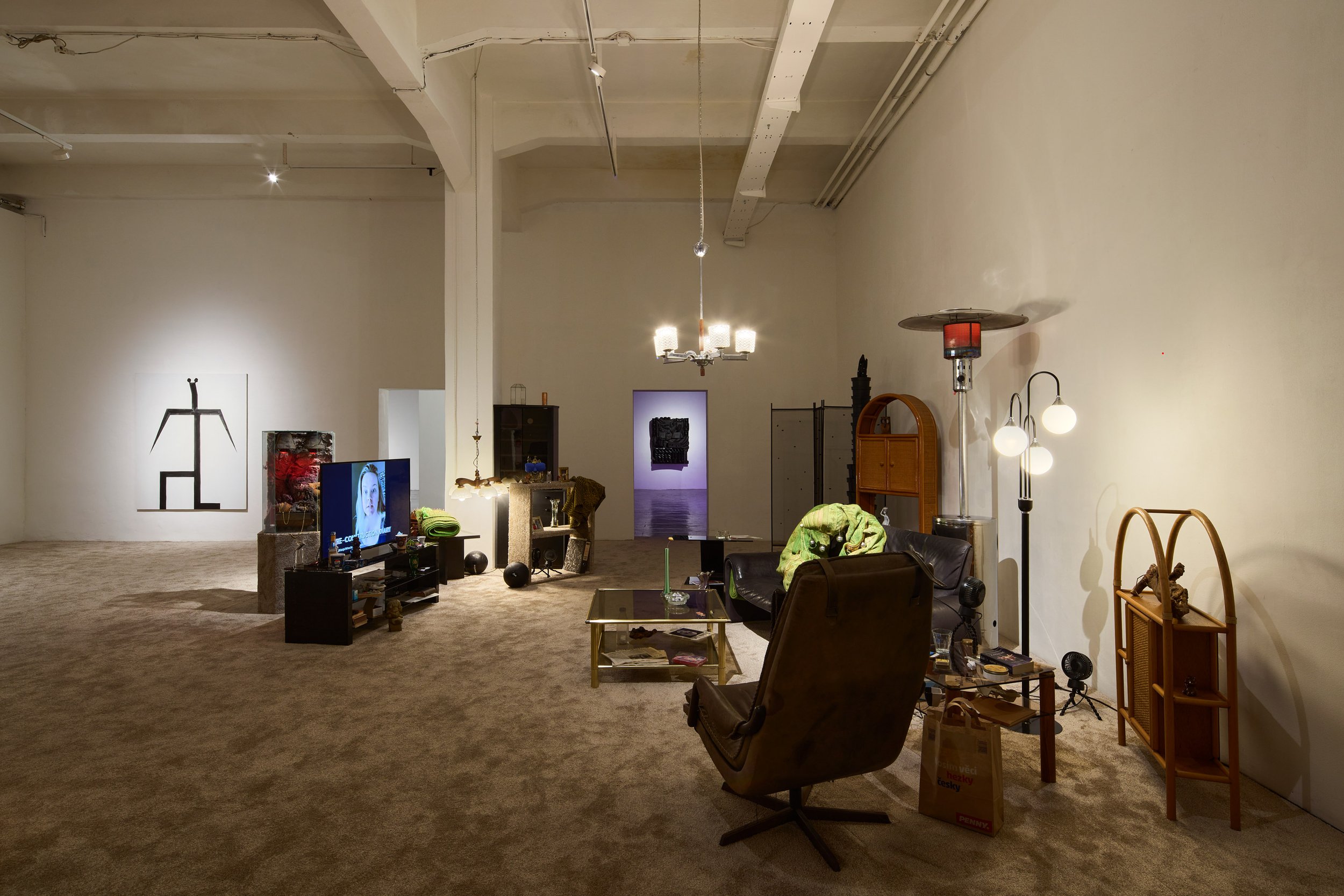
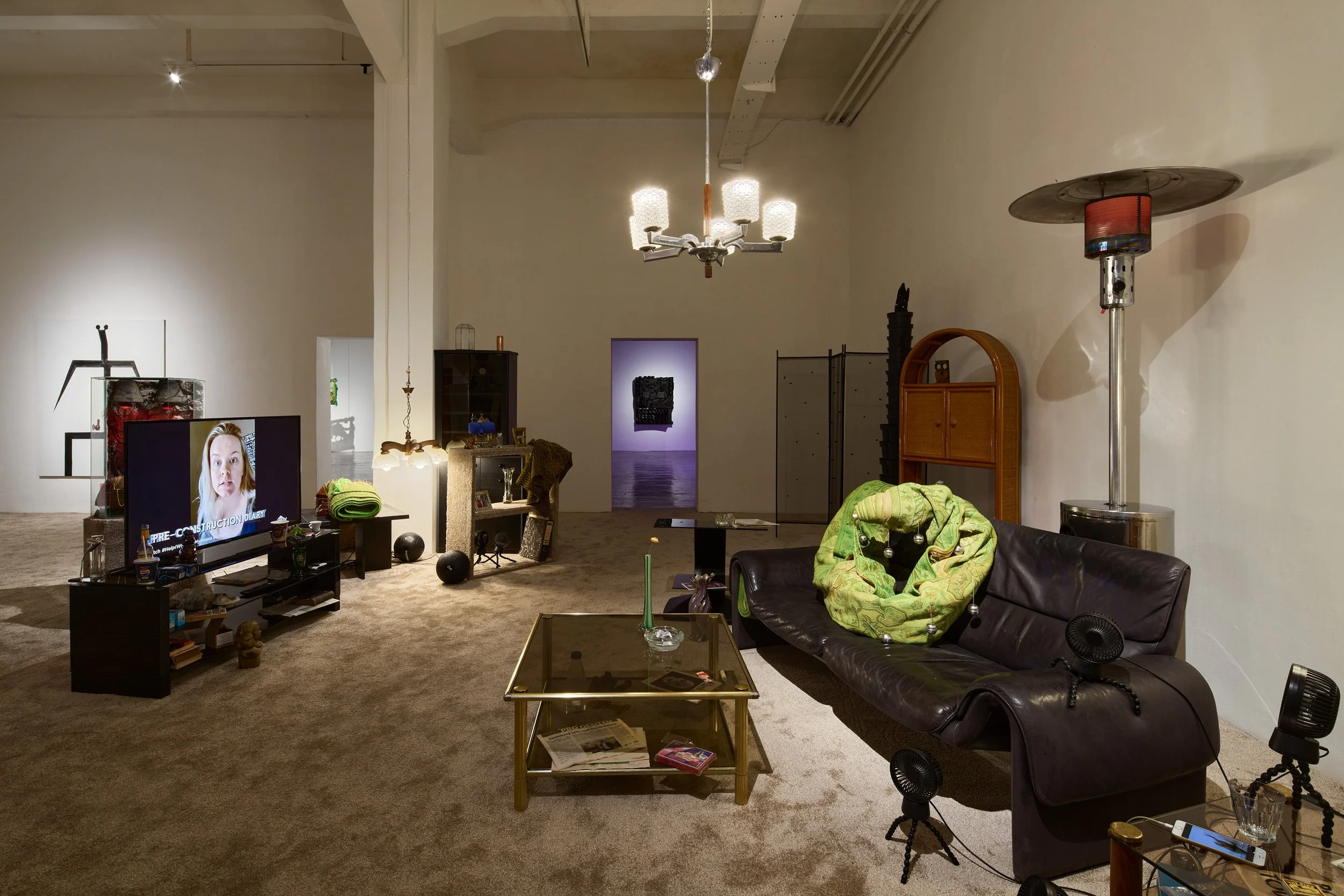
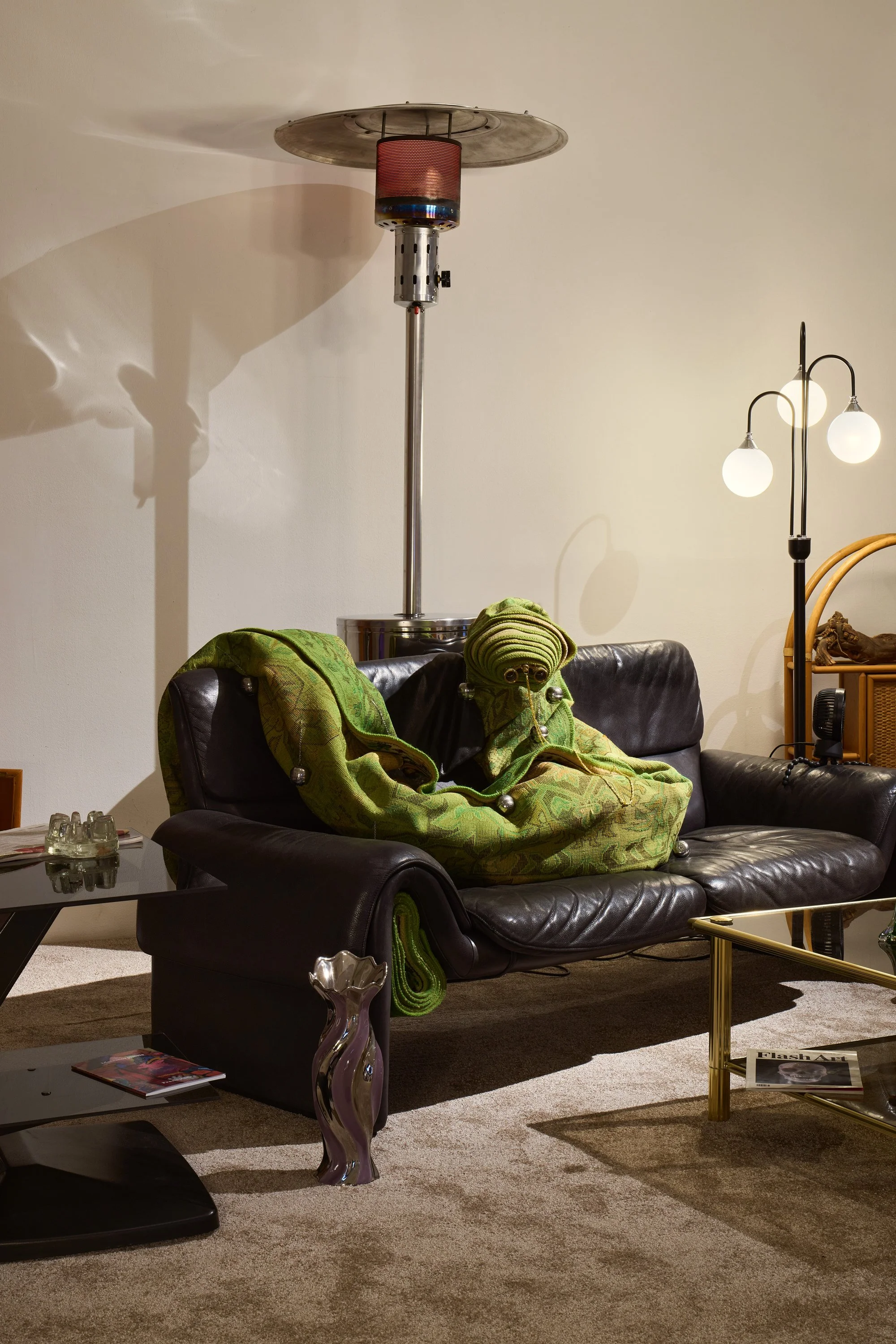
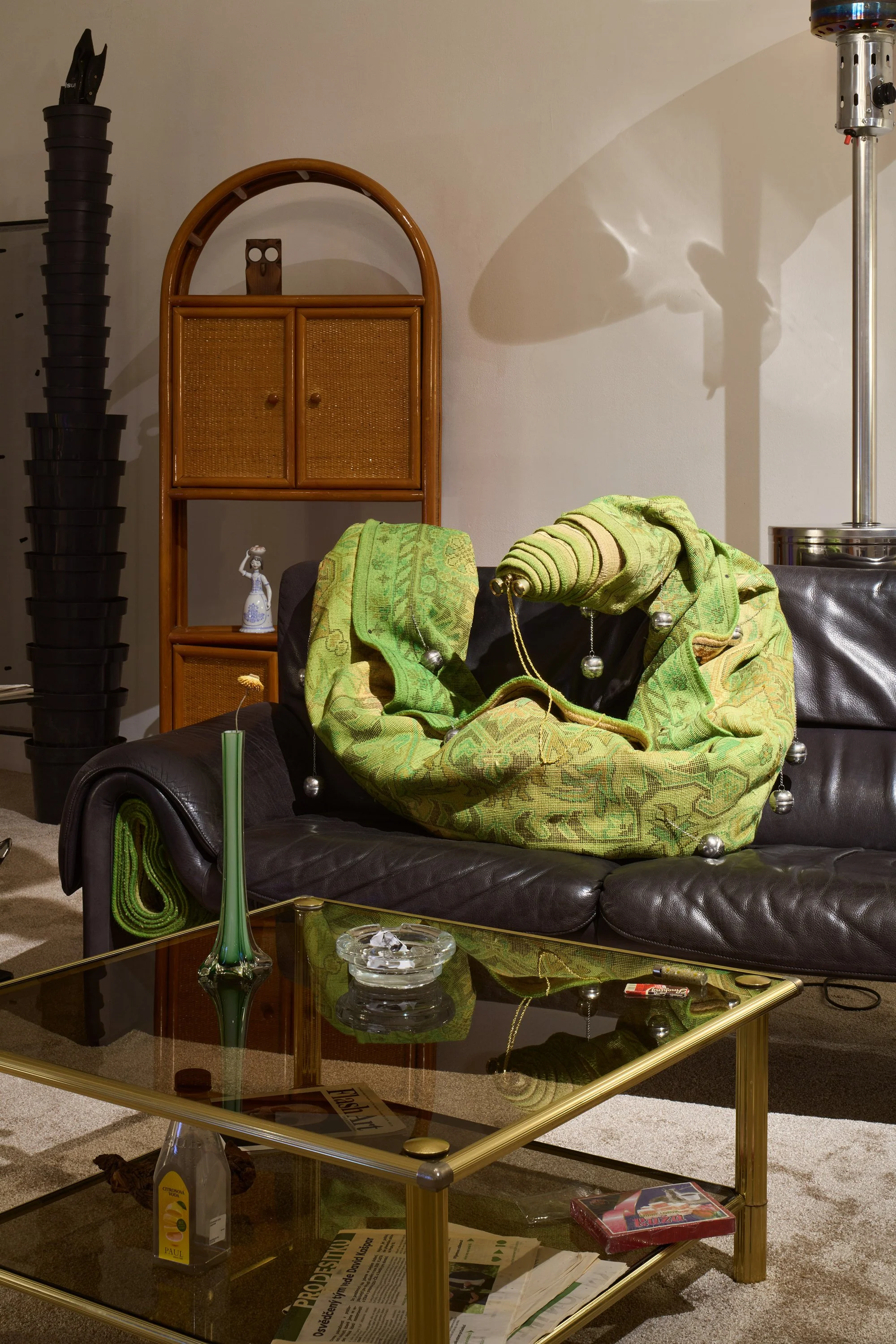
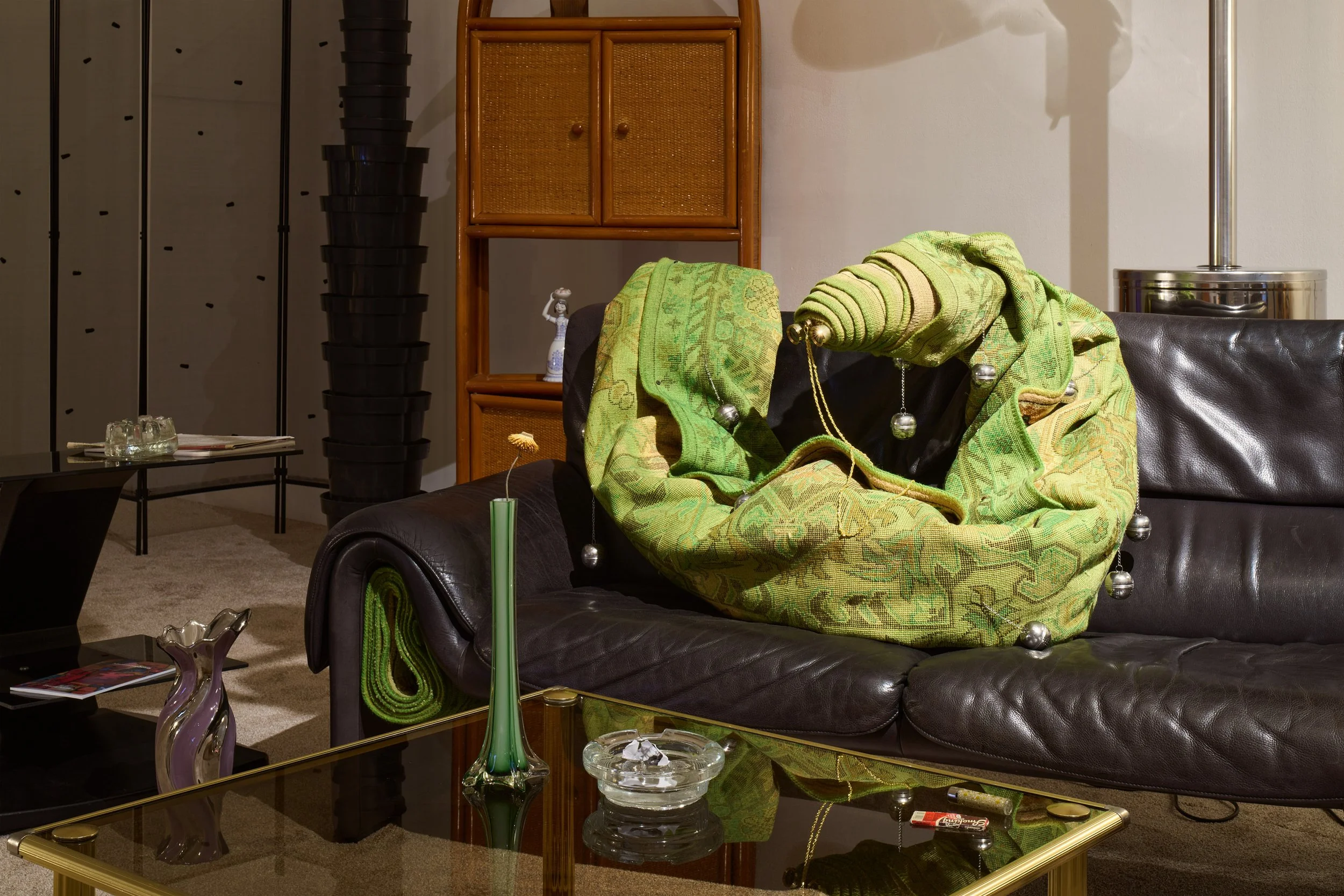
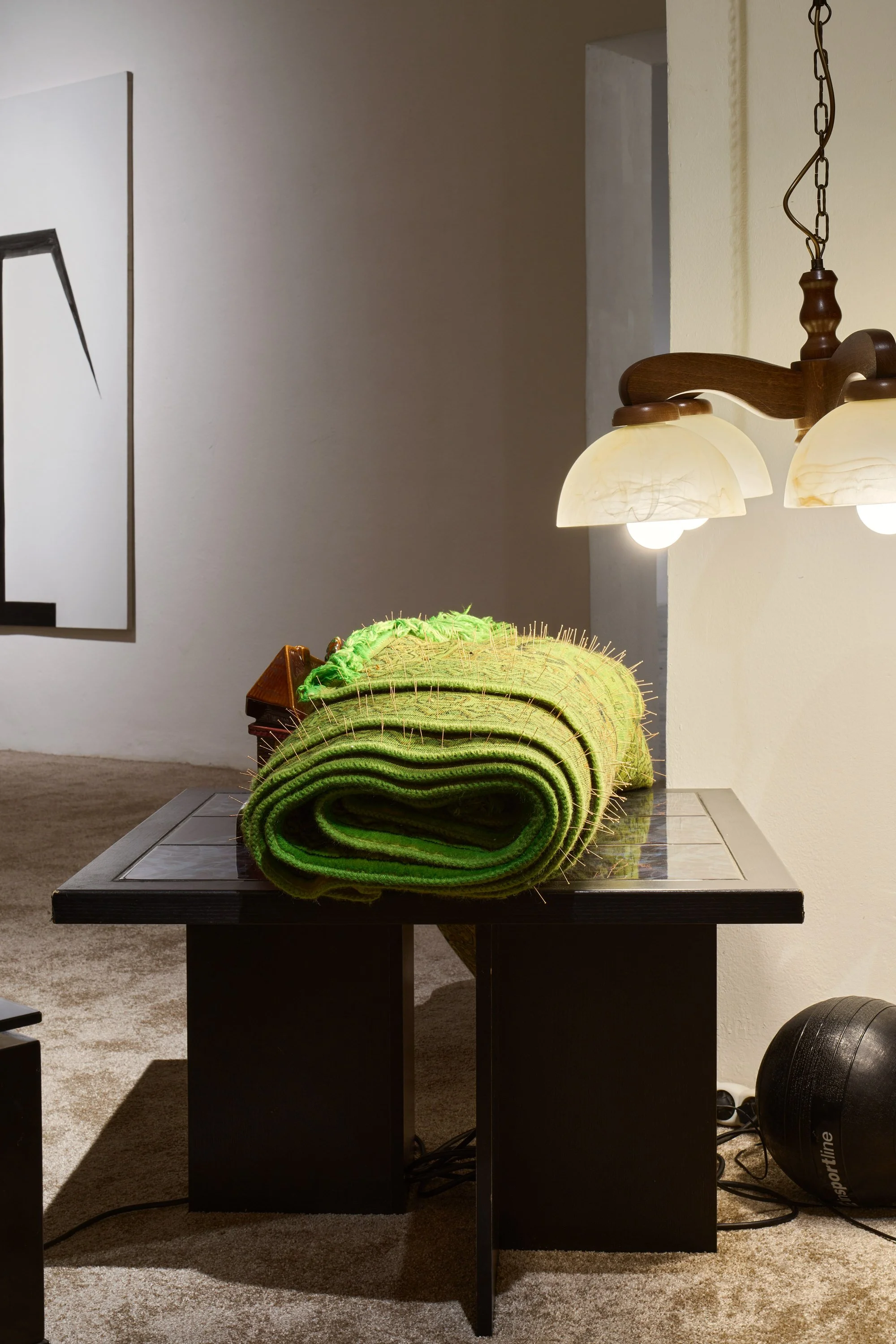
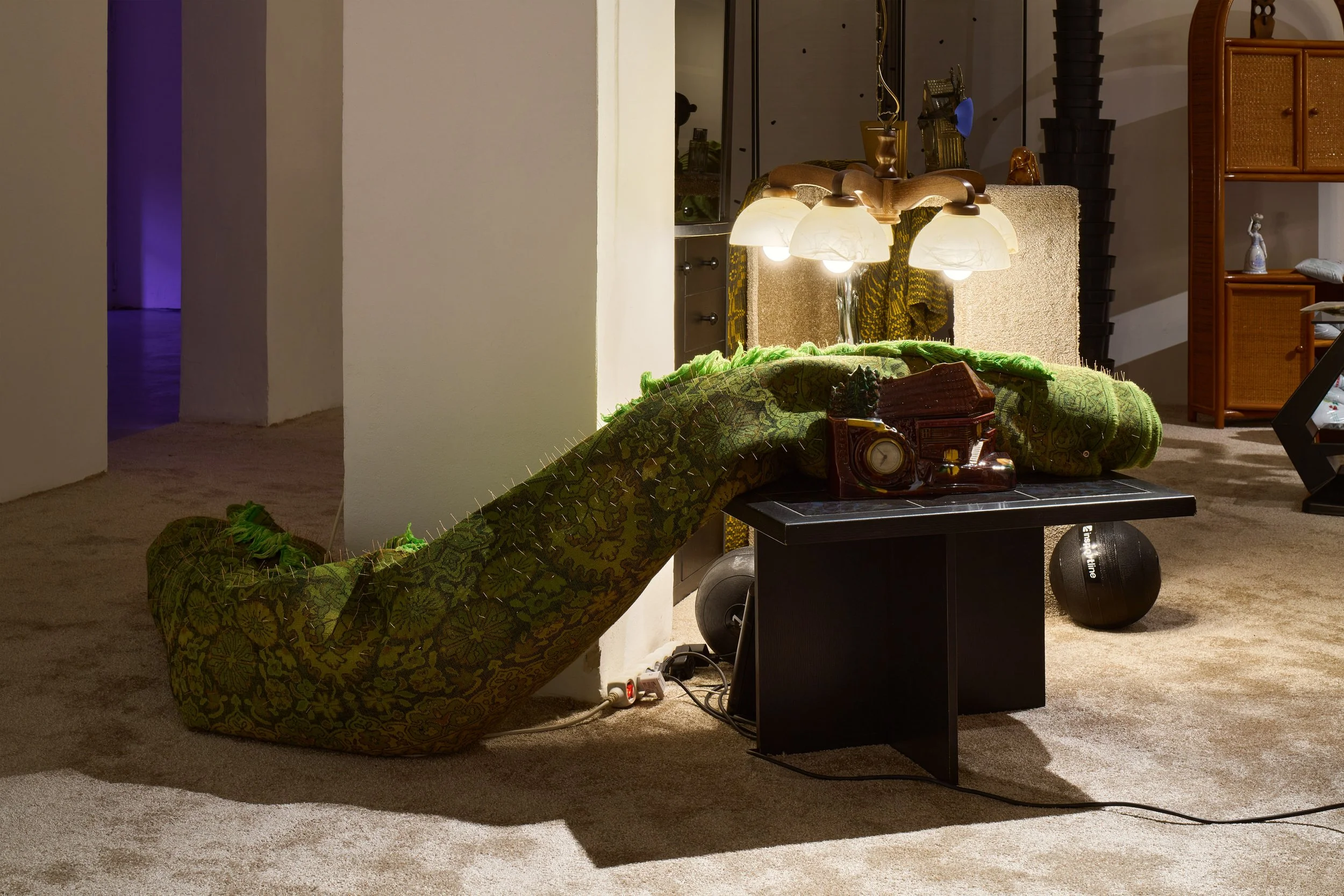
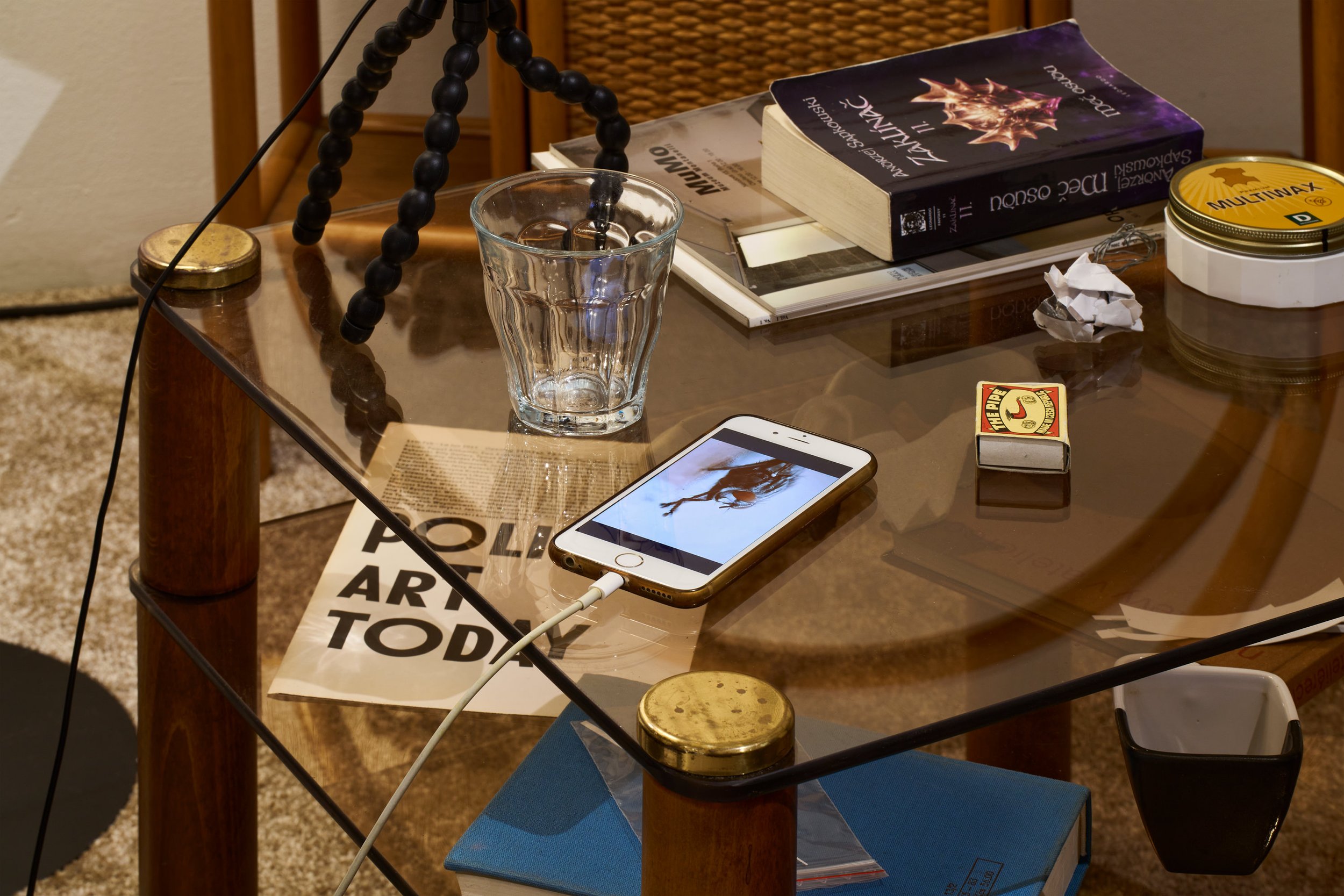
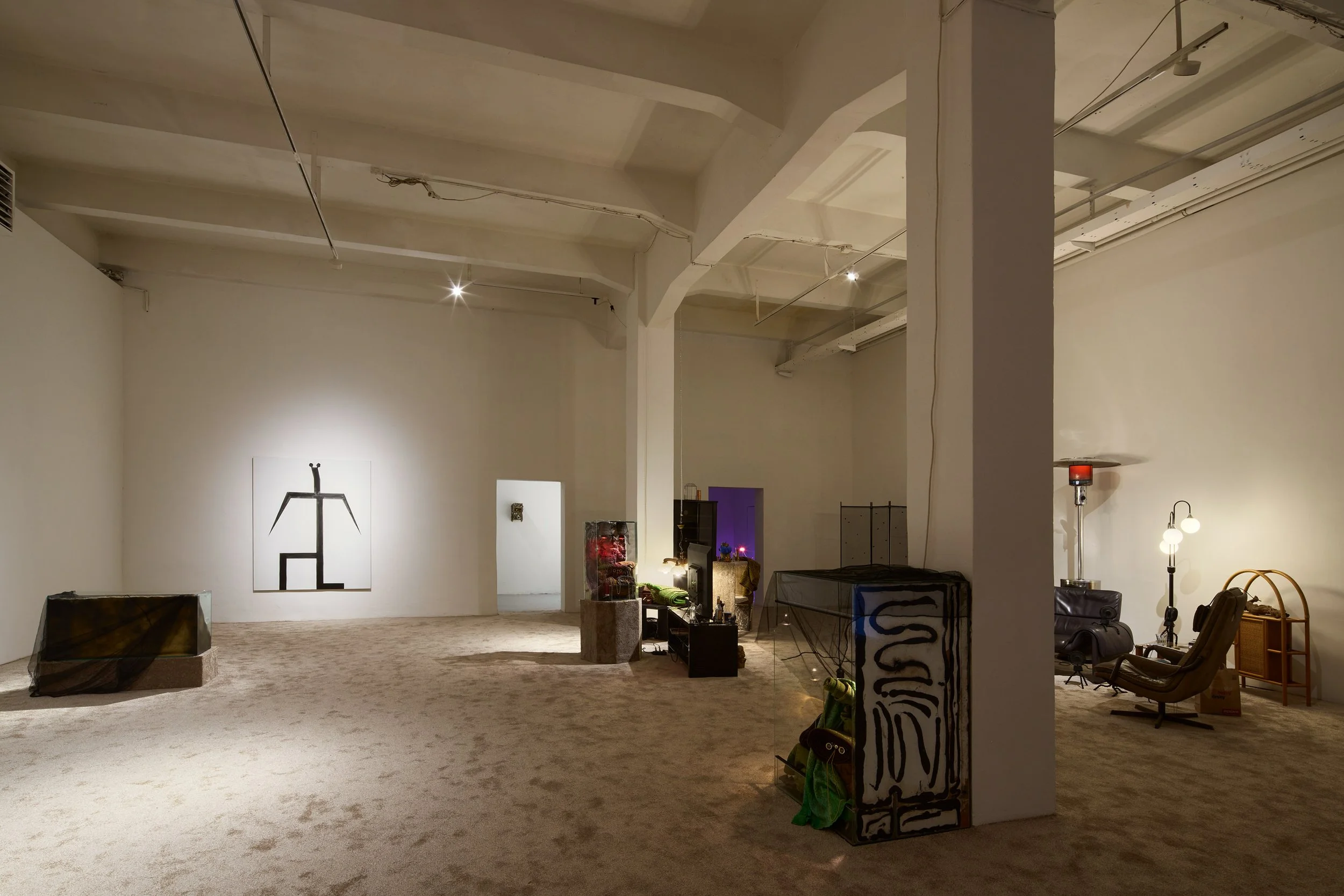
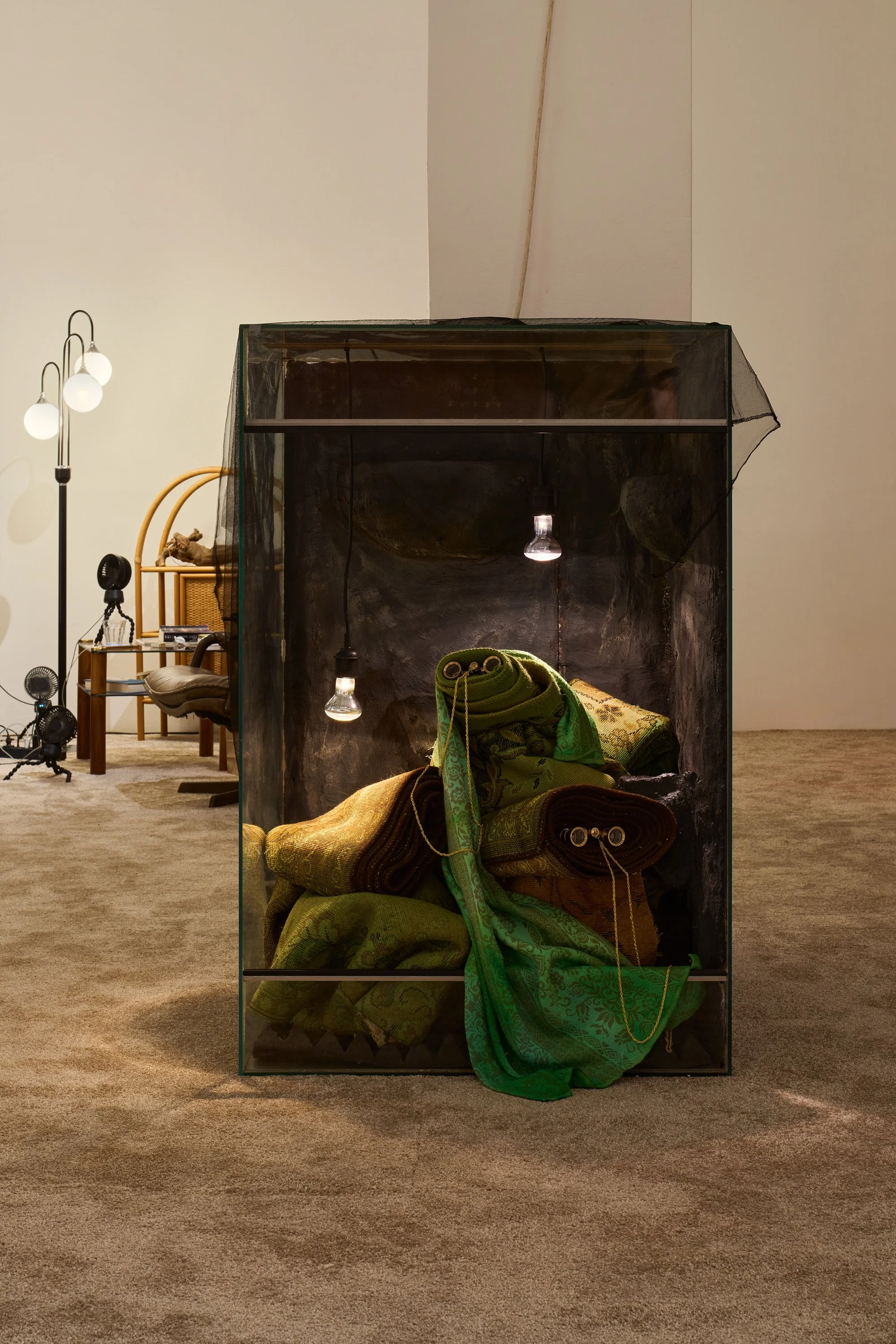
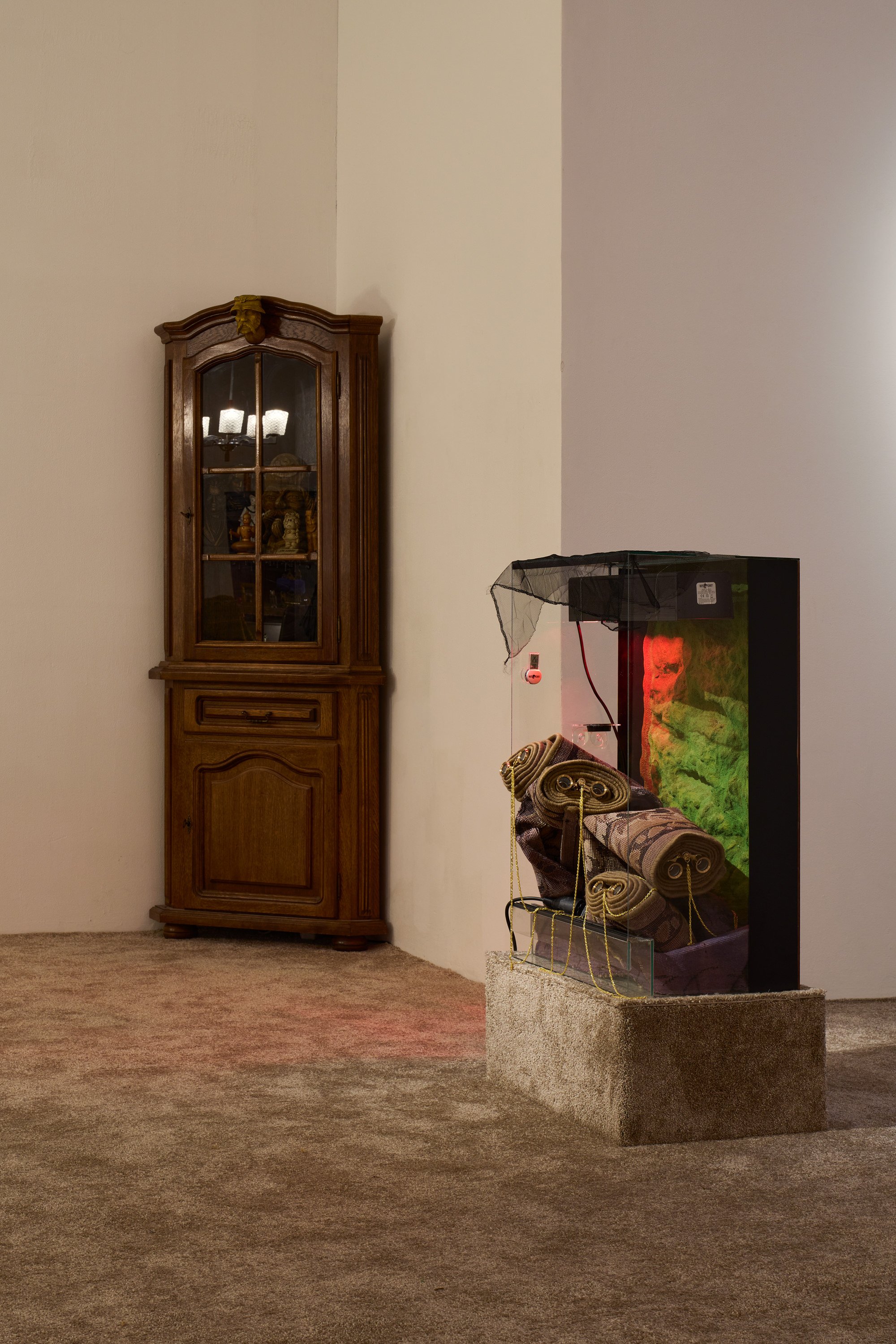
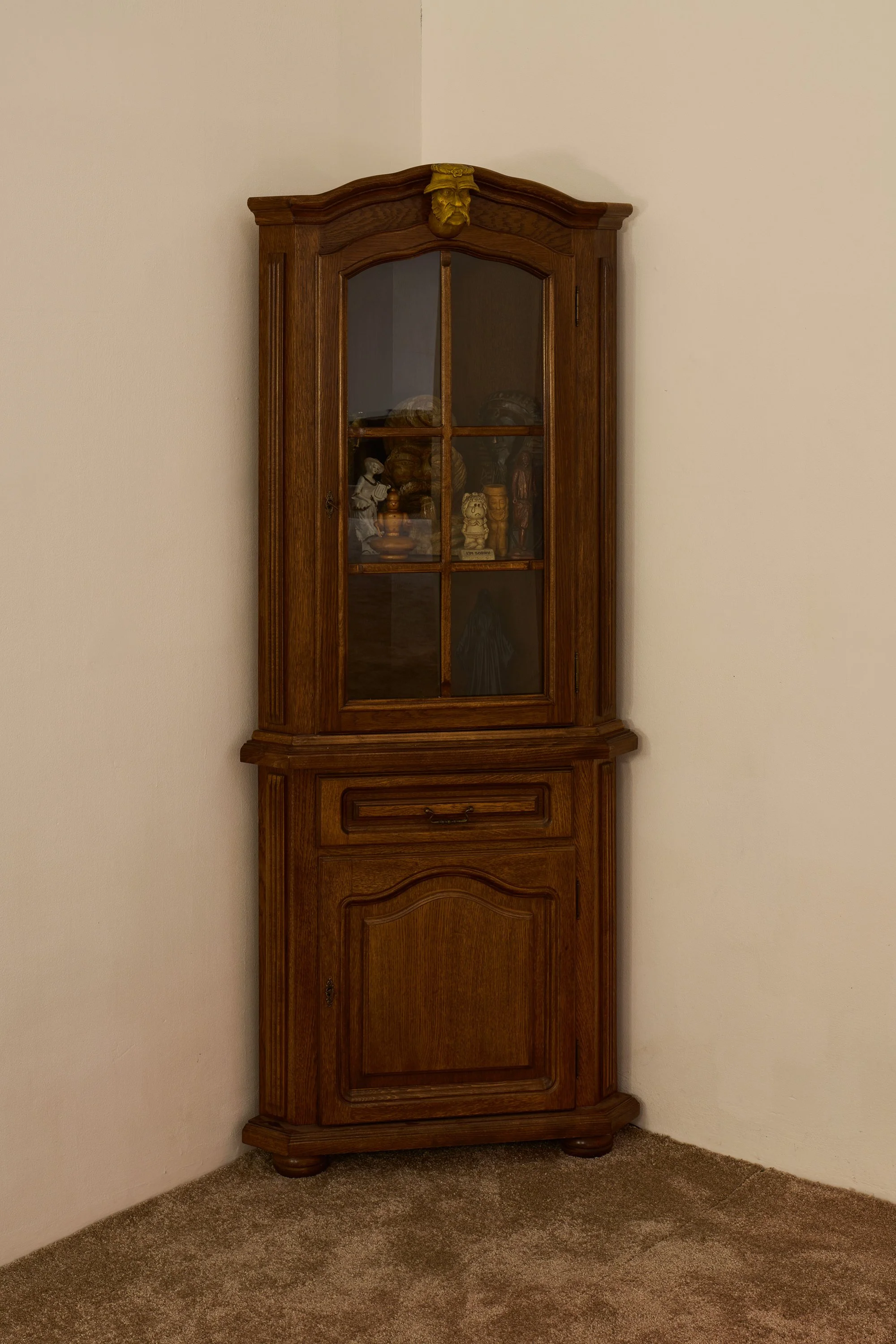
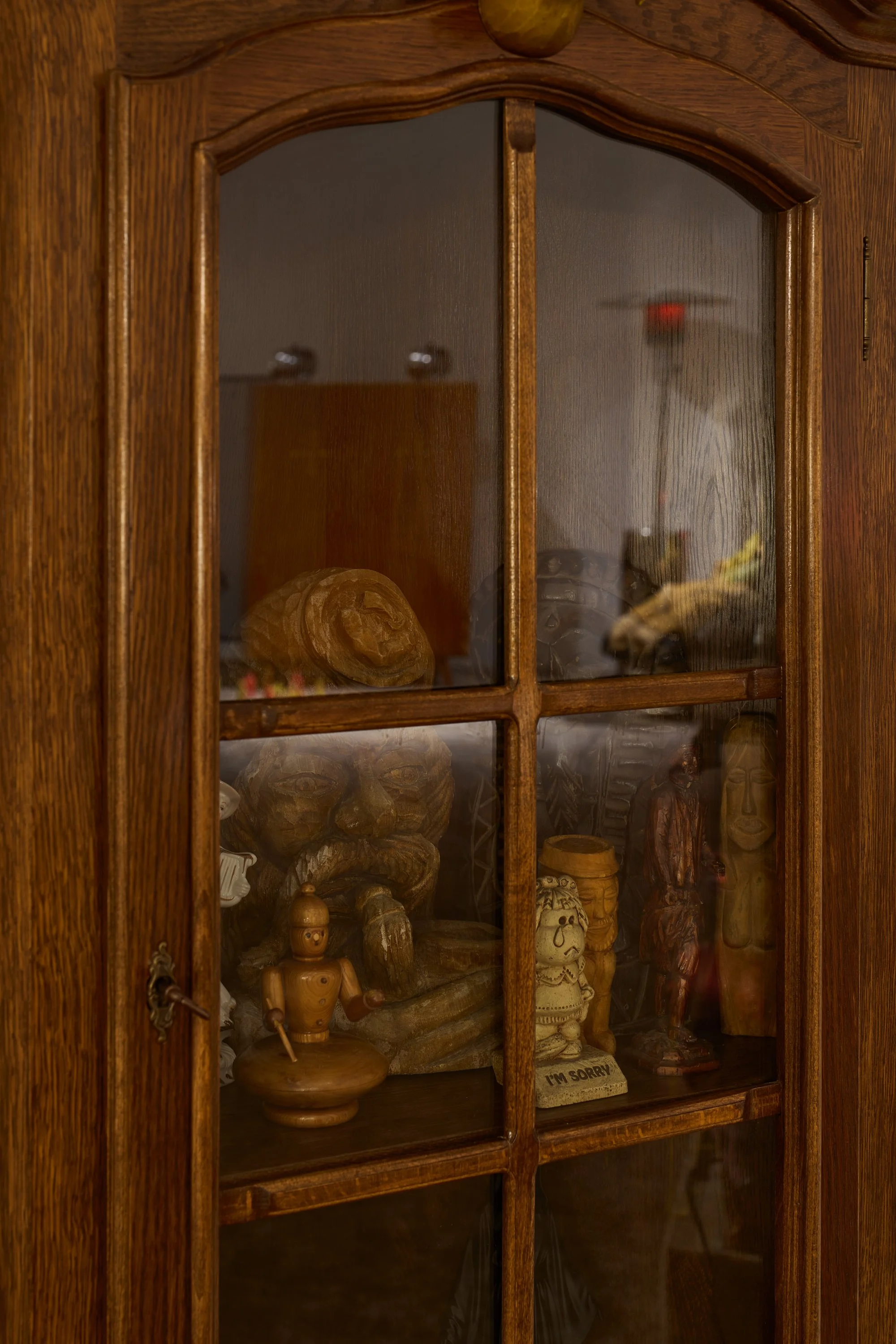
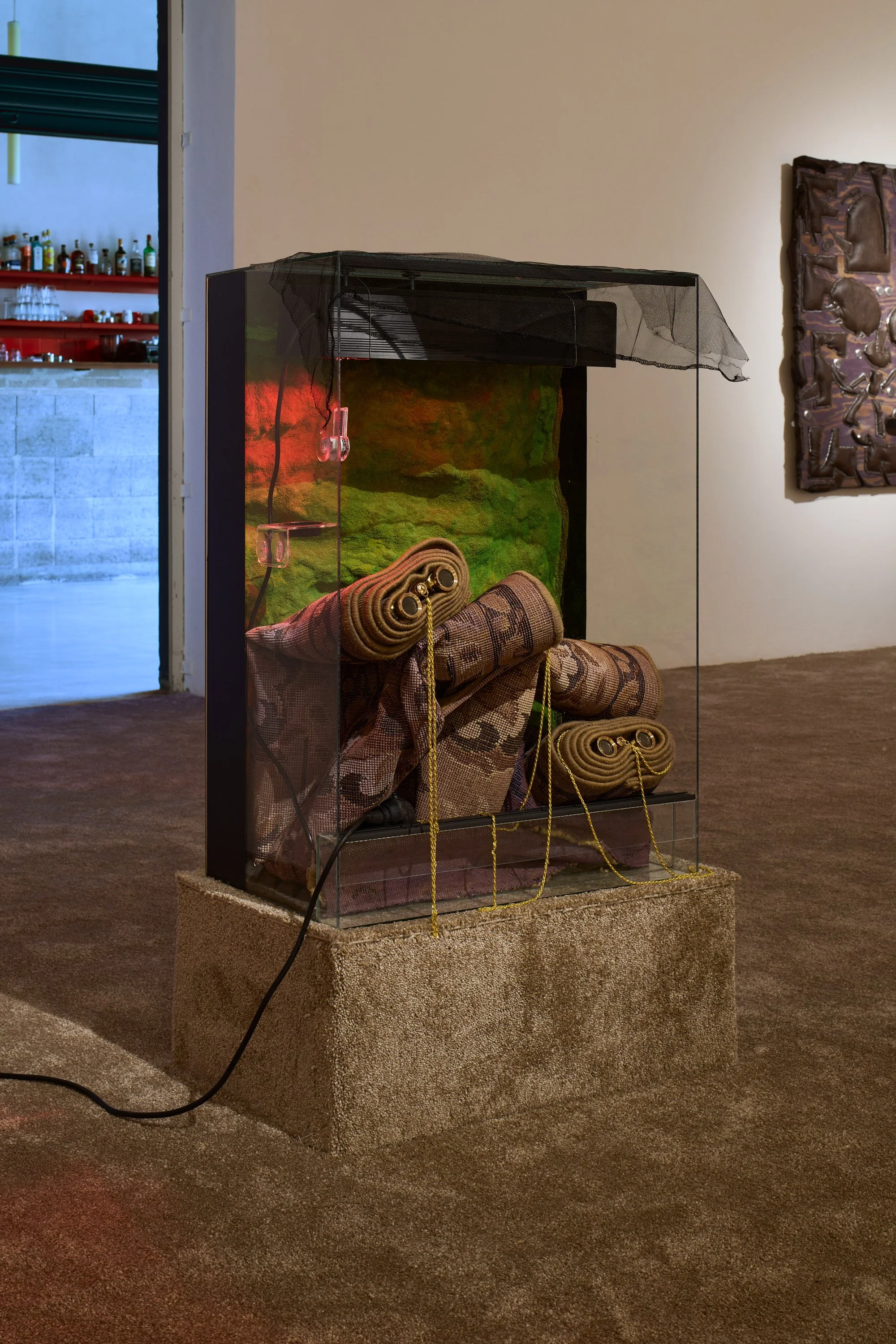
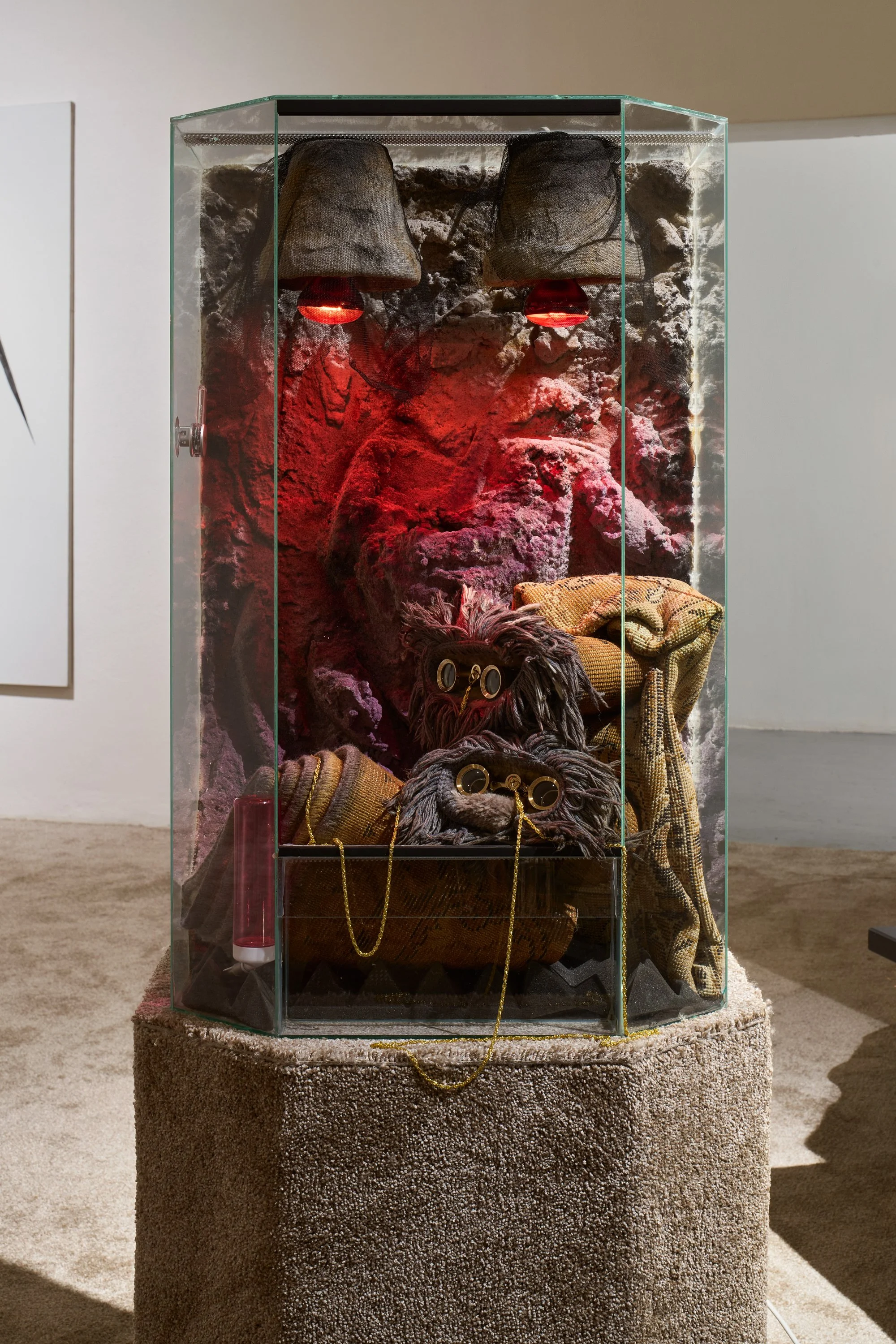
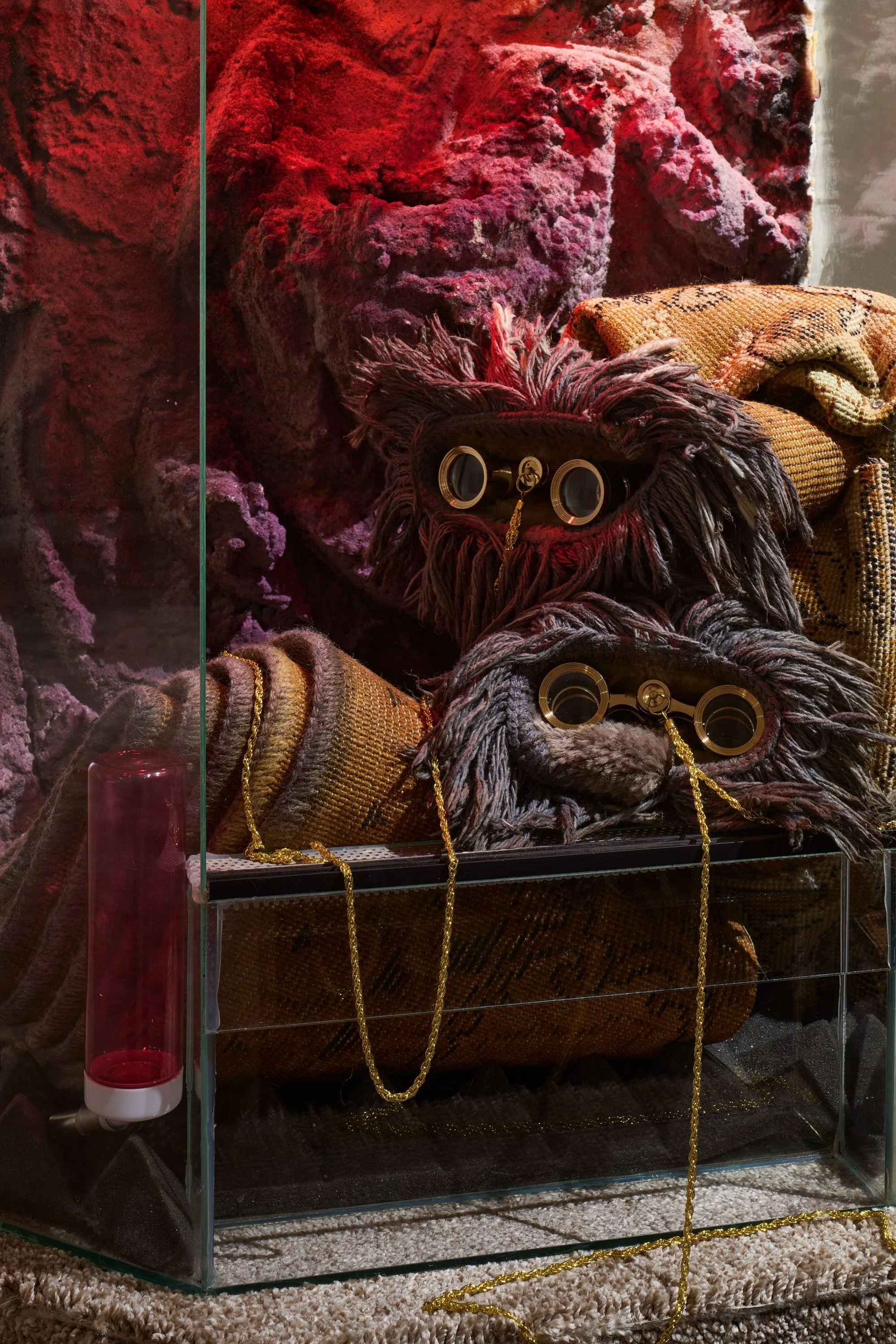
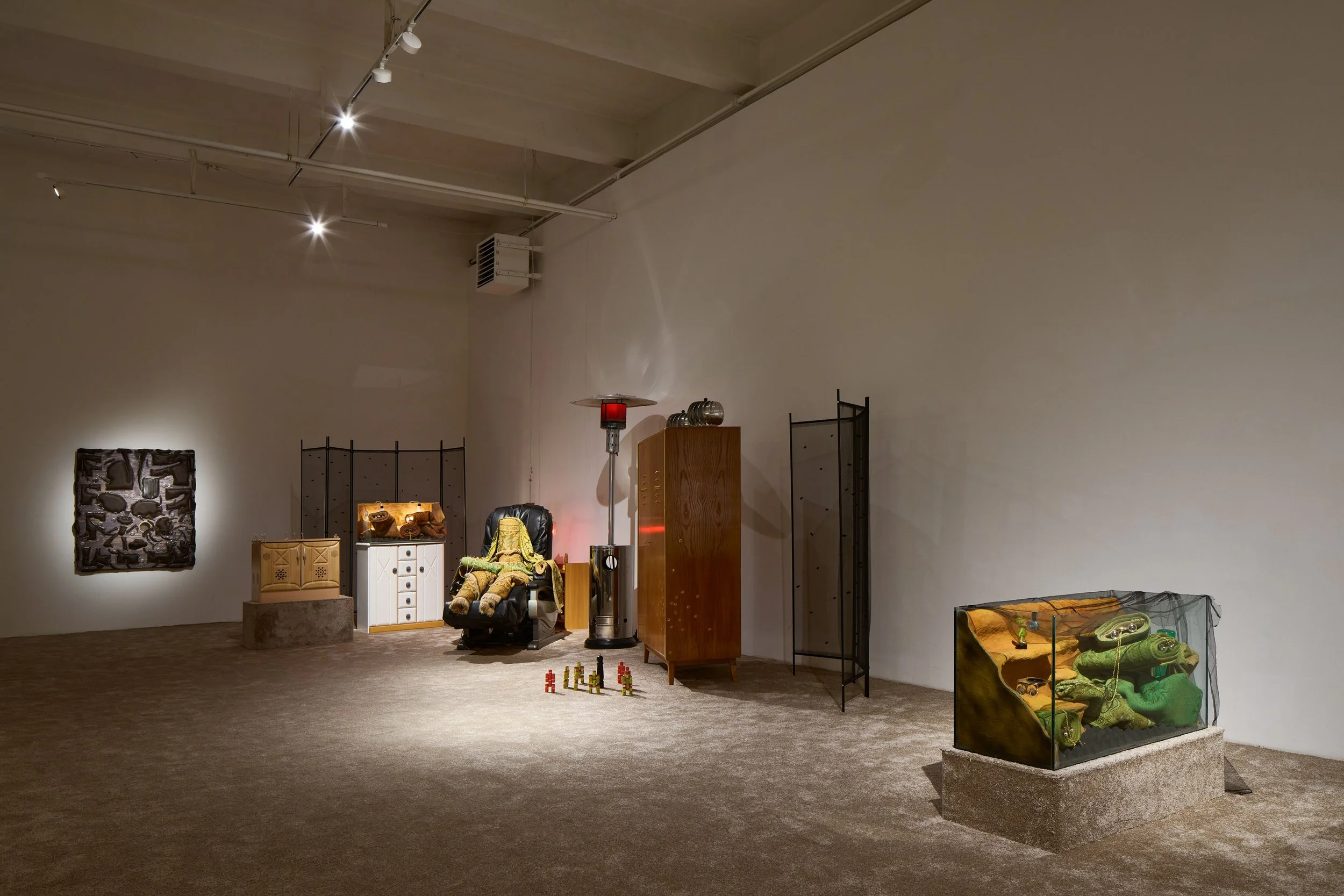
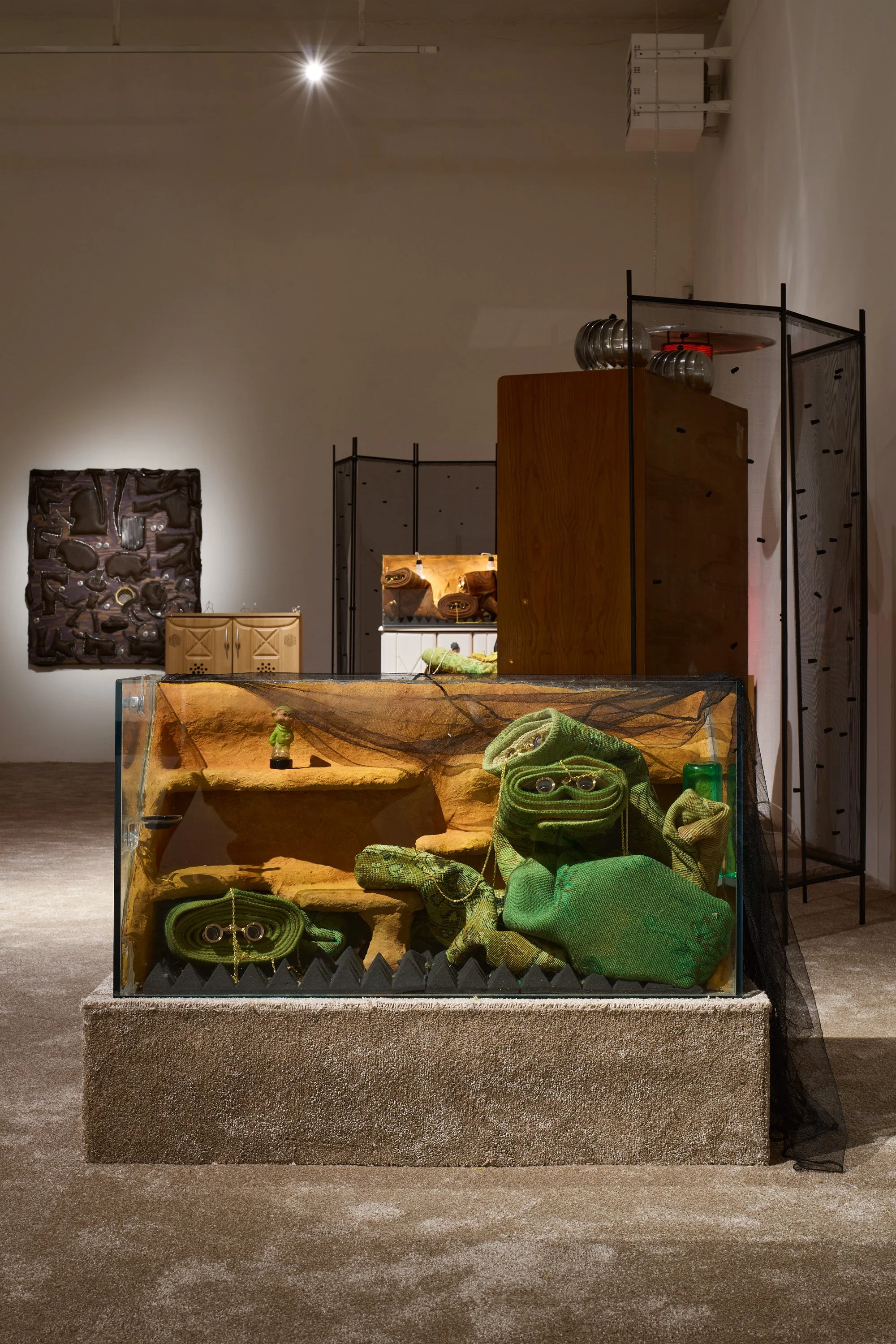
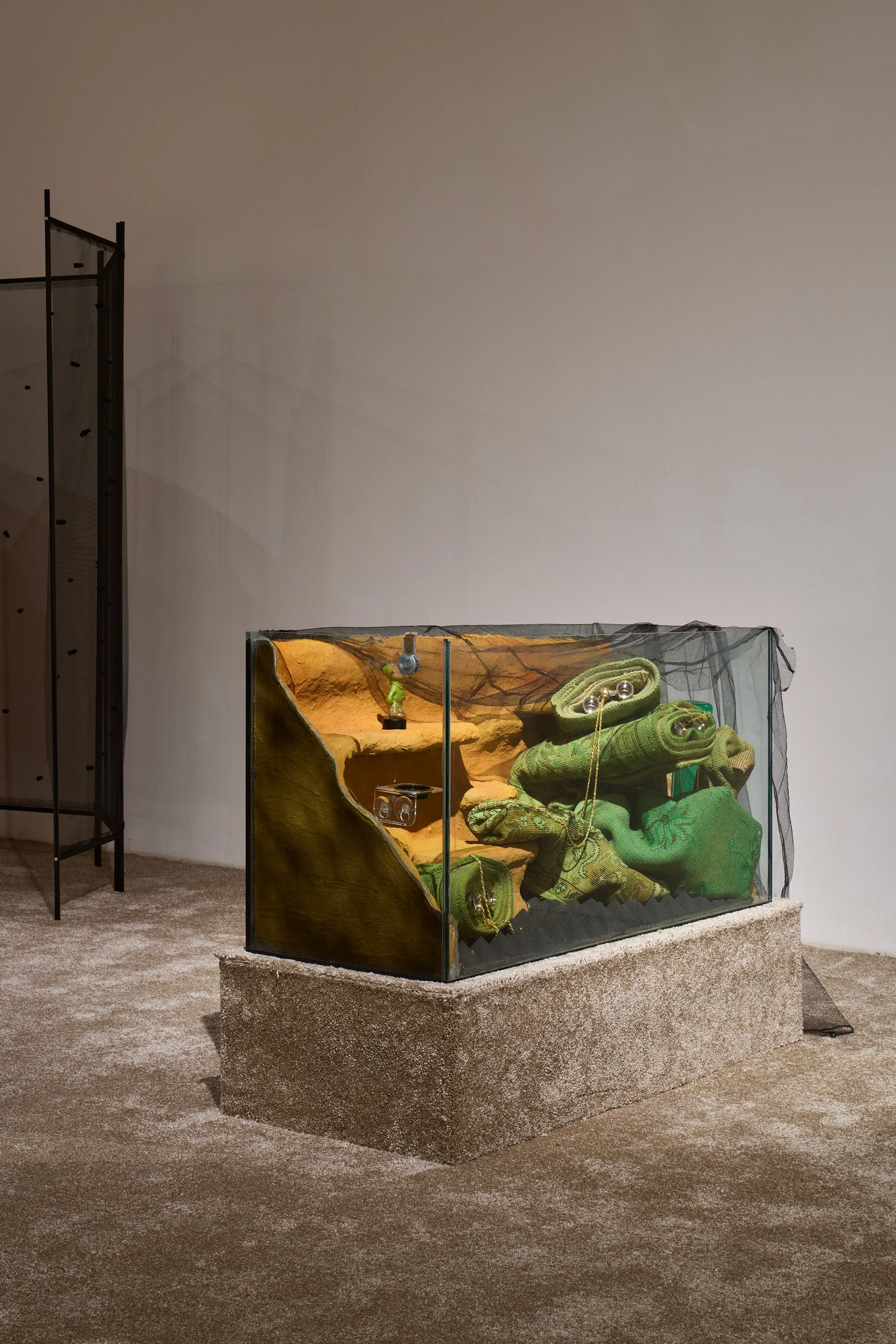
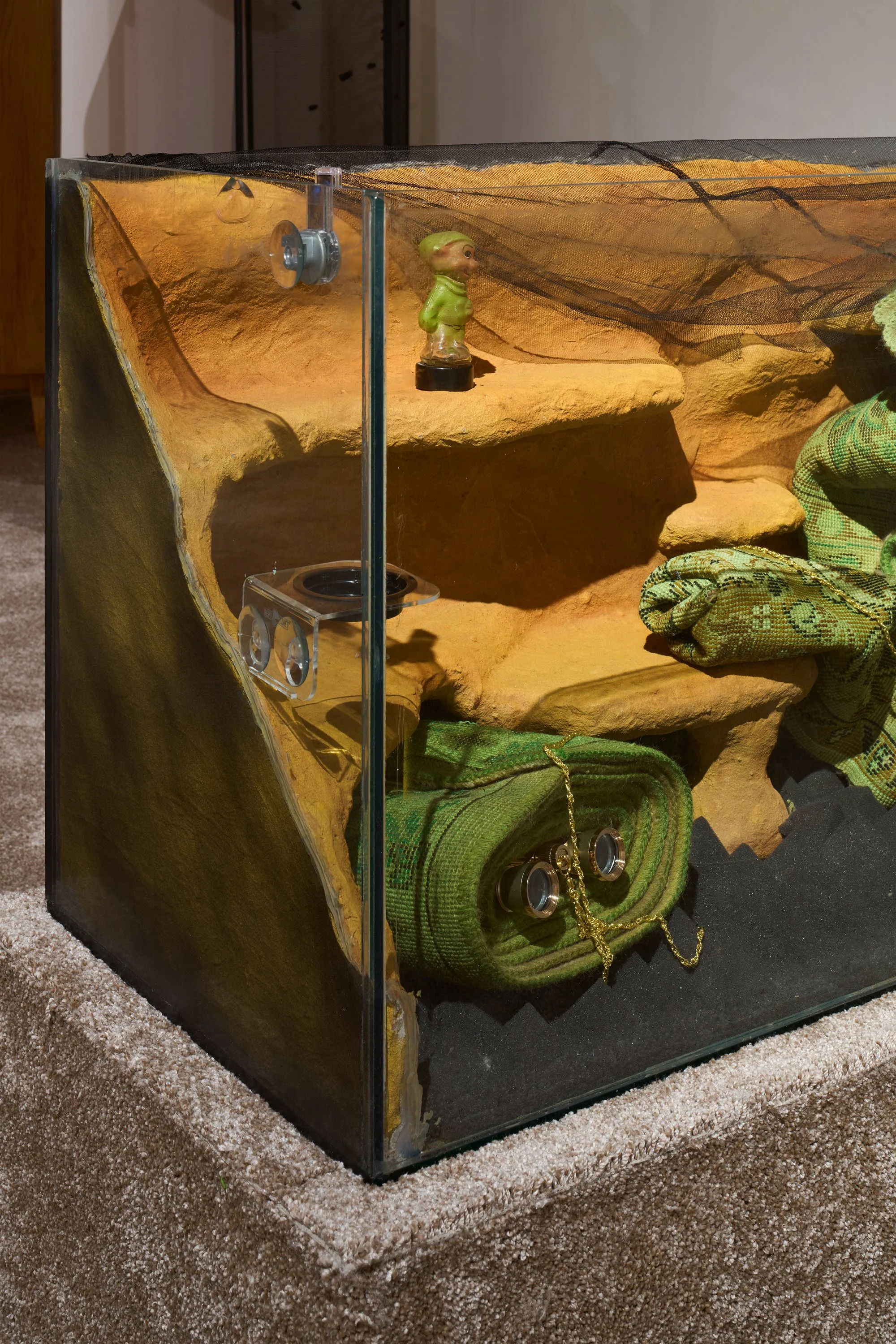
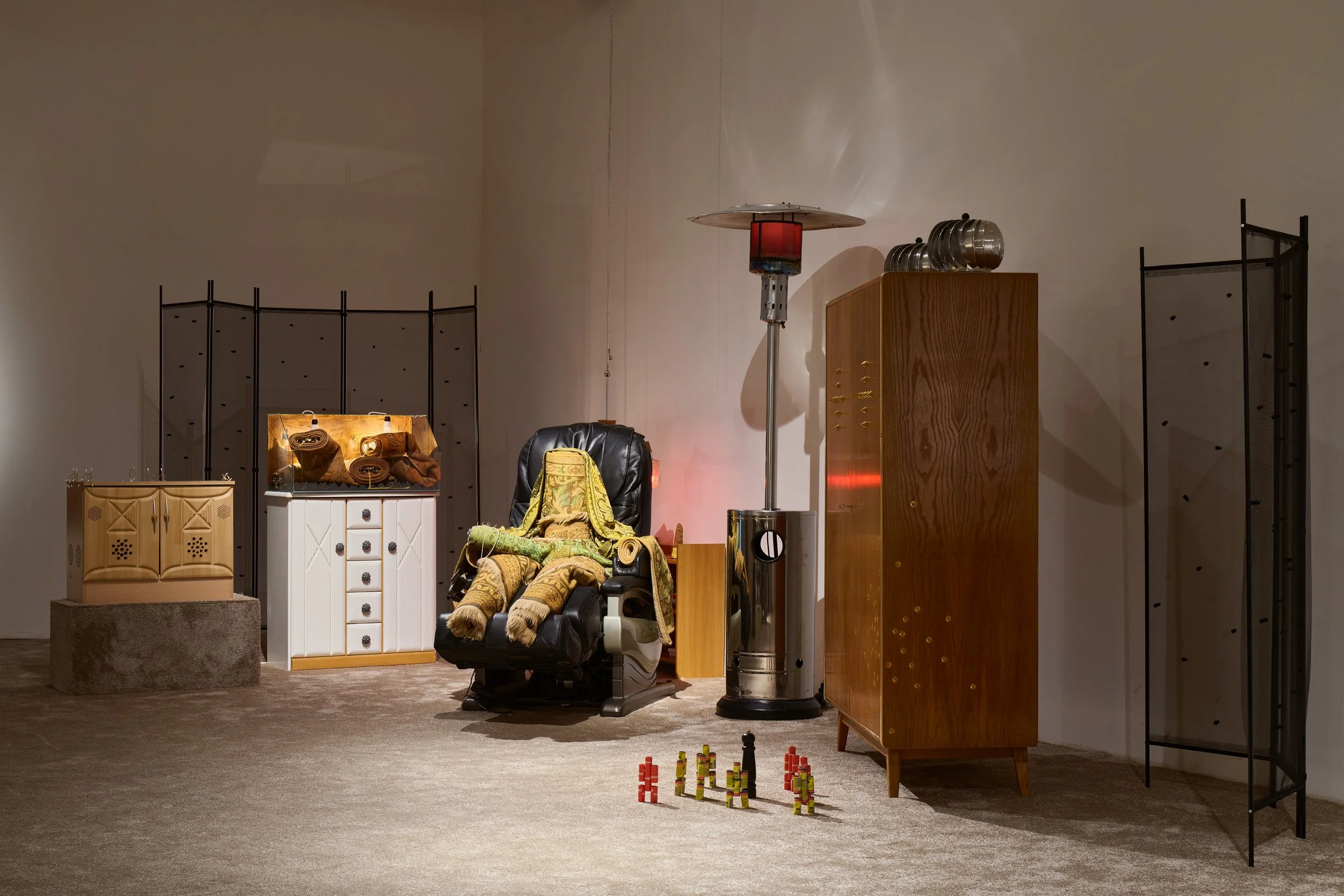
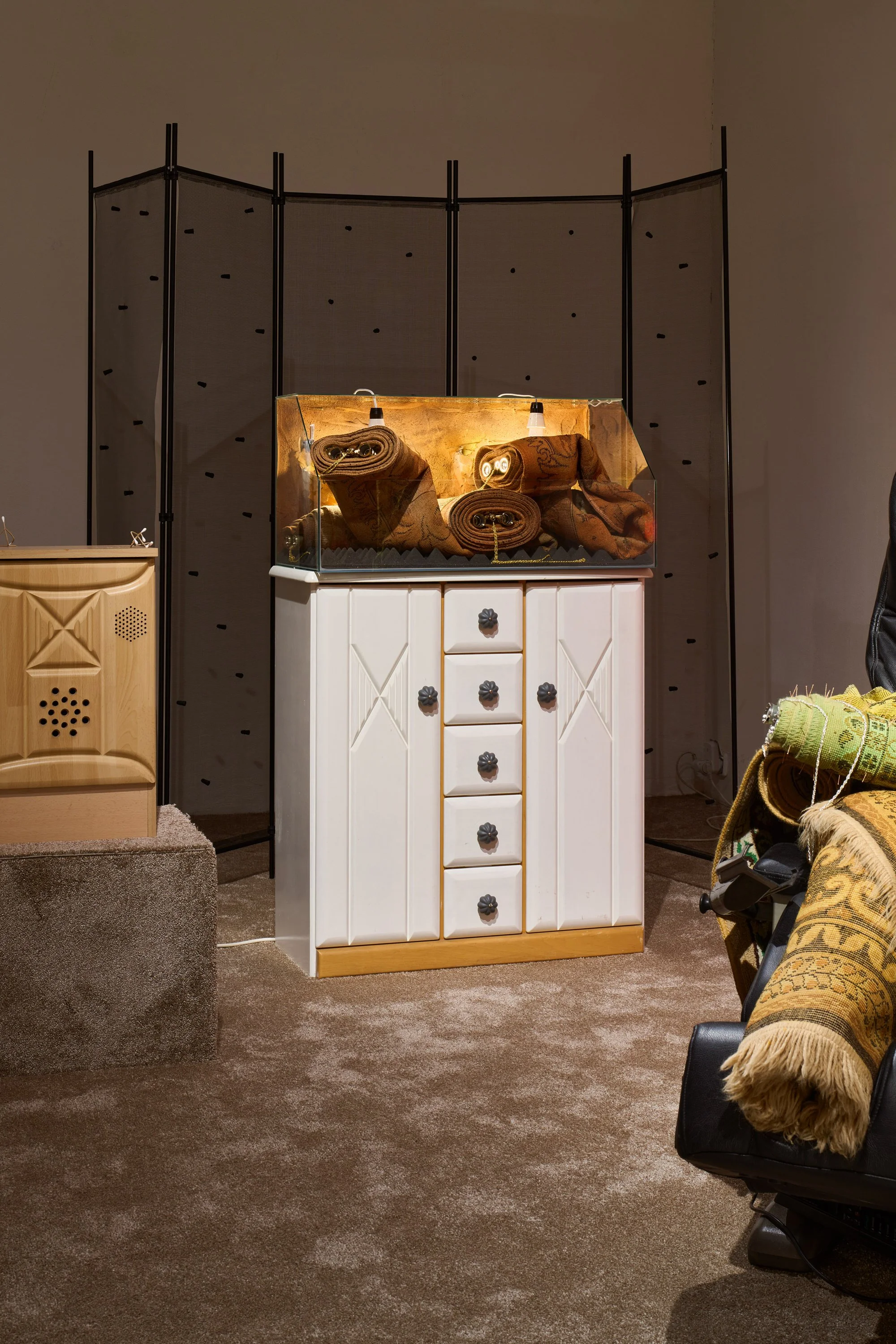
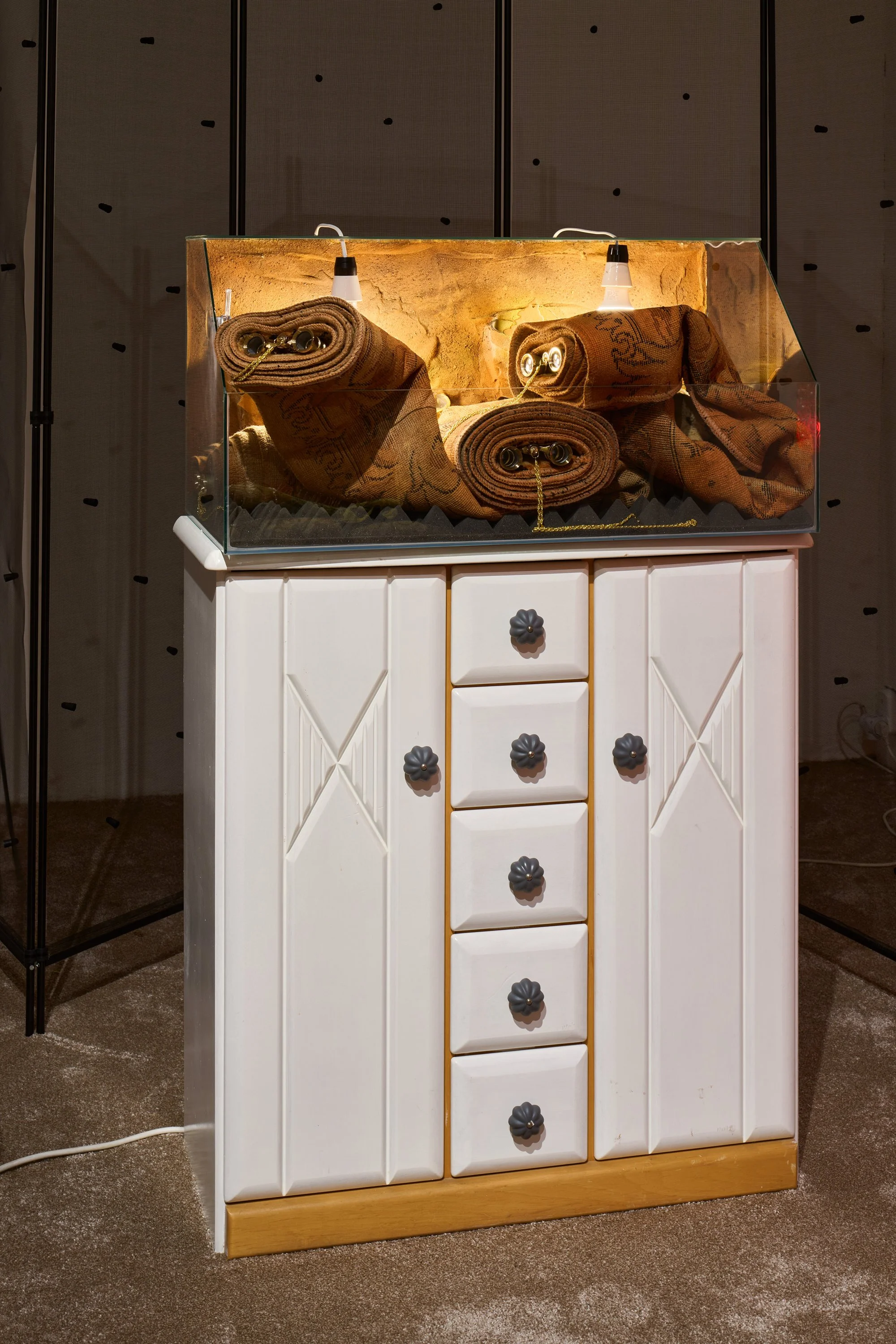
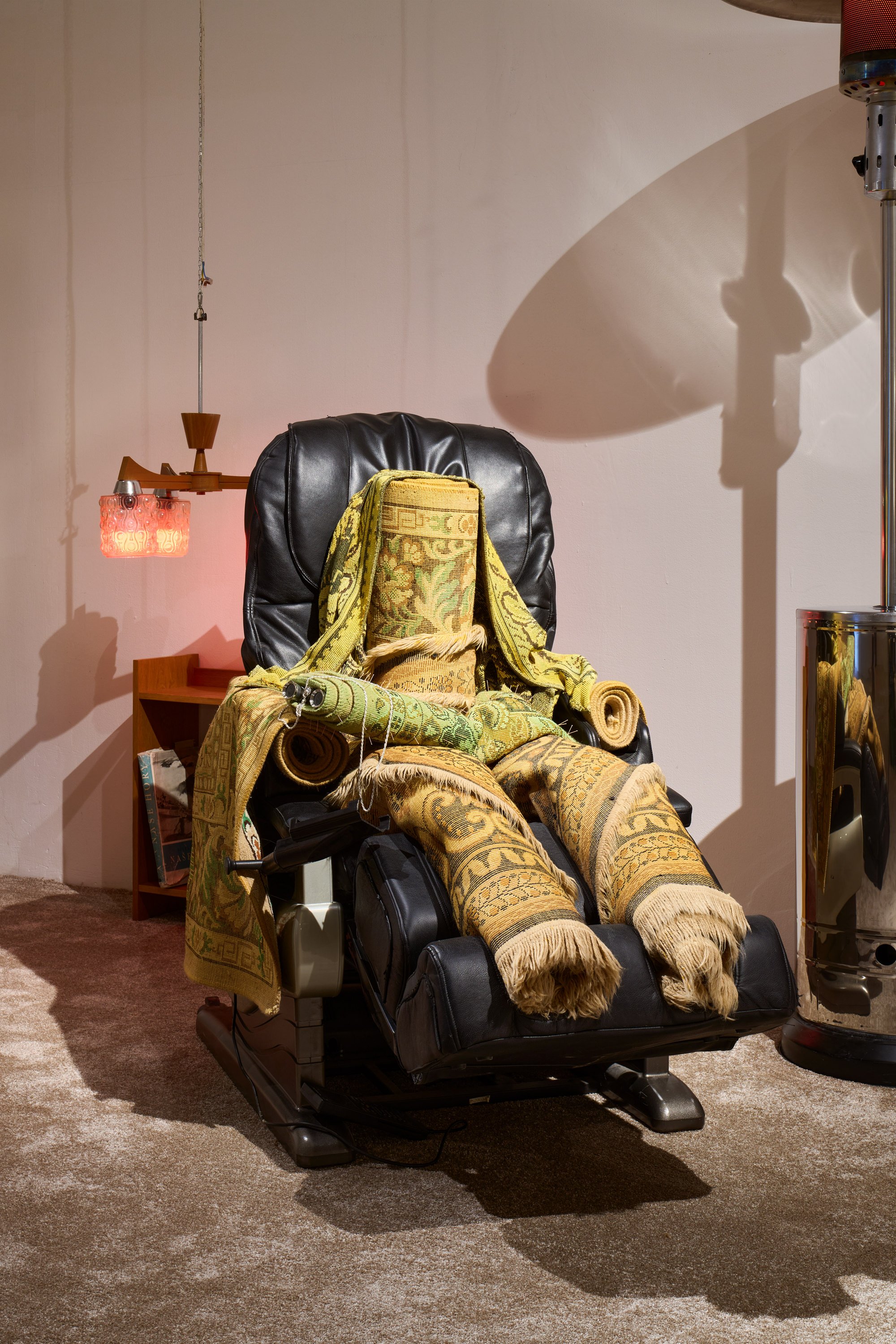
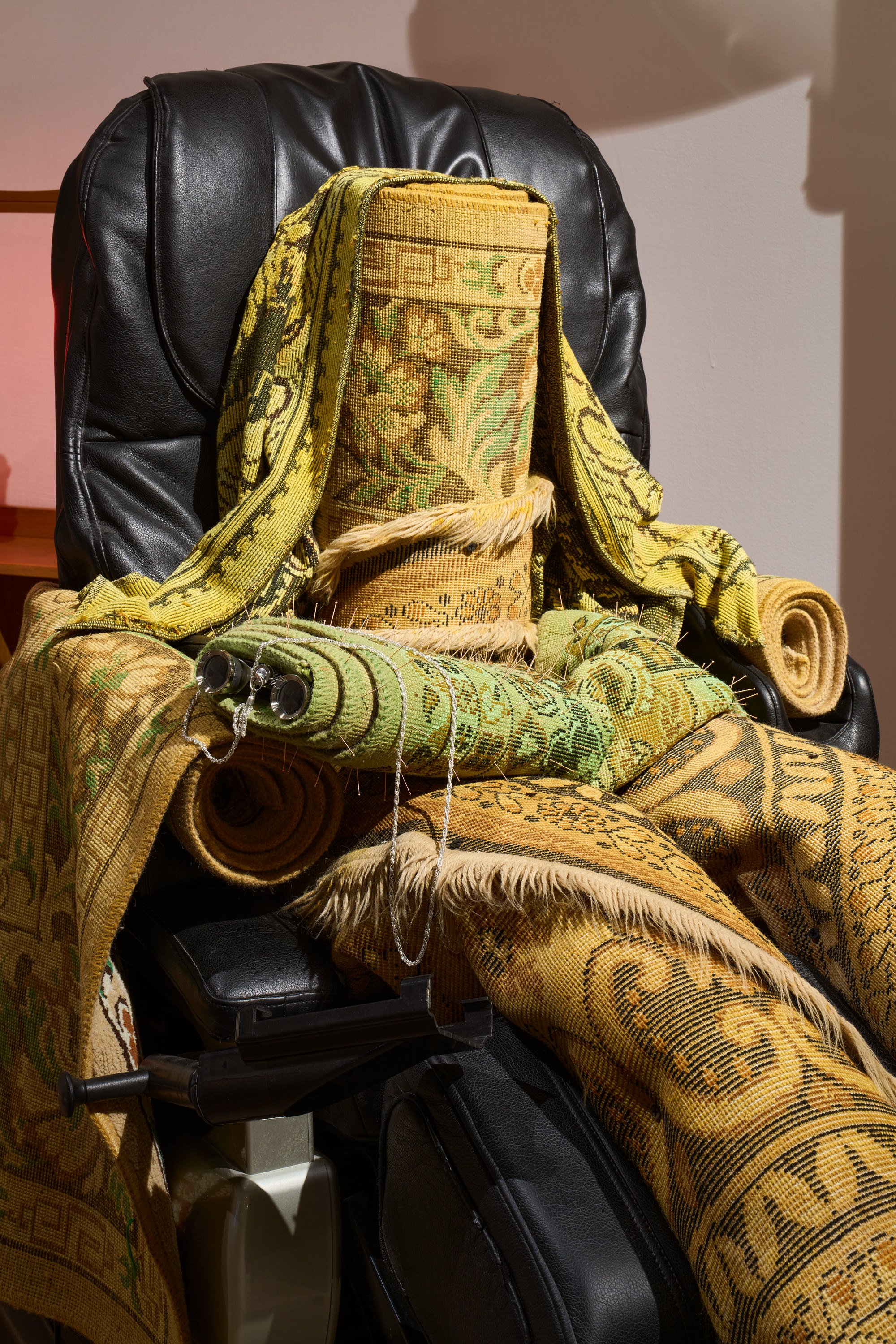
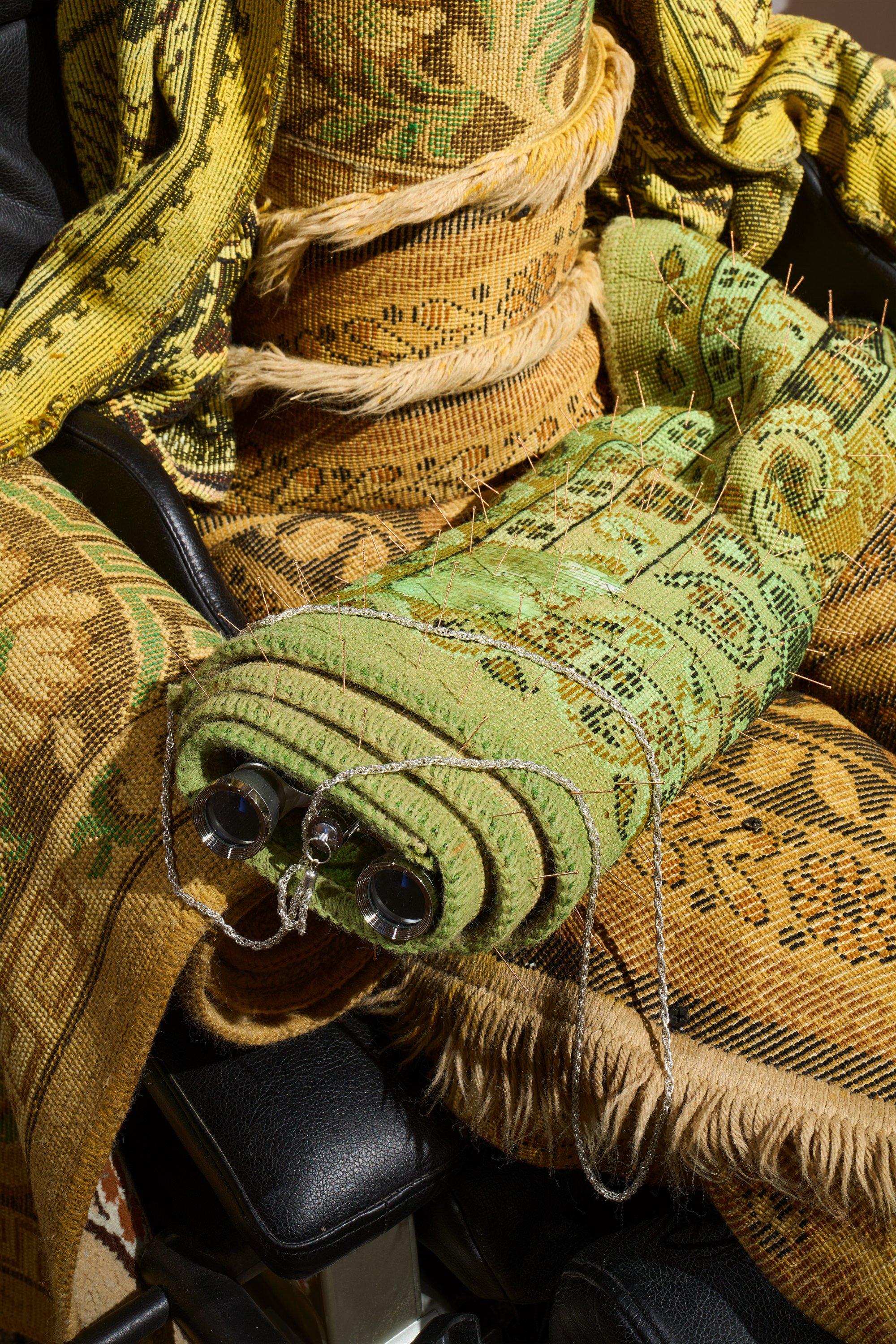
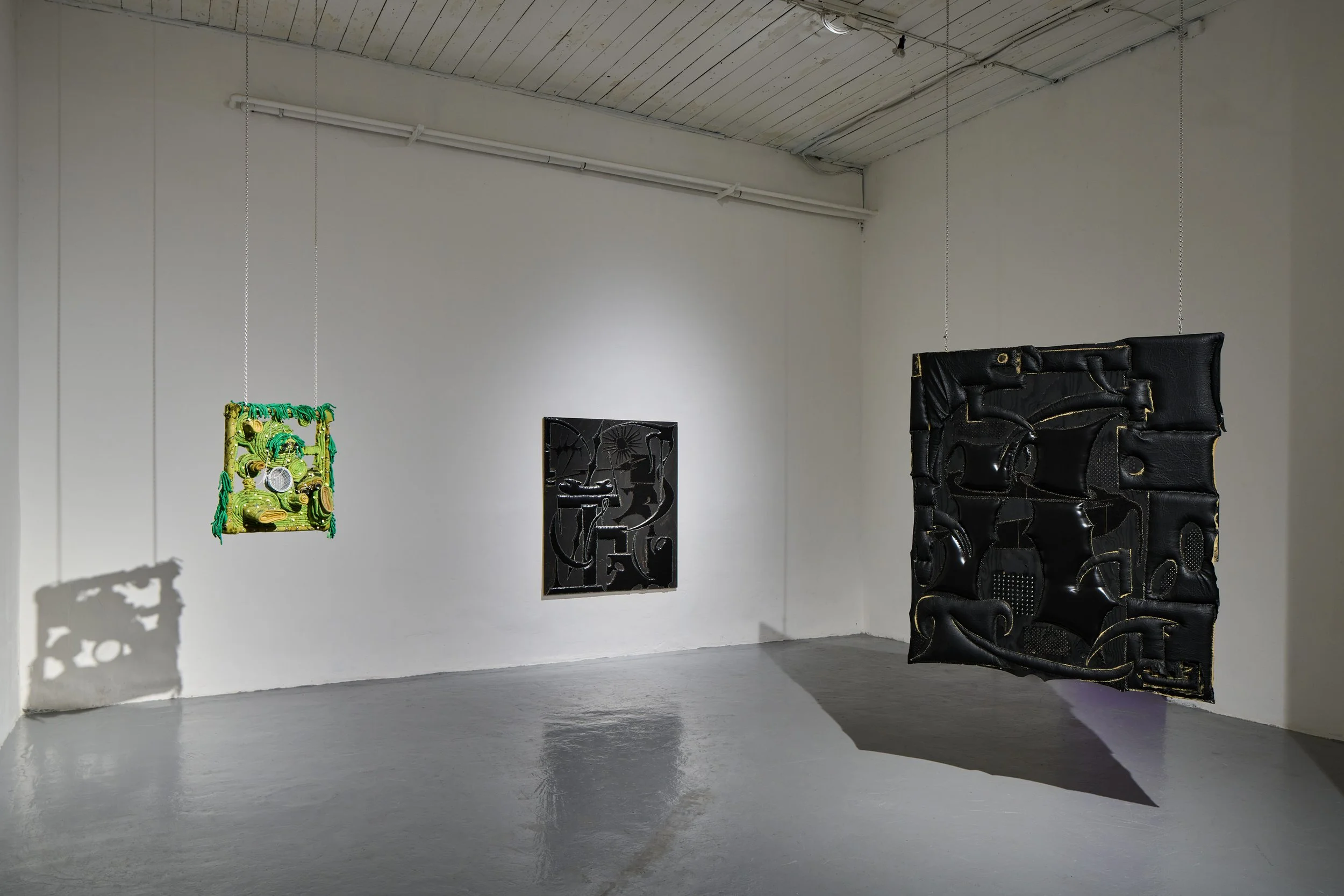
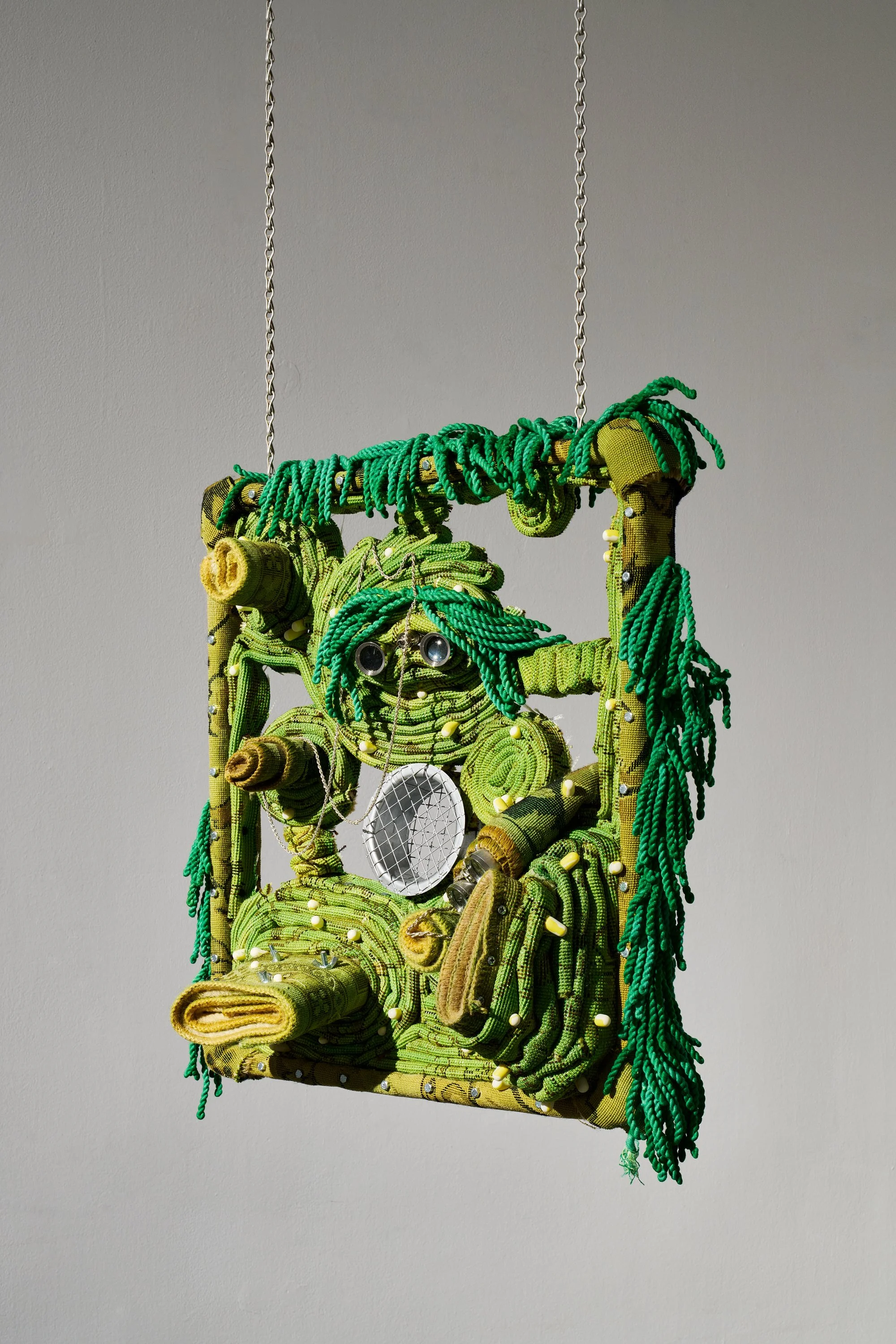
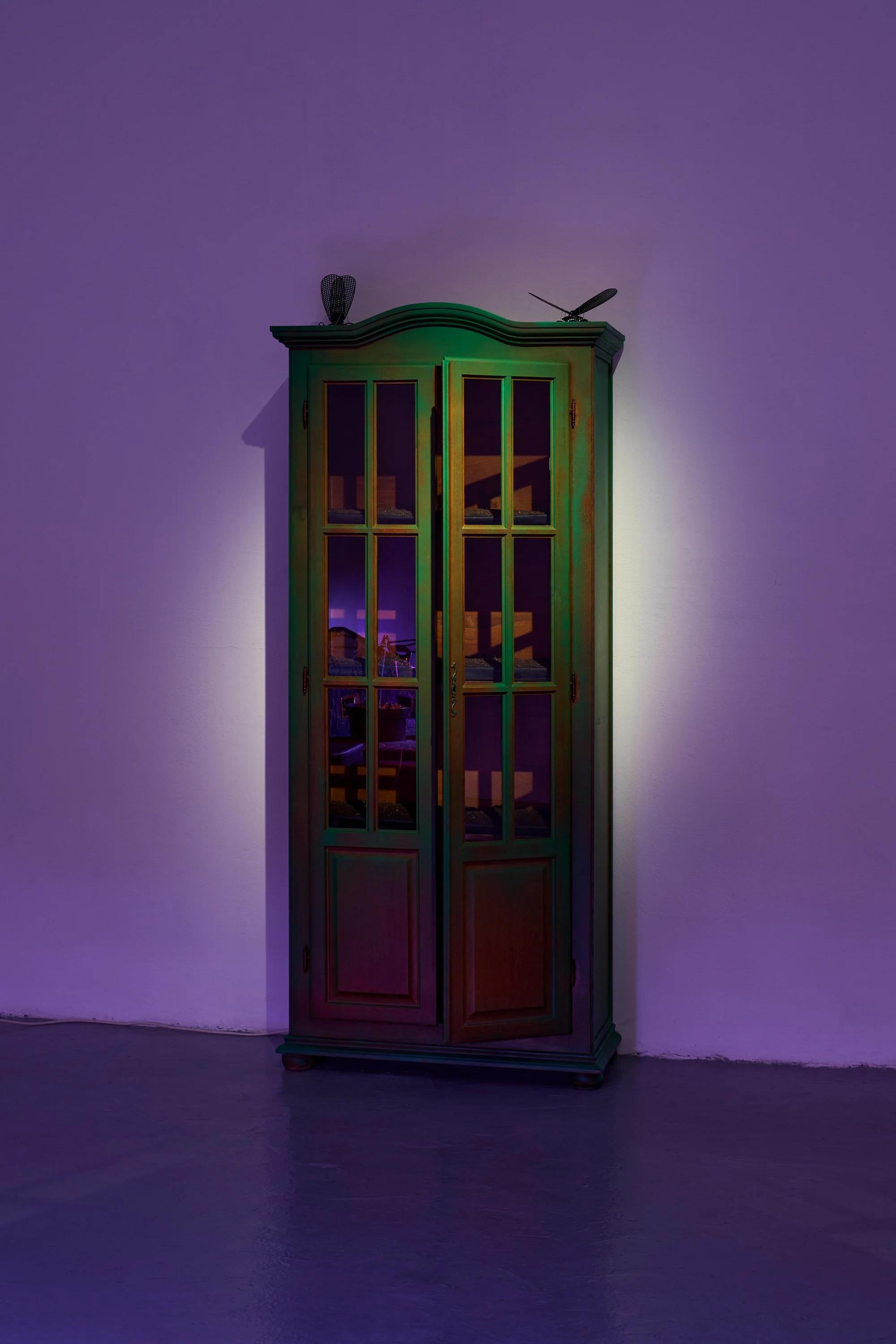
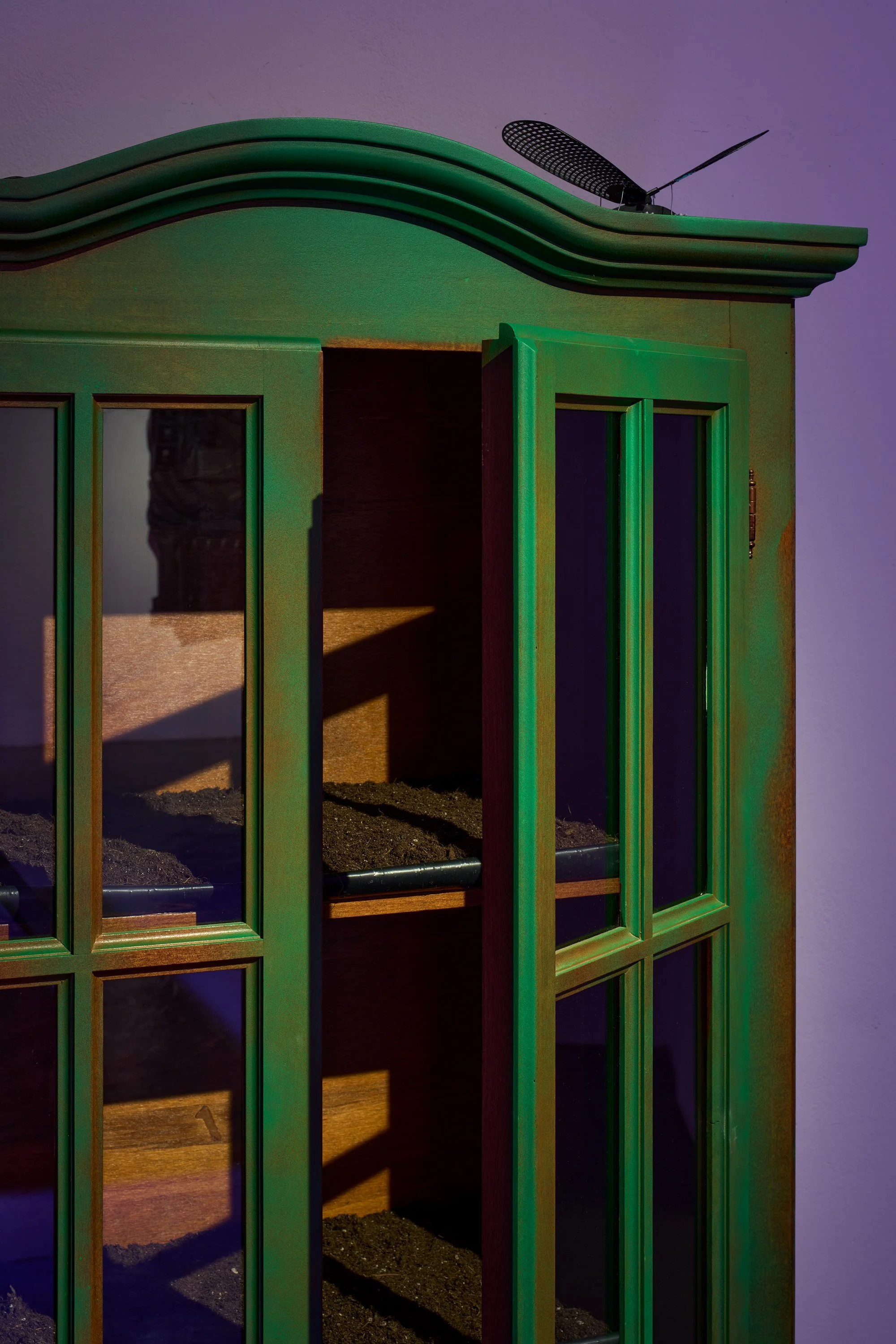
The same logic governs the central installation in the first room. A black faux-leather massage chair embraces a rolled-up carpet shaped like a faceless body, its lap exposed to a cluster of acupuncture needles. Beside it stands a gas heater, kitschy cabinets, and glass terrariums housing rolled carpets coiled into the shape of voyeuristic reptiles; elsewhere, a carpet-entity oozes into the comfort of a sofa and watches a glitching television programme Help! I Wrecked My House. This spectral domestic archaeology is a both humorous and chilling vision of what the home might look like at the moment when, after we’re gone, nothing remains within it but its eerie insect metabolism. Material corporeality is essential for Poniatowski for a reason he describes with the term subcutaneous tension. The materials, shapes, and textures of the found pieces of old furniture, carpets, faux leather, and foam evoke a haptic memory without us ever touching them. This tactility is not merely an aesthetic effect: for the artist, the materials are instruments for reaching what we perceive when surrounded by the walls, upholstery, and floors of the home.
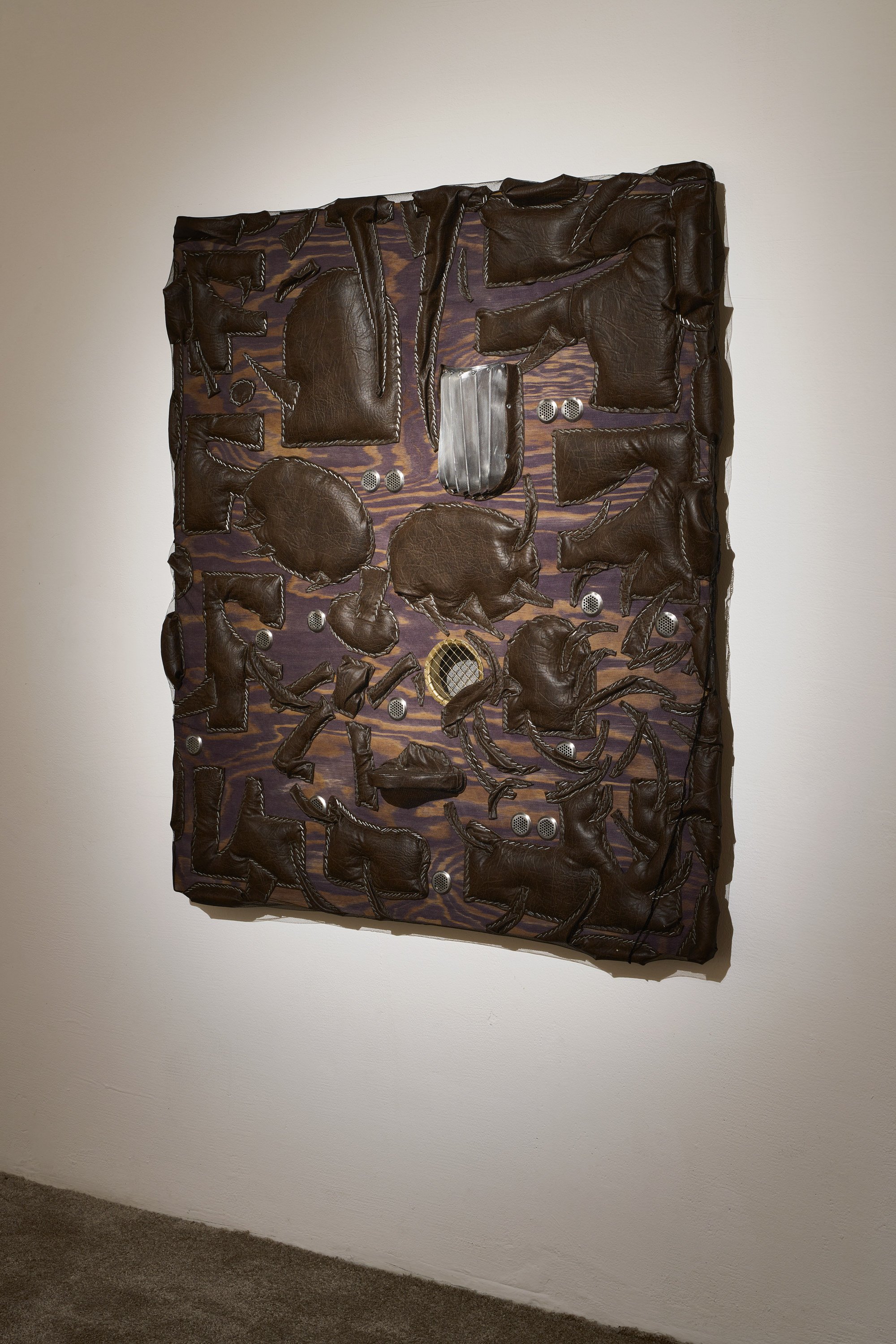
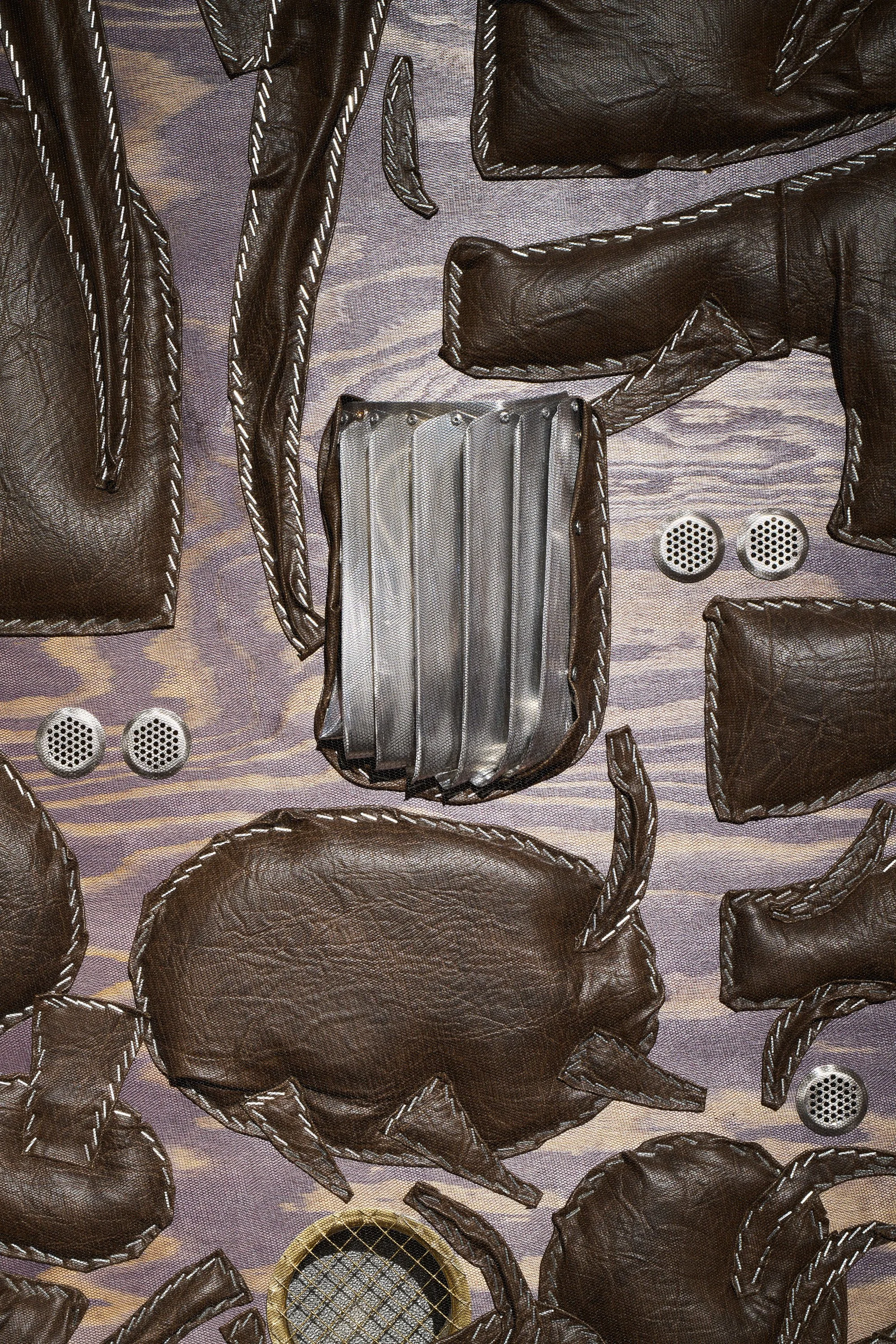
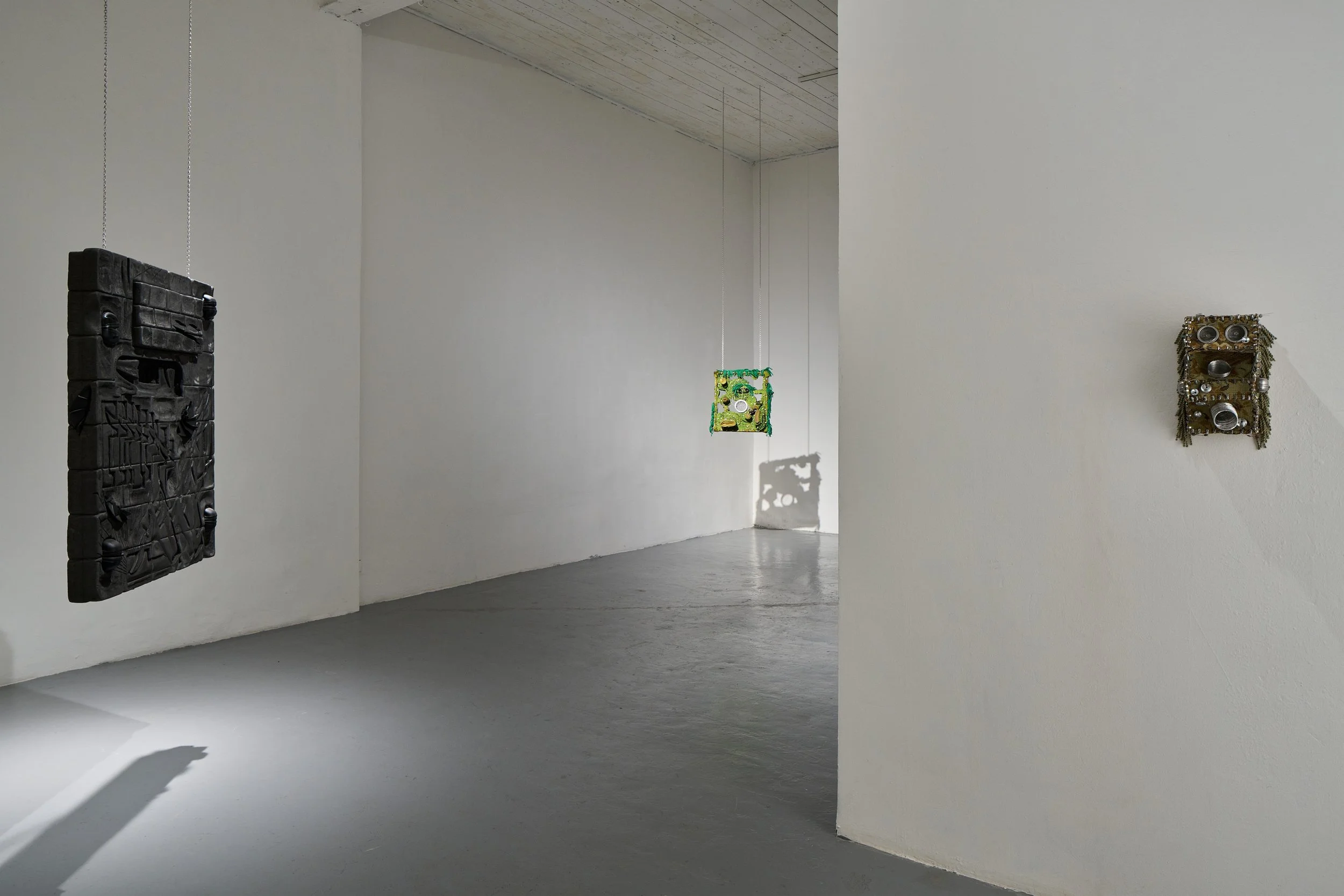
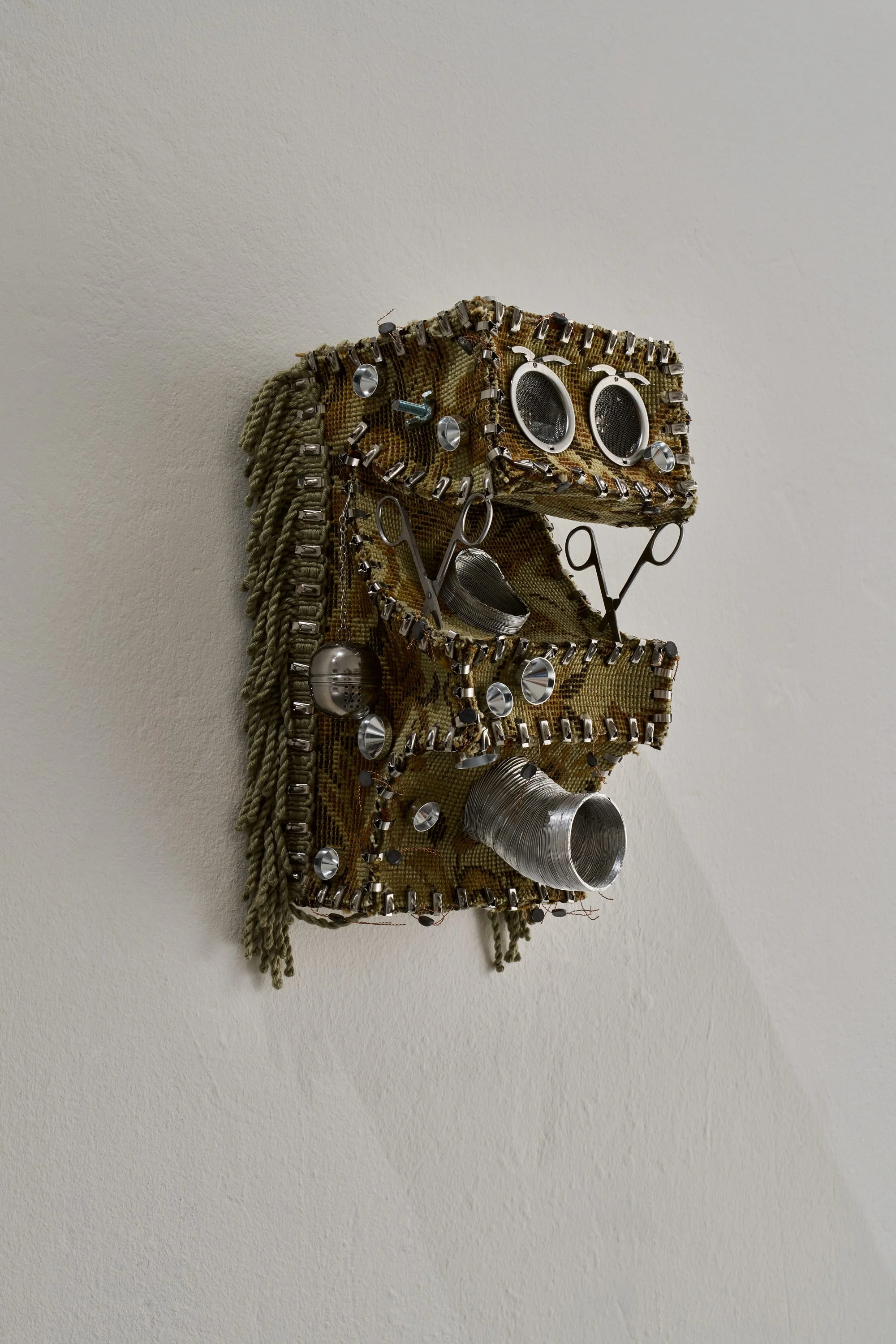
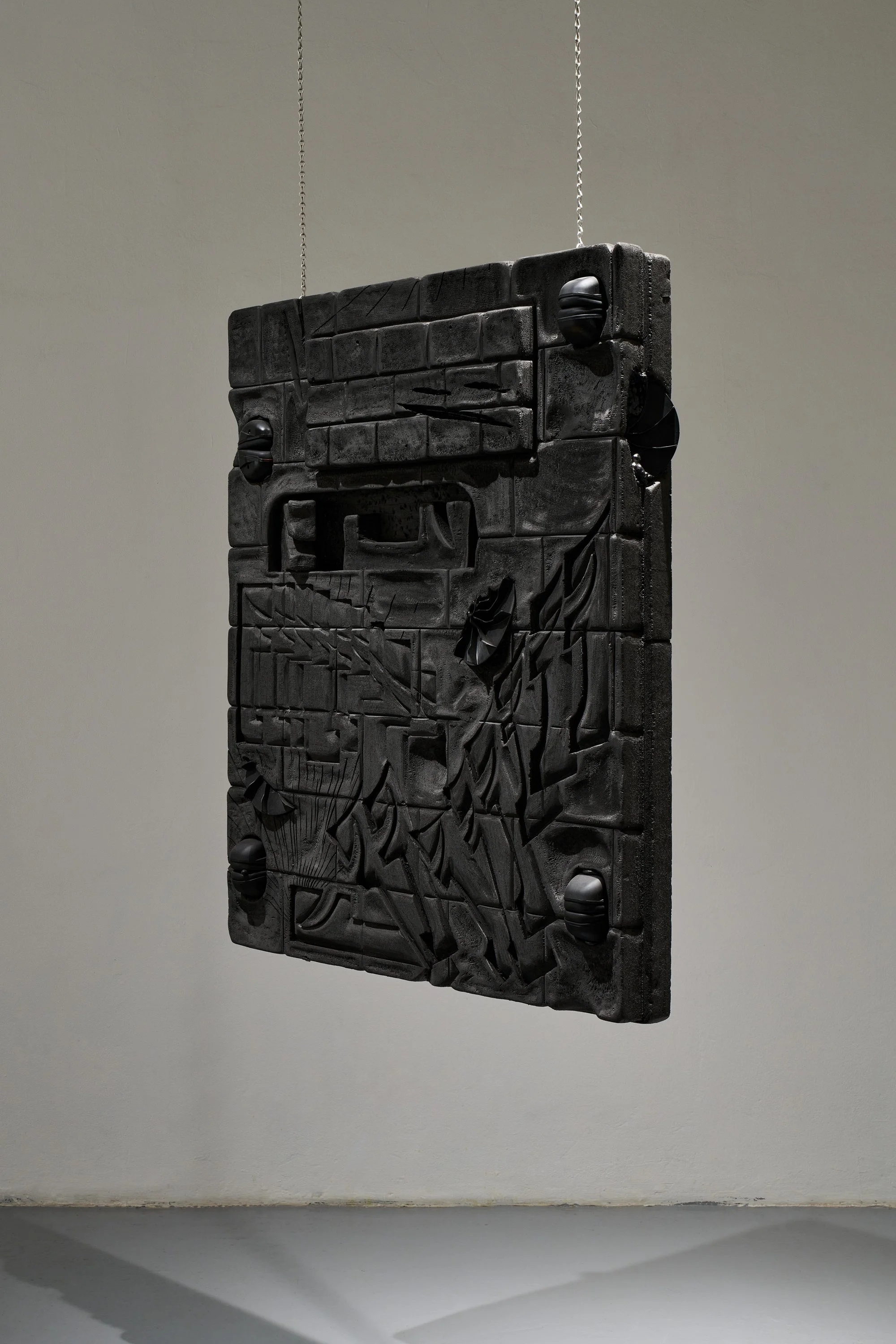
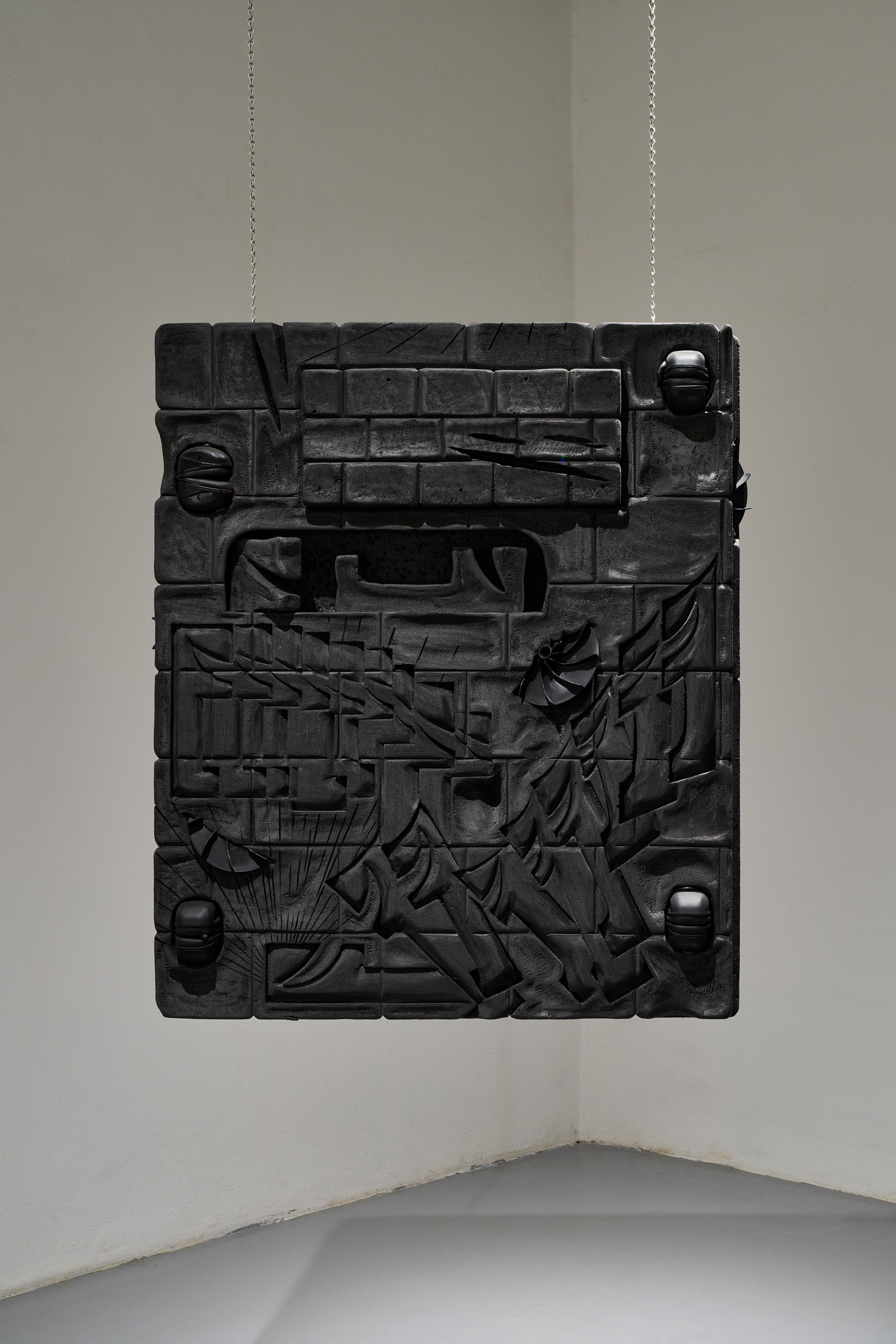
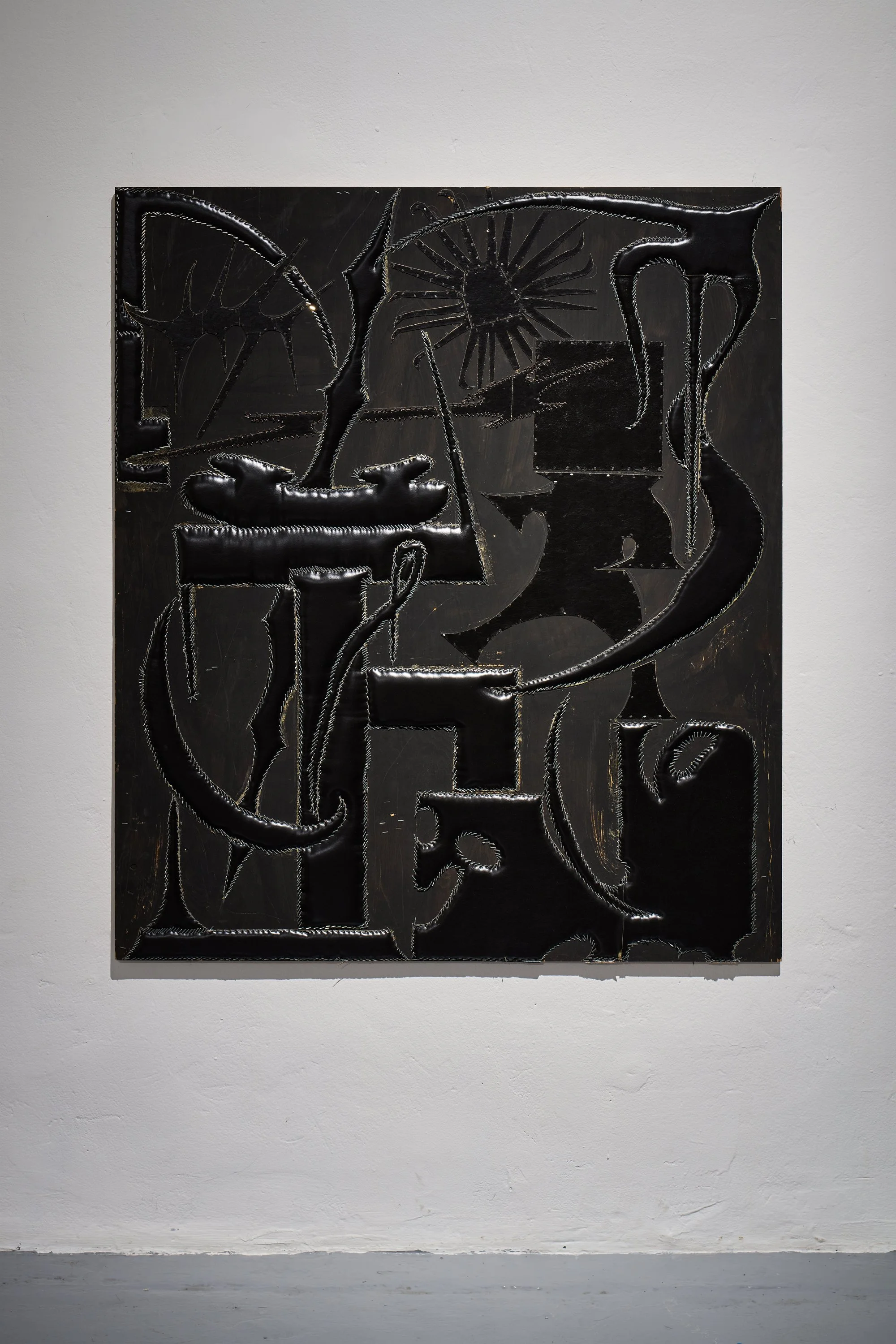
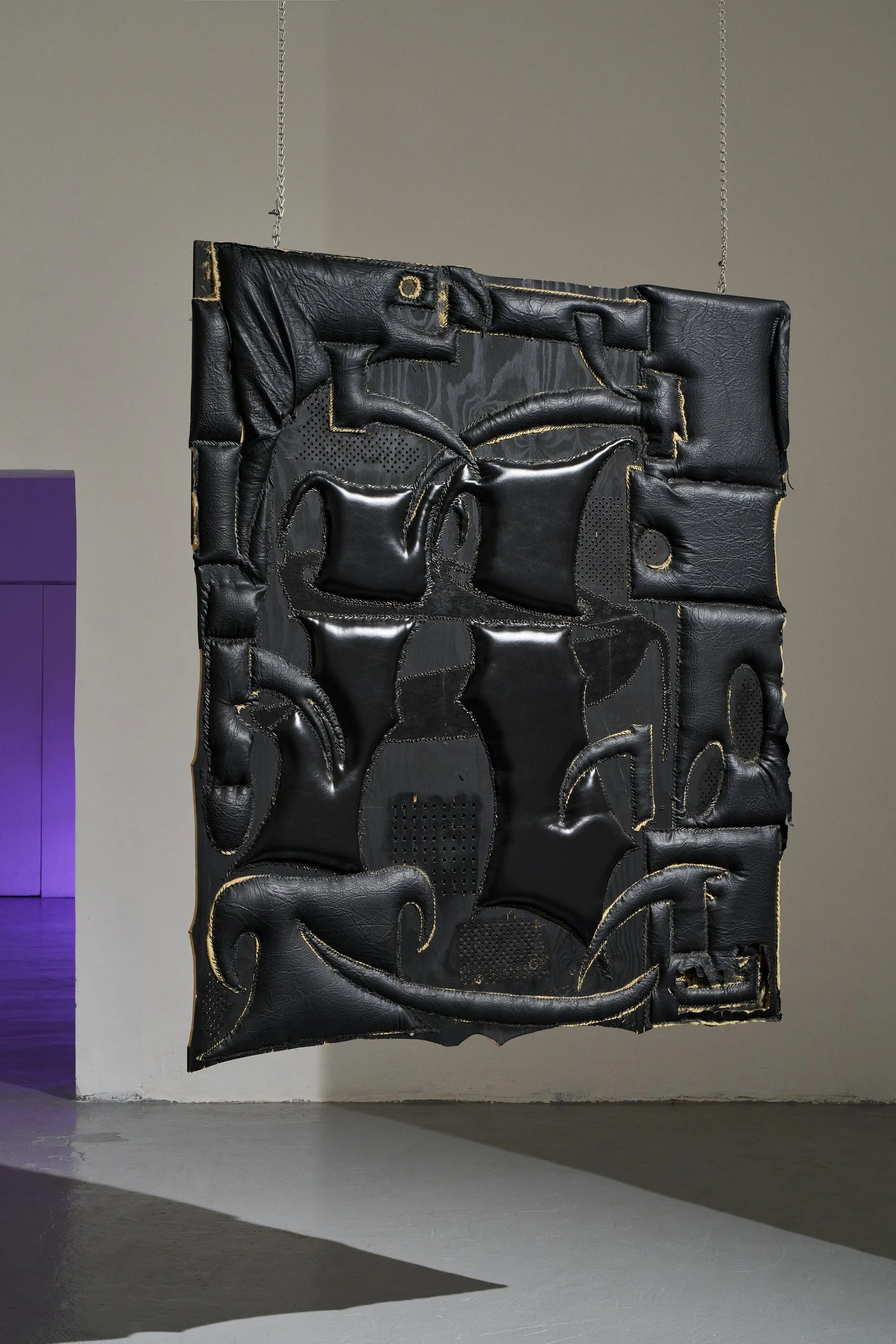
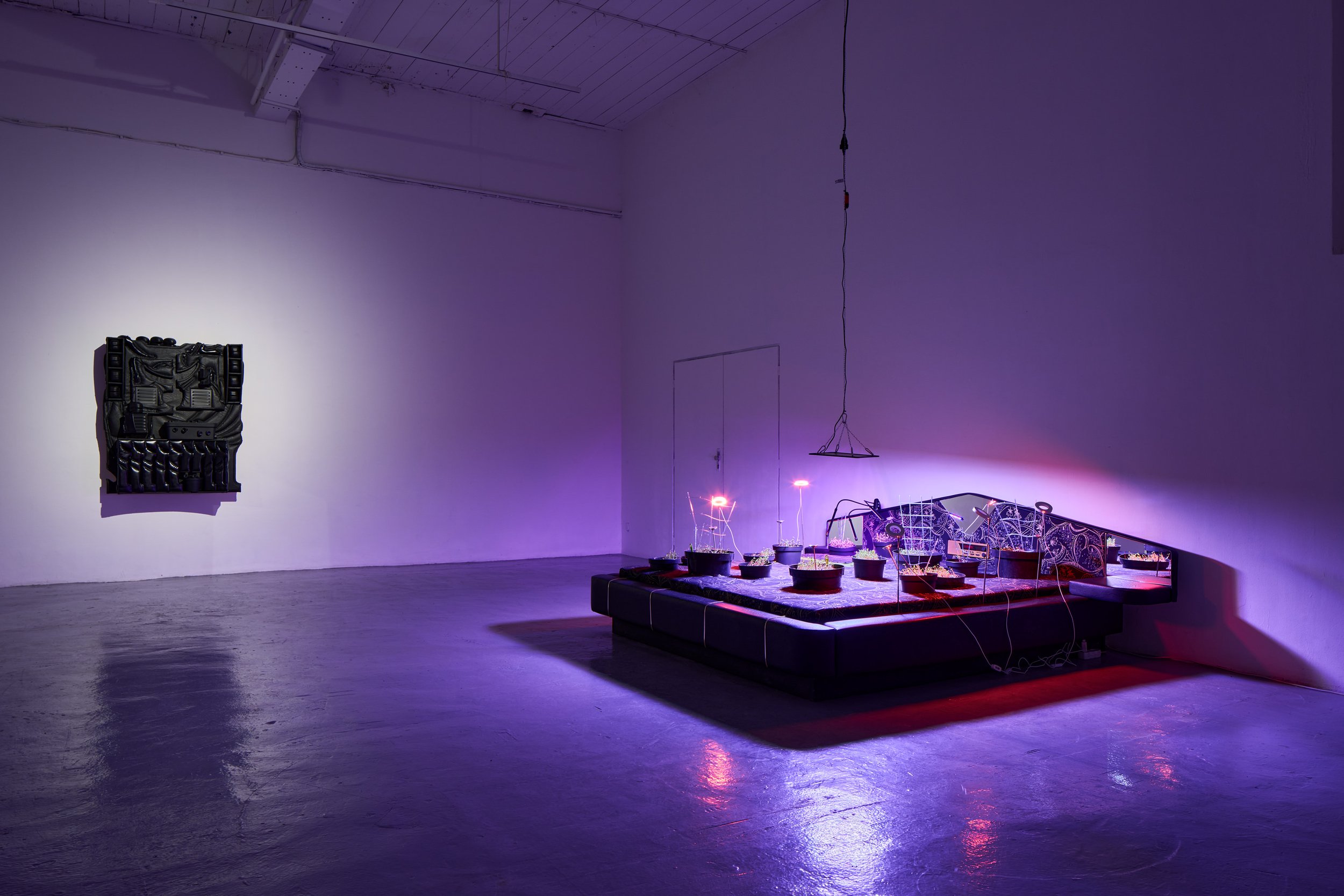
The second room in the gallery presents a series of wall reliefs drawn from various periods of Poniatowski’s practice. Some are carved from construction foam, others crudely upholstered in faux leather with their metal seams left exposed. The reliefs also function as quiet voyeurs: embedded binoculars, headphones, and metal grilles redirect the viewer’s gaze and pose the question of who, in fact, is watching whom. The deliberate display of the works’ reverse sides has its origins in the artist’s training in printmaking at the Warsaw Academy – the interplay between recto and verso, print and matrix, positive and negative recurs throughout his work.
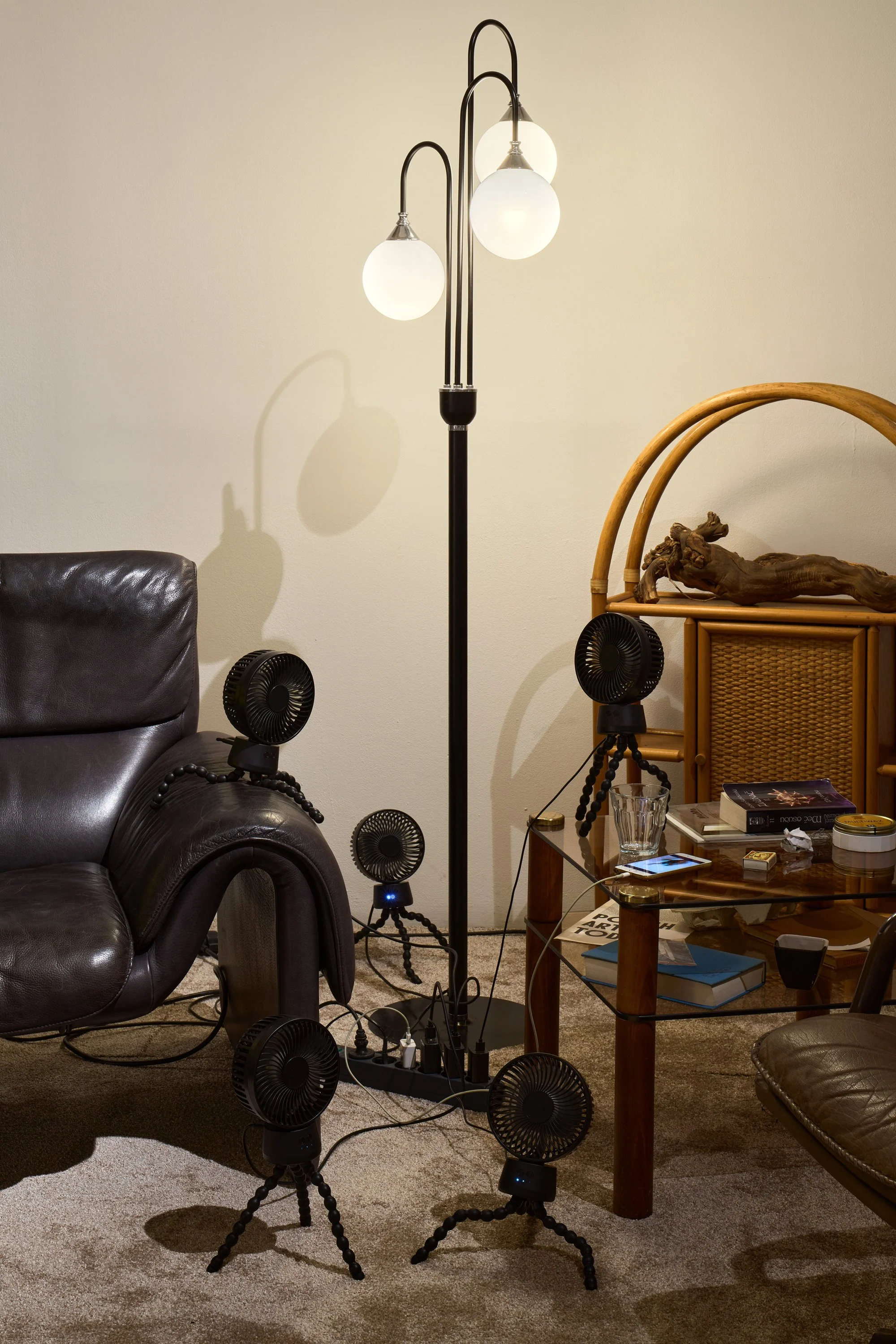
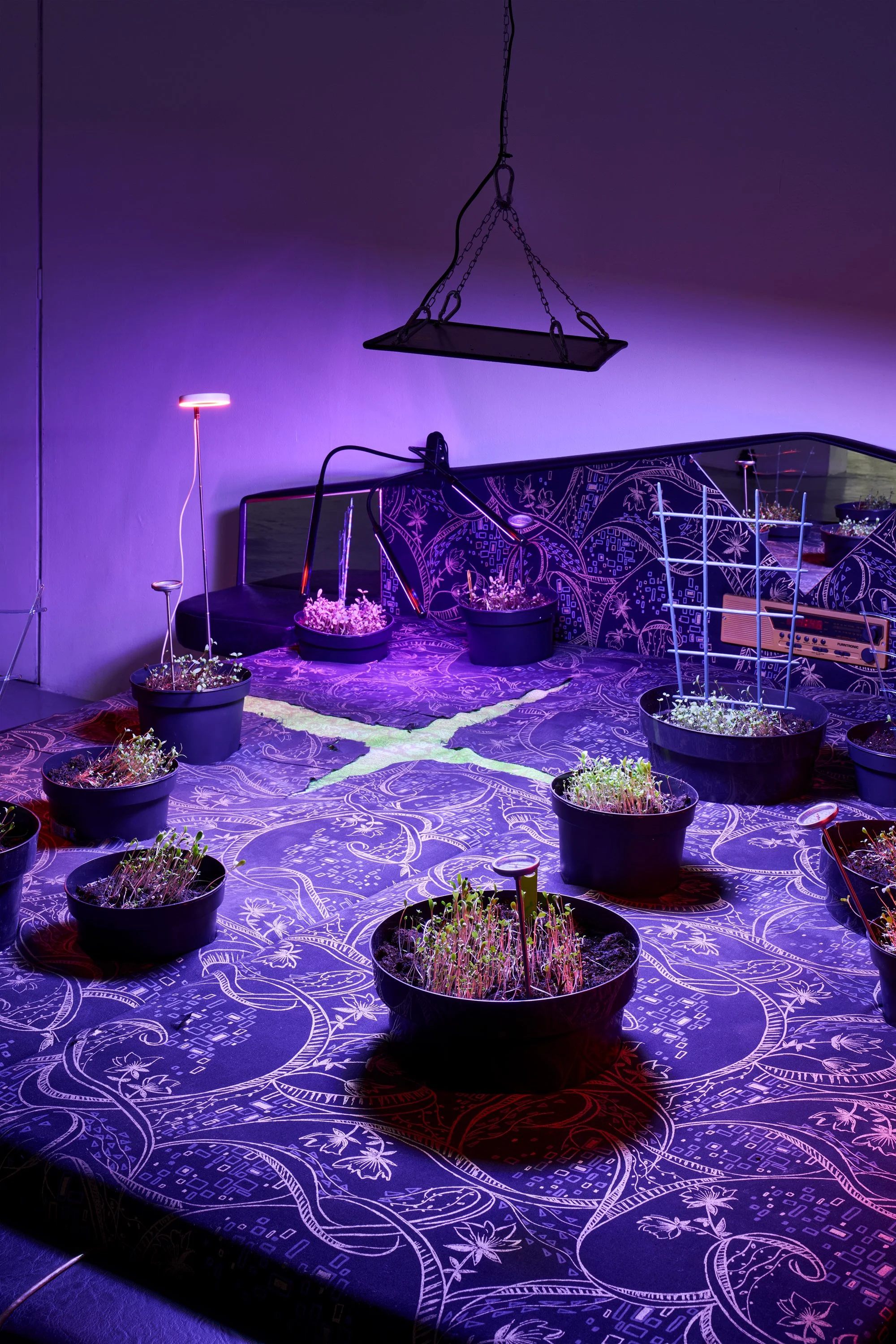
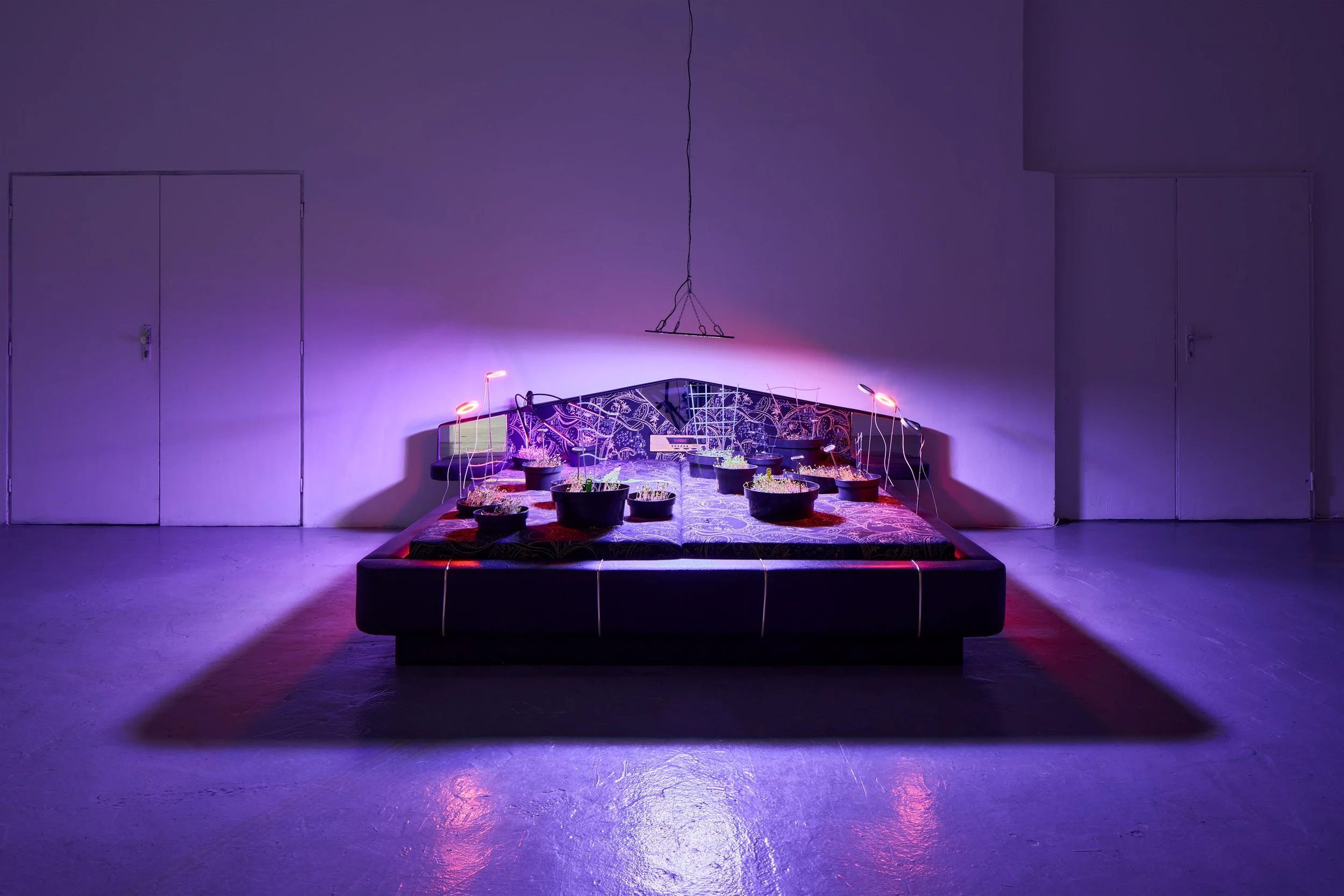
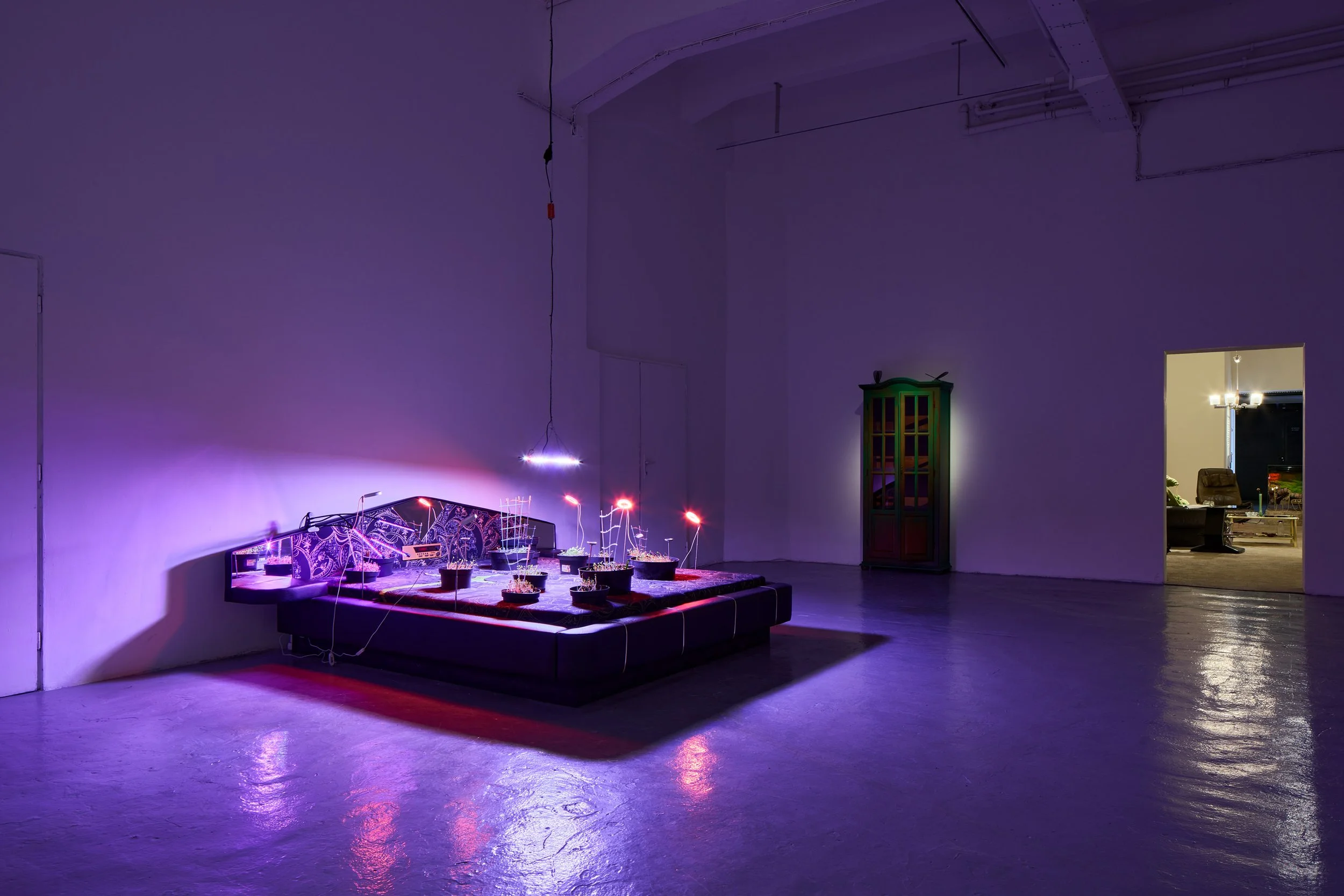
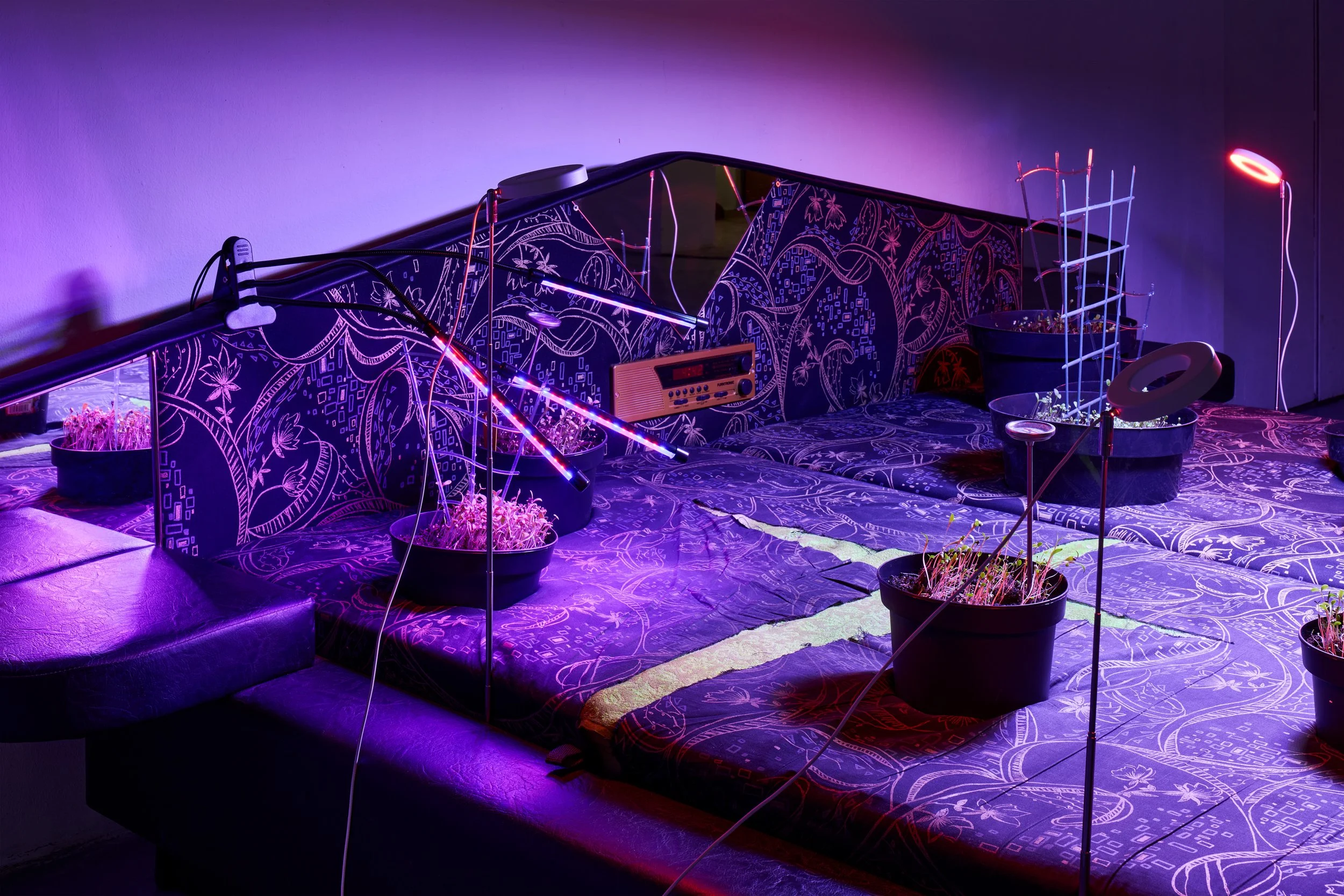
The third room, which takes the guise of a bedroom with the bed of an imagined eighties metalhead, is a place where, to the sound of an old radio, the residual human warmth held in the mattress transmutes into flowerpots in which new insect settlers proliferate. This insect microcosm, which lays claim to the home throughout the exhibition, does not operate according to human logic; it moves and acts based on the rules of swarm intelligence, as a single vast collective mind, and, like generative artificial intelligence, it too hallucinates unpredictably. Its insect protagonists toy with human objects in the manner of children learning how a household works, imitating, rearranging, and clowning around.
The conventionally drawn boundaries between design, sculpture, and architecture thus dissolve in the exhibition in favour of the idea that the home is a continuously transforming organism: a network of dependencies, care, and decay, in which the life of things carries on even when we, as humans, have been reduced to a residue of a never-ending material transformation. Deep House therefore lends itself to a twofold reading. It can be understood as a post-apocalyptic vision of a home without an owner, a grotesque domestic invasion of parasites that have settled into everything we left behind; just as readily, however, it can be read as the calm and final handover of power to nature. Cezary Poniatowski deliberately interweaves these registers and leaves the decision to the viewers, who are simultaneously observing and being observed, made into participants in one of the possible, probable, and humorous versions of their own ultimate future.
more: