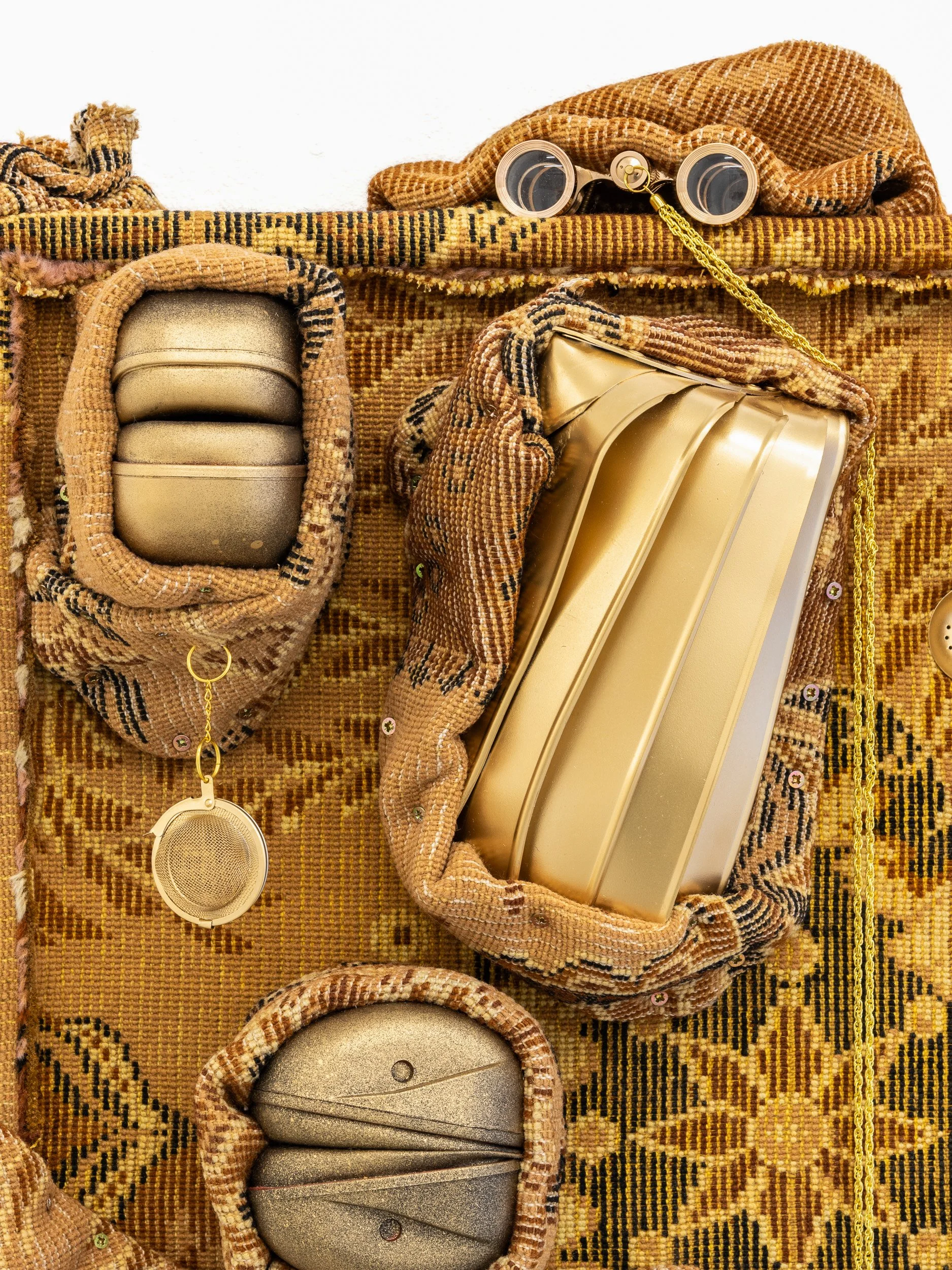
the midden of time, coulisse,
stockholm, sweden, 2026
The Midden of Time
Venue Coulisse, Stockholm, Sweden
Date February 19 - March 21, 2026
Photography
Press Release
The Midden of Time
group exhibition
Middens are archaeological sites characterised by the accumulation of debris. They are composed of rich soil punctuated with the refuse of previous lives: artifacts, broken shells, bones, pottery shards, and botanical remains. These layered deposits are critical capsules for reconstructing human and ecological presence throughout time. To access the stratified information, archaeologists carefully excavate and contextualise the matter; precisely reassembling and analysing the midden in a laboratory is an essential secondary process in which, fragment by fragment, the details of another era reveal themselves.
The group exhibition The Midden of Time brings together five contemporary practices that explore what occurs through the sifting, digging, collecting, and transforming of symbols, genres, and embodied experiences. Embracing rigorous material-focused processes, the exhibition is a site for witnessing the artistic, bodily, and historic fieldwork held in the presented works.’ Im- portantly, each piece is concerned with interiority, inquiring what it may look like to visualise our insides, subcutaneous and otherwise. Like the midden’s material properties, the practices each approach time as a layered thing, ruled by accretion and punctuated by memories and objects.
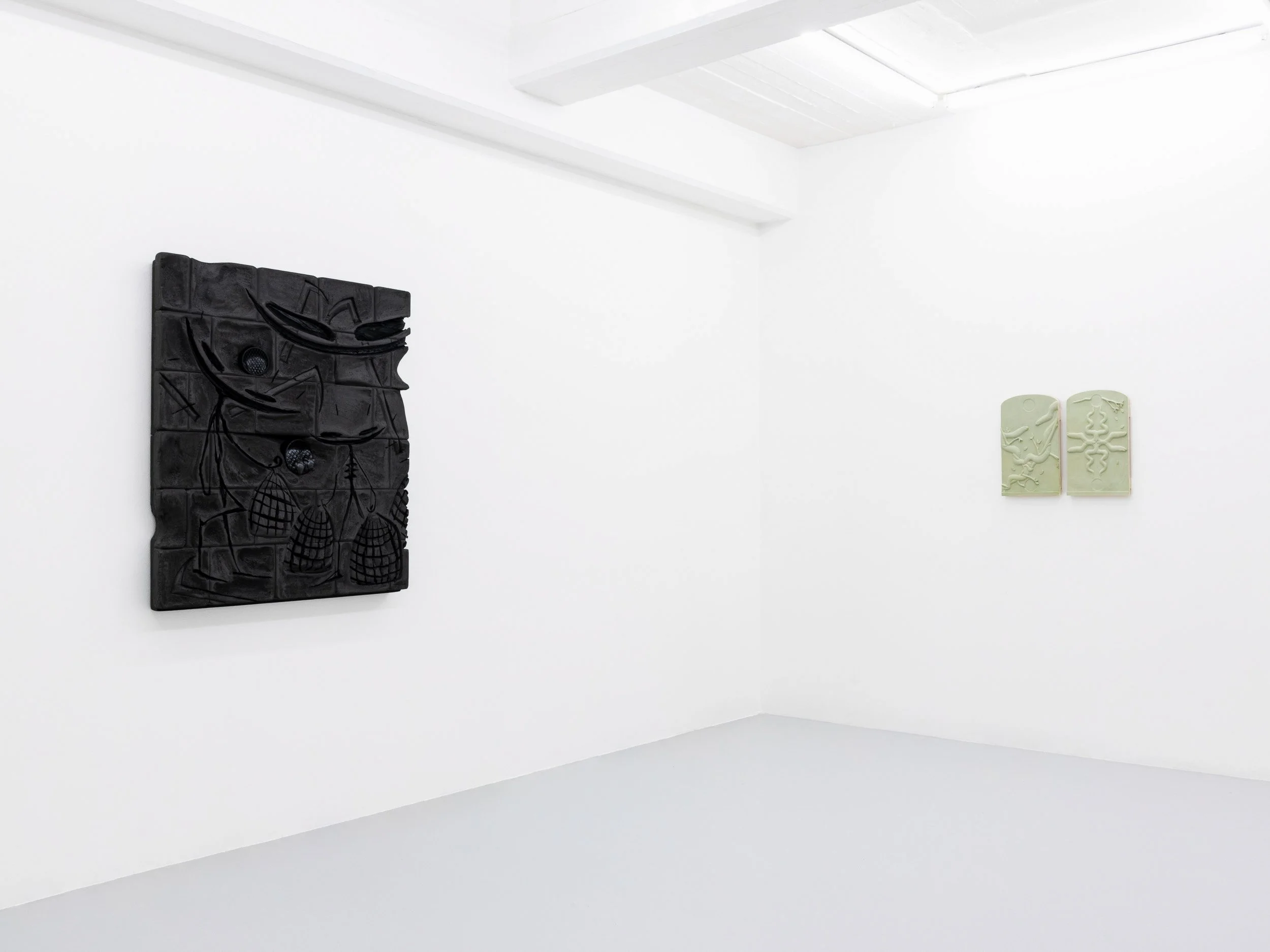
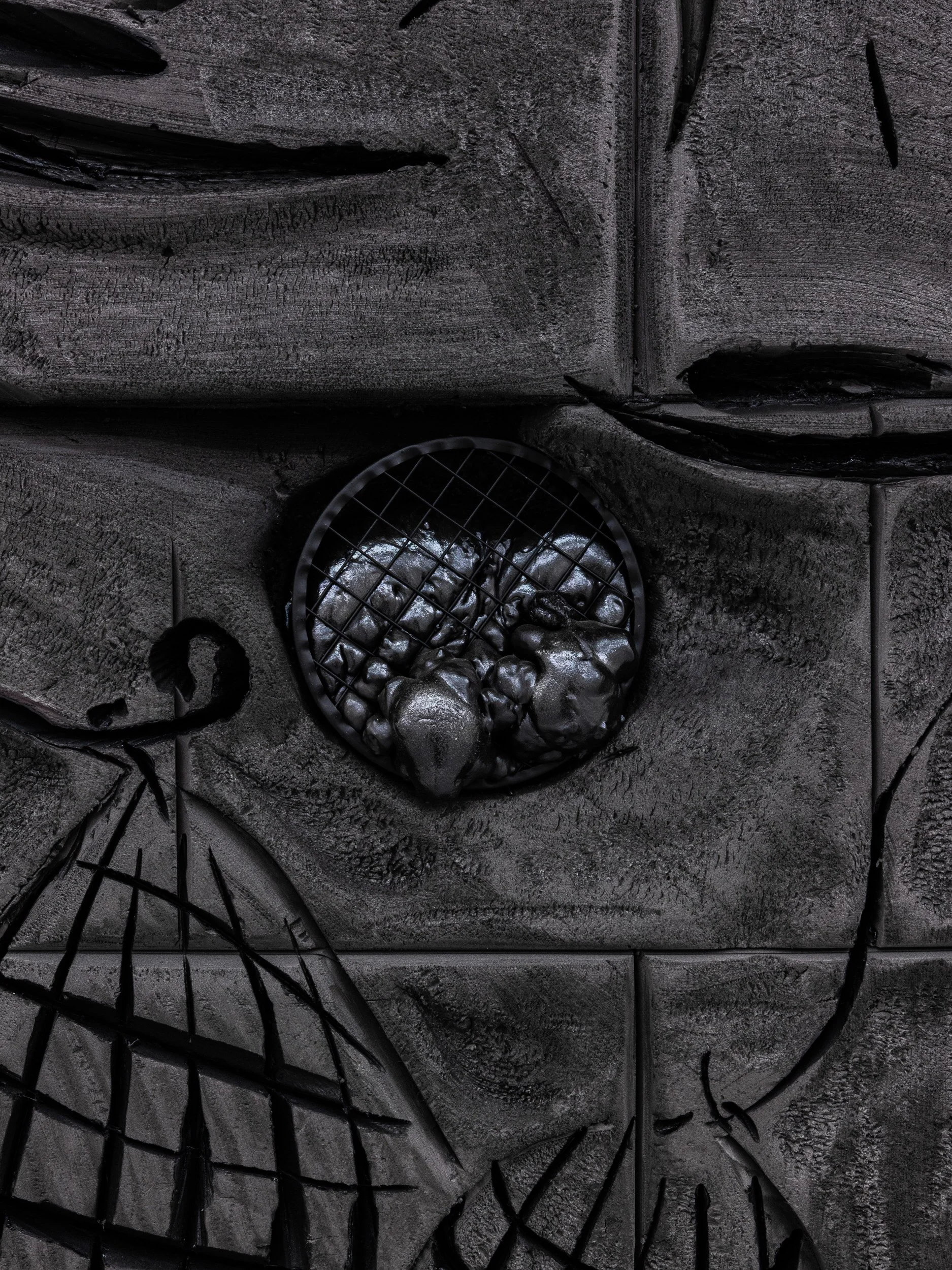
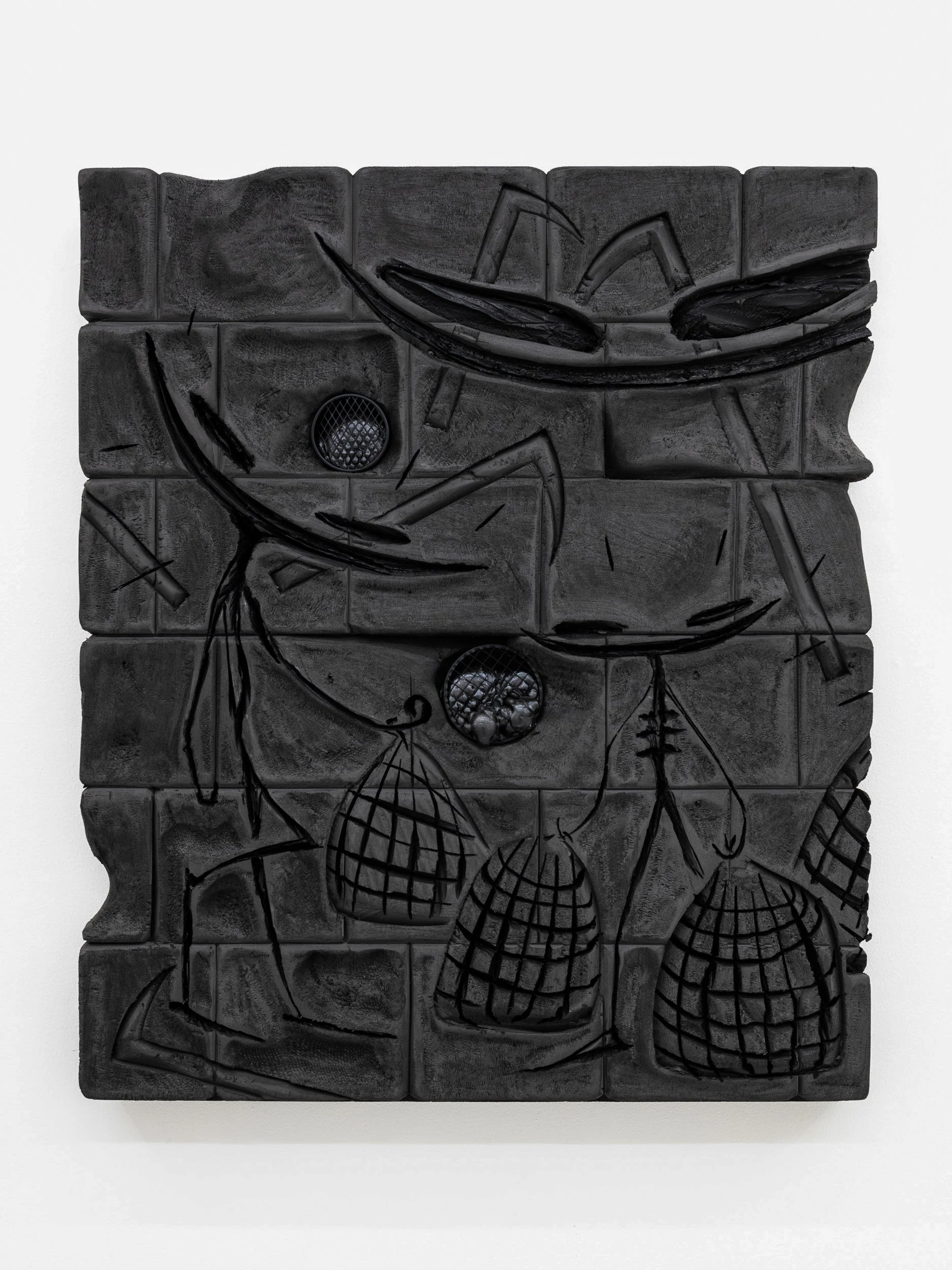
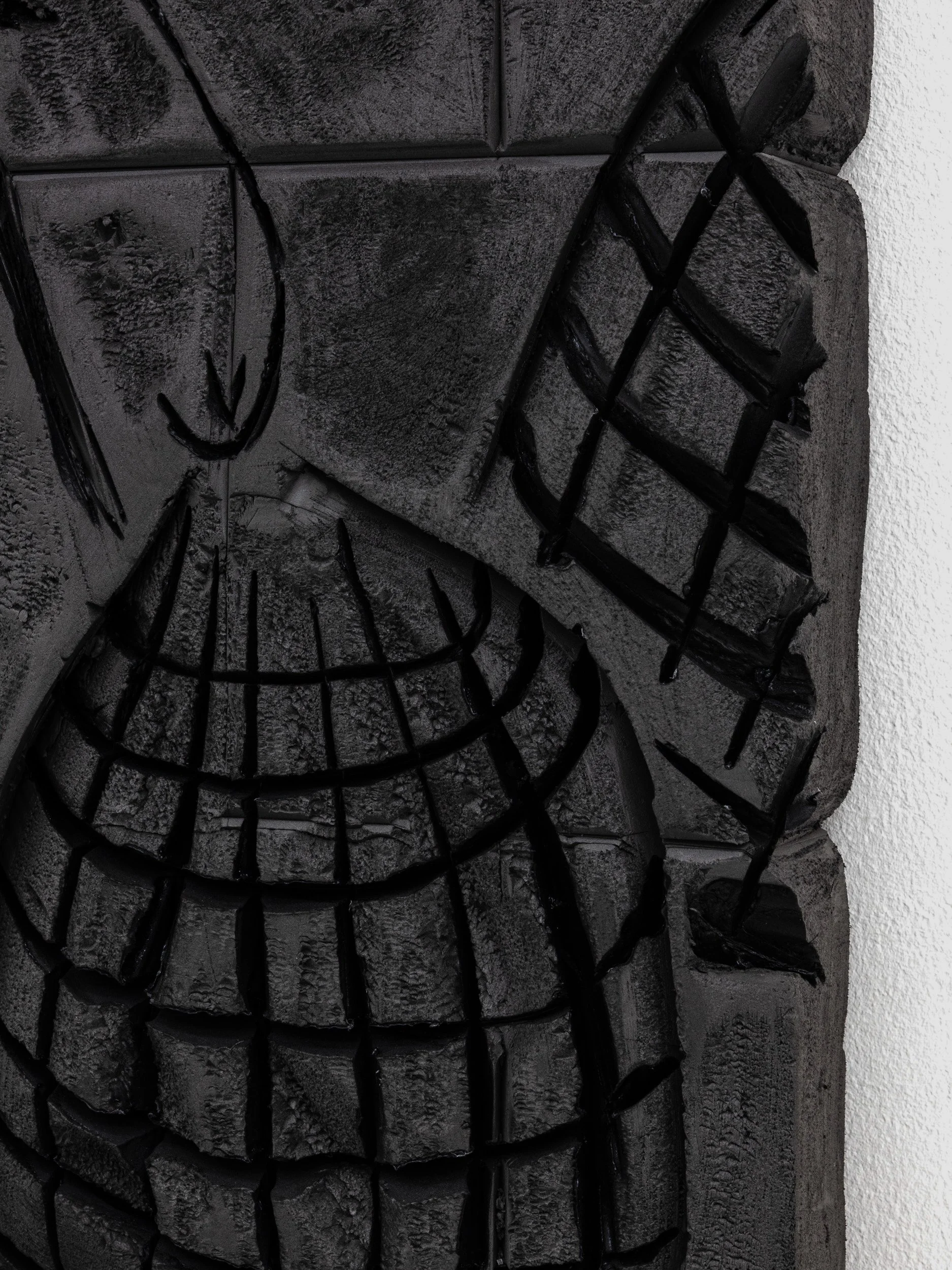
Working with the material history of old polystyrene, Cezary Poniatowski’s sculptural reliefs intervene in one phase of the object’s lifecycle, molding and inserting them into a new context. Originally composed of crude oil and historically used as quick, cheap insulation in Eastern European homes, Poniatowski is interested in the production, narrative, and witnessing of these items as they absorb throughout their time in their tense, skin-like proximity to walls, stories, and secrets. Described by Poniatowski as being ‘pulled from a future archeological dig,’ the reliefs are embedded with domestic items and totemic carvings, becoming fossilized spectators of the past and present, which journey towards the future in search of regeneration.
With a sustaining focus on materiality, Ferdinand Evaldsson’s carved wooden reliefs integrate iconography and theological language to explore personal and cultural memories. The vined reliquary links encountering a holy relic at an Orthodox pilgrimage site to the unrevealed contents of Penelope’s chest in Homer’s Odyssey, a nod to Hellenic thinking about ideal aesthetic works. Unlike Penelope’s chest, however, Evaldsson’s reliquary is kept slightly ajar, an encouragement to a closer look: to approach a core, we must involve ourselves. In the reliefs, the weary saint-like figures are held afloat by branches and foliage. Here, inspired by Dali’s nuclear mysticism and recollections of revolution, Evaldsson insists on a close attention to nature as an elevated witness through calamity.
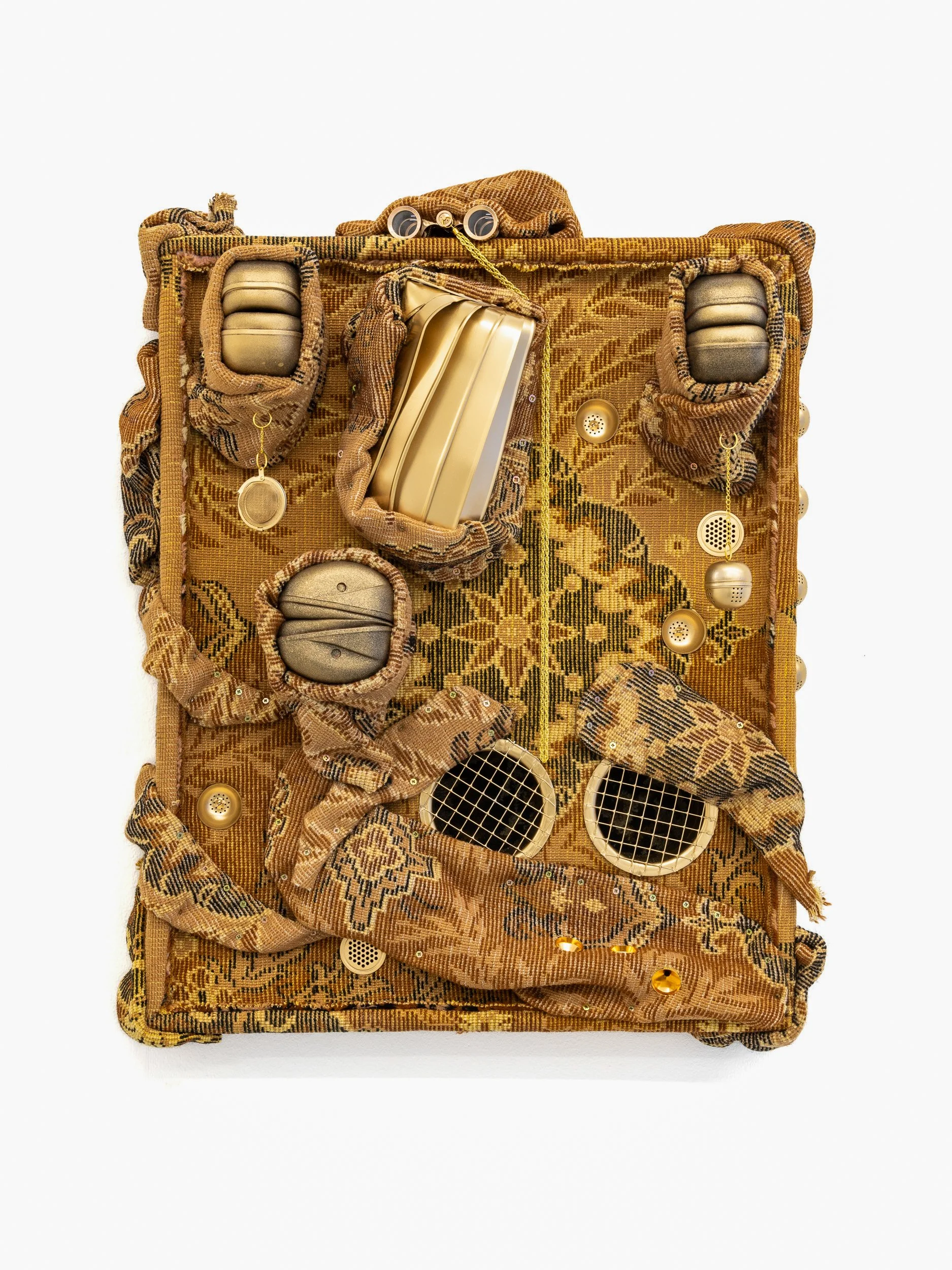
Considering enduring symbols, Tanja Nis-Hansen’s apple and pipe are stand-ins for discussing the body and its mechanisms. The Granny Smith apple is a globally distributed strain, grown in excess due to its durability. Having pushed dozens of smaller strains into obscurity, it encapsu- lates the neoliberal notion that a non-fragile body is the ideal body. The leaking joint of the pipe speaks to this notion further: unruliness and pain surge, the body requiring endless maintenance. Incorporating text, Nis-Hansen moves words out of their location within language into semiotic balance with figuration in pictorial space. While ‘Free Radical,’ on Homeowner 2, suggests the destructive uncharged molecule that emerges from fatal habits, ‘Vain’ adorns the corners of An Apple a Day, addressing the link between appearance and well-being. The repetitive painting of said key symbols – whilst working through transforming inexplicable experiences of fragility and freedom – is central to Nis-Hansen’s exercise in portraiture: representing bodies without them.
Similarly approaching still life and portraiture, alongside landscape painting and classical aesthetics, Niklas Asker uses familiar elements from art history to capture the sentiments of contemporary life. Considering figuration as scenographic, Asker intuitively creates dioramas alongside sculpting and molding the objects depicted within his works. Constructing each aspect in the process, Asker aims to merge the represented world on the stage of the painting with the physical world and personal experiences. While Shape and Form portrays a sculpture showing a subject, an attempt to express an internal process of change, focusing on objects, Reverence (Pietà) illustrates a pietà, a visual theme wherein the Virgin Mary cradles Jesus after his crucifixion. Integrating Velázquez’s techniques and textures directly from Goya’s Black Paintings, Asker journeys on an excavation through tradition.
Likewise, Justin Fitzpatrick’s reference-rich practice works to combine seemingly disparate ideas and systems into new, imaginative worlds, revealing existing connectivities. Blood Memory (Martha Graham Spinal Alignment) reflects on how one may envision their insides. Drawing on the Graham technique, a modern dance style focused on contraction and release, Fitzpatrick considers how an all-encompassing movement practice can shift the understanding of one’s psyche, biology, and spirituality. On the other hand, Rota Fortuna (Carmina Burana) is a layered embodiment of the wheel of fortune. Beginning with visual inspiration from Jean Pierre Ponelle’s production of Carmina Burana, the wheel turns above the cathedral of a medieval town. Fitzpatrick’s inclusions each contain intertextual links: The Byrds ‘Turn Turn Turn,’ a direct quotation of Ecclesiastes, while the flooding steam addresses a key biological dimension – the eight-step Krebs cycle powering organic life, with its disease-producing molecules. A thread to Nis-Hansen’s work, Fitzpatrick’s matrix of life incorporates a variety of architectural and cultural threads: at the heart, an ultimate return to the vulnerable body.
Collectively, the practices’ deep material and medial considerations overlap and converse, the works becoming newfound objects and images inserted into the strata of time. Whether through subverting genres of sculpture, still life, figuration, and portraiture or reordering biological systems and allusions, The Midden of Time asserts that history, like the present, is also a living medium that can be molded, reconstructed, and put into motion.
Words by Michaela Yarmol-Matusiak
more: